Garden Tool Organization · THE GUIDE
Construct a Shallow Wooden Tool Box on Wheels for Balcony Under-Bench Space
Balconies and compact terraces frequently accumulate clutter when gardening supplies lack dedicated outdoor storage. Freestanding patio benches often provide open clearance beneath their frames that can be adapted for seasonal organization. Planning a shallow, low-profile wooden storage box on casters allows gardeners to convert this underutilized footprint into accessible, rolling storage for hand tools, small containers, and kneeling pads. Tailoring the box dimensions to the bench cavity helps shelter everyday items from sun exposure while keeping floor areas clear, provided local balcony load limits and surface materials are carefully respected.
Jump to the checklist ↓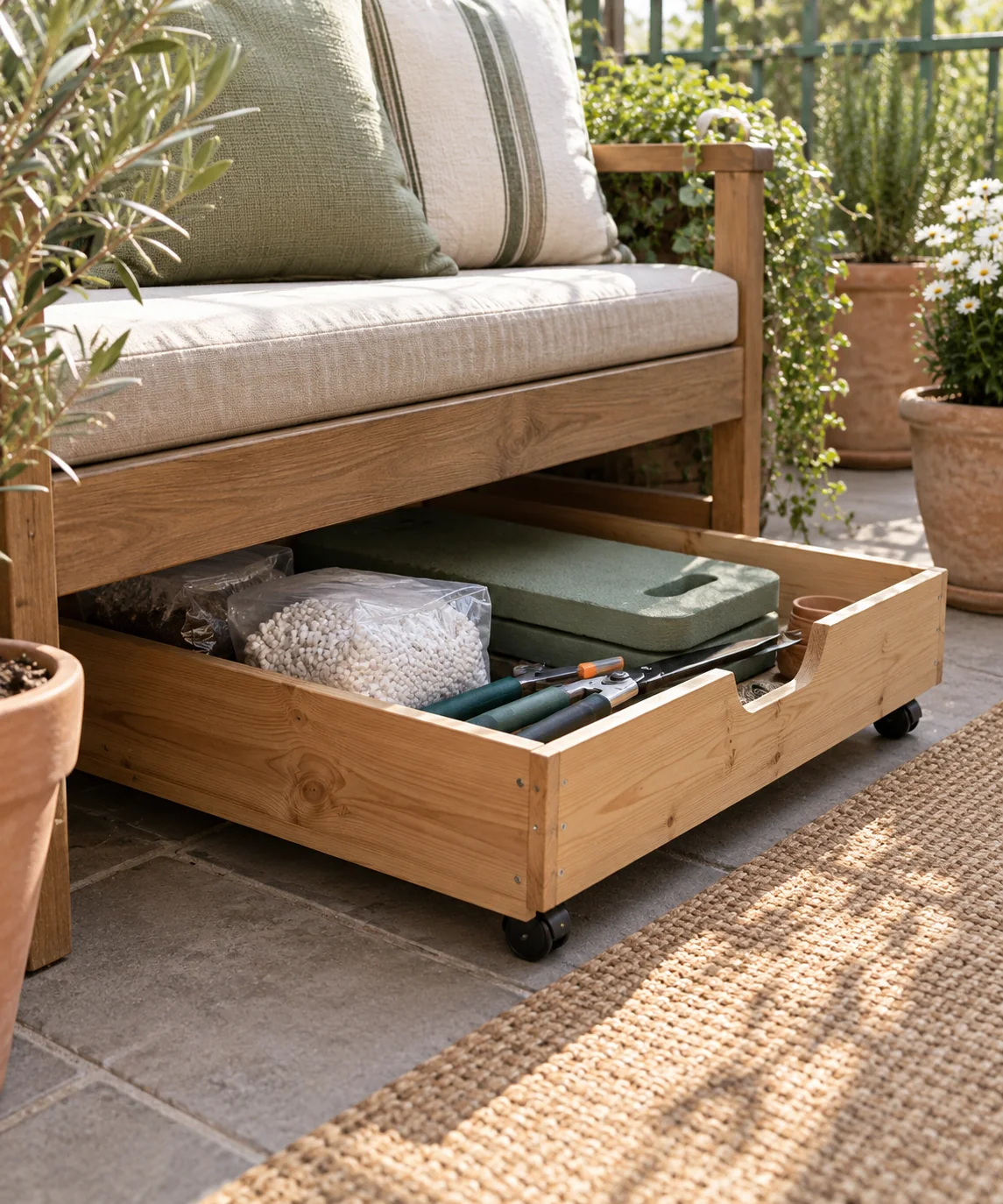
Measuring Bench Openings and Balcony Clearances
Accurate measurements help ensure smooth movement across outdoor flooring. Record the height from the balcony surface to the lowest point of the bench frame, planning ample clearance for caster wheels, hardware heads, and potential deck irregularities. Measure the depth beneath the seating area so the front panel sits safely behind walking boundaries rather than protruding into circulation paths. Check the width between the bench legs and confirm that the rolling path avoids door thresholds, exterior electrical covers, drainage scuppers, or perimeter railings.
Selecting Suitable Timber and Joinery Approaches
Exterior conditions require materials capable of withstanding ambient humidity and seasonal temperature swings. Naturally decay-resistant timbers such as cedar or cypress, or exterior-rated treated pine, are commonly selected for outdoor utility builds. Fasteners should consist of exterior-grade stainless steel or coated deck screws to prevent staining and rust failure over time. For the base, spaced slats or perforated panels allow water drainage and air movement, reducing the chance that trapped moisture collects around tools after wet garden tasks.
Caster Hardware and Decking Surface Protection
Balcony deck boards, whether composite, natural hardwood, or modular tiles, can be sensitive to point loads and wheel friction. Broad, soft-tread rubber or polyurethane casters distribute weight more evenly than rigid plastic wheels, reducing the risk of scuffing or tracking into board grooves. Check the manufacturer load rating on casters to confirm they accommodate the empty box plus modest tool weights. Secure mounting plates with appropriate exterior hardware, ensuring screw tips do not penetrate the interior floor space.
Internal Organization and Balanced Loading
Without internal structure, wide rolling bins can quickly become disorganized. Removable timber dividers or shallow, drop-in plastic trays create dedicated compartments for snips, twine, gloves, and small trowels while preventing items from sliding during movement. Avoid permanent interior adhesive so compartments can be adjusted as tasks change between spring planting and winter cleanup. Place heavier implements toward the center to keep rolling balance stable across all four wheels.
Weight Limits, Drainage, and Building Regulations
Balcony structures are engineered around strict structural live load limits set by building codes and property regulations. Check with property management, HOA guidelines, or a qualified structural professional before accumulating heavy outdoor containers, soils, or stone amendments in rolling storage. Keep stored items limited to lightweight hand tools rather than saturated soil bags. Pull the box out periodically to clear away trapped leaves and debris, allowing the underlying deck to dry thoroughly after rain.
YOUR STARTING POINT
A little checklist.
Original editorial guidance. Images are AI-generated concepts, not photographs of completed projects. Our sources and approach.
Questions to consider
What type of wood finish works best for an under-bench balcony box?
A penetrating exterior wood oil or breathable exterior water-repellent finish protects the timber while allowing seasonal moisture to escape. Inspect the finish annually and reapply according to the manufacturer instructions to prevent wood checking.
How can I prevent the rolling box from moving during high winds?
Choose casters equipped with integrated foot brakes on at least two wheels, or place lightweight rubber wheel chocks under the front casters. Ensure the bench itself is adequately sheltered and conforms to building wind safety rules.
Can heavy potting soil bags be stored inside an under-bench rolling bin?
Large bags of potting soil and mineral amendments quickly add substantial weight. Balconies have strict structural limits, so store dense materials only in quantities permitted by your building regulations and within the safe carrying capacity of your chosen casters.