Entryway Organization · THE GUIDE
Contain Umbrella Drips in a Slender Ceramic Cylinder
Wet umbrellas tracked into a home can quickly cause water stains on polished baseboards, soften wooden floor finishes, and introduce slippery hazard zones across entry tiles. In tight vestibules, lightweight metal racks or wire baskets frequently tip over when holding full-length walking umbrellas with heavy wooden handles. A slender, heavy-walled ceramic cylinder provides an ideal structural counterweight, corralling both tall umbrellas and compact folding models in a modest footprint. Selecting the proper vessel proportion, protecting delicate floor surfaces, and managing pooled runoff keeps wet-weather storage neat, stable, and visually composed.
Jump to the checklist ↓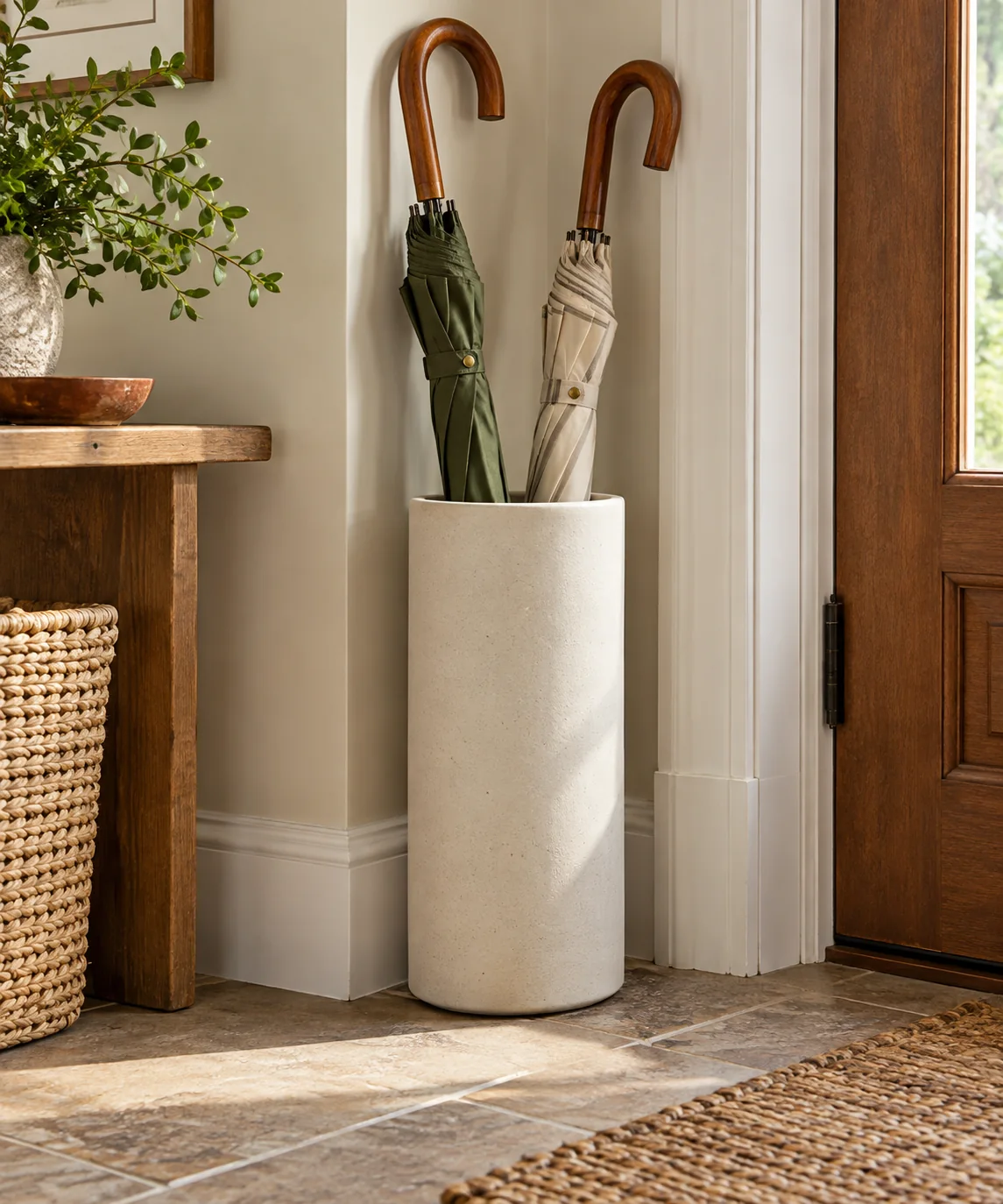
Assess Weight and Proportions for Anti-Tip Stability
The primary mechanical challenge of storing tall walking umbrellas is their high center of gravity. Lightweight wire racks or thin sheet metal stands can tip over when a heavy cane or curved handle leans across the rim. A dense stoneware or earthenware vessel provides reliable ballast, but proportions should match the intended umbrellas. Taller stick umbrellas generally require a vessel with sufficient height and base diameter so the rim catches the shaft above its midpoint, preventing it from pivoting outward. Before buying, verify that the vessel feels heavy enough at the base to stay upright when loaded unevenly, and confirm that interior dimensions accommodate both compact folding frames and full-sized walking sticks without crowding.
Position Away from Main Traffic Vectors
Position the ceramic cylinder where it will not impede the doorway or narrow the usable walkway. Tucking the vessel into an adjacent corner alcove or near the hinge side of the doorframe helps prevent door handles and swings from striking the brittle ceramic rim during routine use. Check local pathway clearances and ensure the placement does not create a trip hazard in dimly lit entryways or obstruct accessibility. Placing the container within arm's reach of the threshold allows incoming occupants to stow wet items immediately, preventing puddles from being tracked across the room.
Protect Finished Floors Beneath the Base
The rough, unglazed foot of a heavy ceramic vessel can abrade polyurethane hardwood finishes or scratch softer stone tiles. Inspect the underside of the base before positioning the vessel indoors. Rather than using absorbent felt pads—which can wick pooling water from umbrella overflow and trap moisture against the floorboards—opt for non-porous silicone bumpers or a dedicated waterproof rubber coaster under the base. This elevates the ceramic rim slightly off the flooring, prevents scuff marks, and ensures accidental drips cannot hide unseen beneath the heavy container.
Adapt the Interior for Compact Folding Umbrellas
Deep ceramic vessels contain full-length stick umbrellas securely, but short folding umbrellas quickly drop to the bottom where they are inconvenient to retrieve. Rather than digging into a deep container, you can adapt the interior using a non-absorbent, removable plastic cup or silicone organizer inserted into one section of the base to support shorter handles. Alternatively, reserve the floor cylinder strictly for tall umbrellas and place compact models in an adjacent shallow wall pocket or hang them from nearby entryway pegs by their wrist lanyards.
Manage Accumulated Moisture and Prevent Odors
While vitrified glazes resist water penetration, unglazed interior pottery or micro-fissures in decorative glazes can allow standing moisture to seep through to the bottom over time. Stagnant water left in the bottom of a dark cylinder also fosters mildew on damp canopy fabric and produces stale odors. Place a removable, washable silicone insert or rubber disc at the base to cushion pointed ferrule impacts and catch drainage. Inspect the base periodically after rain, emptying standing liquid promptly and wiping the interior dry to maintain clean conditions.
YOUR STARTING POINT
A little checklist.
Original editorial guidance. Images are AI-generated concepts, not photographs of completed projects. Our sources and approach.
Questions to consider
Can ceramic umbrella stands crack from temperature shifts?
Glazed indoor ceramic stands handle normal room temperatures easily. However, if stored on an unheated porch where standing water freezes, the expanding ice can shatter the ceramic base. Keep ceramic vessels in climate-controlled indoor entries during winter.
How do I prevent umbrella tips from damaging the inside base?
Drop a circular silicone coaster or a cut section of dense rubber mat into the bottom of the cylinder. This cushions the impact of sharp metal or wooden umbrella tips, preventing chipping of the interior ceramic glaze.
Will damp umbrellas develop mold if kept in a cylinder?
If tightly packed while soaking wet, mold can form on folded fabric. Unfurl very wet umbrellas to air-dry briefly before rolling them loosely and placing them inside the cylinder, ensuring good vertical airflow around the canopy.