Compact Home Offices · THE GUIDE
Convert a Bedroom Bay Window into a Built-In Writing Ledge
A bedroom bay window often turns into underutilized floor area or a temporary repository for laundry and occasional furniture. Placing a fitted writing ledge or desk within the alcove creates a dedicated study zone without encroaching on primary bedroom circulation pathways. The surrounding perimeter glazing offers generous daylight across the surface, though practical implementation requires careful planning around existing trim, radiator or heating placement, and window operation. Choosing reversible, freestanding supports and verifying that all sashes, latches, and window mechanisms remain completely unobstructed helps establish an adaptable, functional study nook tailored to the room's proportions.
Jump to the checklist ↓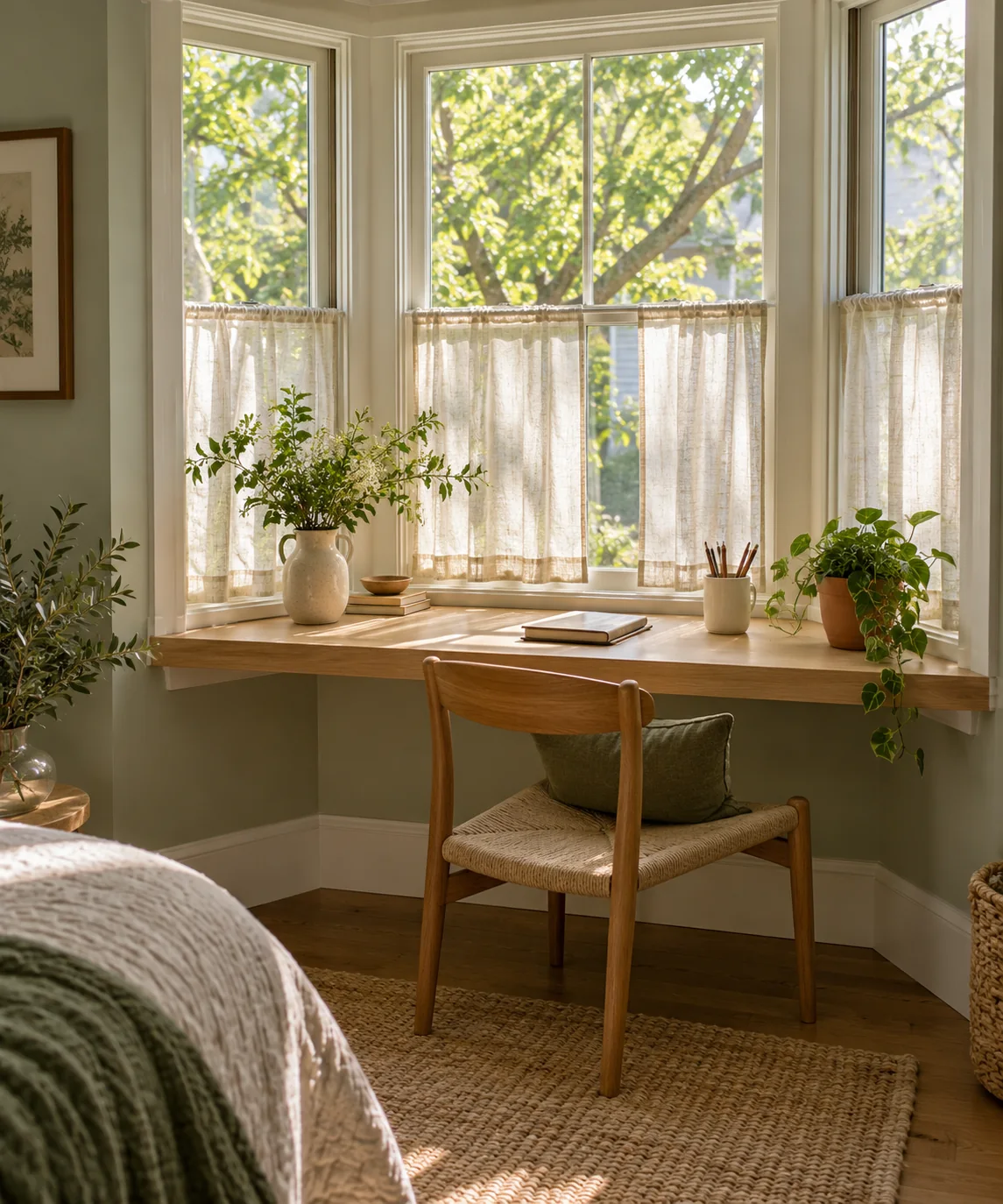
Template the Alcove Dimensions
Bay angles rarely follow true blueprint angles because drywall compound, baseboards, and natural structural settling shift corners over time. Before commissioning a custom top or selecting a modular desk surface, mapping the alcove perimeter with stiff craft paper or corrugated cardboard provides an accurate reference. Laying panels flat along the sill line allows you to scribe around window sills, projecting casing profiles, and heating covers. Taking accurate physical tracings helps avoid dimensional mismatches, providing a dependable template to share with a joiner, carpenter, or millwork fabricator.
Preserve Window Operation and Radiator Clearances
Any desk surface set into a bay recess must leave window hardware fully accessible and functional. Verify the movement of awning cranks, tilt latches, sliding sashes, and security hardware through their complete travel arcs before setting the worktop height or depth. The worktop should not touch operating handles or block emergency egress routes. Furthermore, if convective heat registers, baseboard radiators, or hydronic heaters sit beneath the bay, avoid enclosing the lower cavity with solid casework. Open leg framing or freestanding supports allow heat to circulate naturally without concentrating hot air beneath the timber top.
Select Stable, Reversible Base Supports
Securing permanent ledger boards into exterior-facing framing can create thermal bridging, damage historical trim, or void wall warranties in rental and managed buildings. Utilizing freestanding trestles, modular post legs, or low lateral filing pedestals tucked beneath the side returns offers solid downward support without structural wall anchors. Place support legs inward from window drapery paths to prevent fabric pinching when drawing drapes. Verify that the combined weight of your selected desktop, equipment, and support framework remains well within practical floor load conventions.
Manage Direct Sunlight and Task Glare
Natural peripheral daylight in a three-sided bay provides ample ambient illumination, but untempered sun exposure can create intense glare on laptops, papers, and monitors. Review existing window coverings or consult manufacturer guidelines when selecting interior shading options, such as tension-fit roller shades or sill-length drapery, to soften southern or western exposures. Arranging reading materials and displays perpendicular to primary glass panes helps limit direct glare, while choosing matte desktop finishes over reflective gloss reduces harsh surface bounces during bright hours.
Organize Essentials for Visual Restraint
Because bay-window alcoves taper outward, broad desktop clutter quickly overwhelms the visual balance of a sleeping space. Keep the primary work zone reserved for immediate tasks, such as a compact laptop and basic writing tools, storing auxiliary cords and bulky paperwork in dedicated drawers or freestanding organizers nearby. Utilizing the narrow flanking corners for small, stationary items maintains a clear center span. Keeping the alcove organized fosters a calm, distraction-free environment suited to a room intended primarily for evening rest.
YOUR STARTING POINT
A little checklist.
Original editorial guidance. Images are AI-generated concepts, not photographs of completed projects. Our sources and approach.
Questions to consider
How deep should a bay window writing ledge be?
Appropriate depth depends on alcove angles, window handle projection, and how the furniture meets bedroom circulation routes. Many users find that providing enough space for a laptop and forearm support without overlapping wall returns strikes a practical balance; check that the front edge leaves adequate passage for clearing nearby bed frames.
Can a standard rectangular desk work in a bay window recess?
A rectangular desk can be placed inside a bay, though it leaves triangular recesses along the rear angled walls where small items may slip out of reach. While simpler than a shaped worktop, it requires verifying that the back corners do not strike window glass or inhibit crank handles.
How should power cords be routed near window framing?
Keep power cords organized using surface-safe cord organizers or guides positioned along desk legs toward the nearest wall outlet. Avoid running extension cords across doorways, beneath rugs, or in areas where opening sashes could pinch or abrade the electrical insulation.