Sage and Cream Interiors · THE GUIDE
Convert a Deep Closet Floor Into a Vertical Shoe Riser Zone
The floor of a deep wardrobe frequently turns into a disorganized pile where footwear gets scuffed, lost, or trapped beneath hanging garments. Rather than allowing loose pairs to claim valuable horizontal space, you can transform the closet base into an orderly vertical shoe station using freestanding modular risers. A tiered arrangement takes advantage of underutilized vertical clearance beneath shorter hanging items, such as shirts or folded trousers. By pairing functional cream or metallic shelving against soft sage backdrops, you maintain an airy visual flow while ensuring your everyday footwear remains visible, protected, and consistently accessible.
Jump to the checklist ↓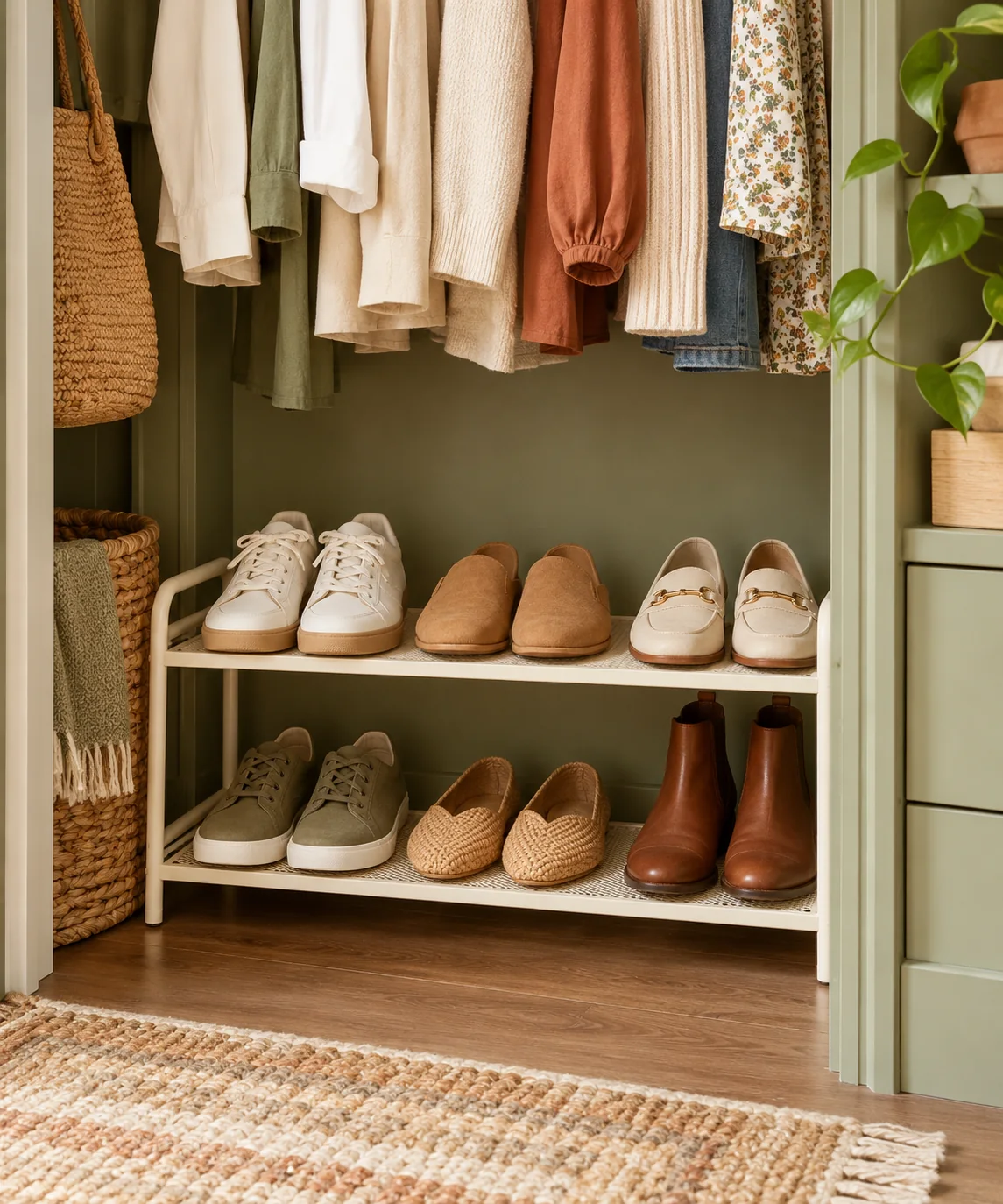
Assessing Vertical Clearance and Depth
Before selecting any organization units, measure the exact distance between the closet floor and the lowest hanging hemline. Long coats require unobstructed vertical drop, so reserve those sections for flat ground storage or single-pair placement. Under tops and skirts, you typically have between fifteen and twenty-four inches of vertical clearance. Measure your wardrobe depth carefully; deep closets often accommodate two-tier or expandable three-tier shoe risers without blocking door tracks. Check that shoe toes or heels will not push against folding or sliding closet doors when fully closed.
Testing the Layout With Existing Footwear
Group your footwear by height and frequency of use before purchasing new organizers. Place your bulkier sneakers, everyday flats, and walking shoes together to determine shelf height requirements. You can test your intended layout using simple cardboard cutouts or spare storage boxes to verify how many pairs fit comfortably across the width. Keep three to four inches of breathing room between pairs so shoes can be retrieved without knocking adjacent items over. Reserve the top tier of any riser for taller ankle boots or platform soles.
Selecting Modular and Freestanding Hardware
Opt for freestanding, modular risers made of coated metal or wipeable sealed wood in muted cream tones. Avoid permanently fixed tracks or units that require drilling into baseboards, ensuring the setup remains entirely reversible for rental units. Stackable models with interlocking pins or nesting legs offer stability without compromising flexibility. Look for ventilated mesh or slated shelf designs that allow air circulation around soles while catching minimal dust. Solid shelves should feature a gentle wipe-clean surface so street debris does not stain the closet interior.
Maintaining Order and Dust Control
Because shoes sit beneath hanging fabric, dust and lint naturally accumulate on lower shelves over time. Establish a regular routine of lifting modular risers to vacuum the base floor every few weeks. Line the shelves with removable, washable cream silicone liners or rigid shelf paper to catch outdoor grit before it reaches the floorboards. Wipe down the frames periodically using a dry microfiber cloth or a lightly damp rag. Limiting the shoe collection strictly to one pair per designated slot prevents the system from reverting to a heap.
Understanding Layout Limitations
A modular riser setup relies entirely on predictable clearances and has practical capacity limits. Tall knee-high boots cannot stand on lower tiers and must either lie flat in boxes or sit elsewhere in the wardrobe. Overloading light freestanding frames can cause bowing or tipping, particularly if heavy work boots are placed on upper tiers. If your hanging rail is low or houses exclusively full-length dresses, vertical shoe risers will crush garment hems, indicating that this specific zone is unsuitable for multistory shoe storage without rearranging your wardrobe rods.
YOUR STARTING POINT
A little checklist.
Original editorial guidance. Images are AI-generated concepts, not photographs of completed projects. Our sources and approach.
Questions to consider
How many tiers can I safely stack on a closet floor?
Keep freestanding, unanchored shoe risers to two or three tiers maximum. Excessive stacking without wall fasteners creates tipping hazards, especially when retrieving pairs from the bottom shelf in deep, dimly lit wardrobes.
Can I store outdoor shoes directly on the risers?
Yes, provided you clean heavy outdoor mud beforehand and place wipeable liners beneath the racks. Metal mesh or slatted wood risers allow air to circulate around damp soles while protecting closet floor finishes.
What if my hanging clothes drag across the shoe rack?
Rehang longer garments toward one side of the closet rod and position the shoe riser strictly beneath shorter shirts and folded trousers to maintain clearance and keep clean fabrics away from shoes.