Compact Home Offices · THE GUIDE
Convert a Landing Stair Turn into a Compact Household Office
A wide intermediate stair landing may appear to offer usable square footage for a compact work corner, but stairwells serve as critical emergency egress paths. Before considering any furniture arrangement, residents must review local municipal building codes, residential fire safety regulations, and property management rules, as many jurisdictions strictly prohibit placing objects on stair landings. Where permitted by governing codes and space allows, utilizing a slim, freestanding console and a fully tuckable stool provides a low-impact surface for brief sorting tasks. Prioritizing clear walking corridors, secure cable management, and unobstructed handrails ensures the transit route remains functional without compromising safe household passage.
Jump to the checklist ↓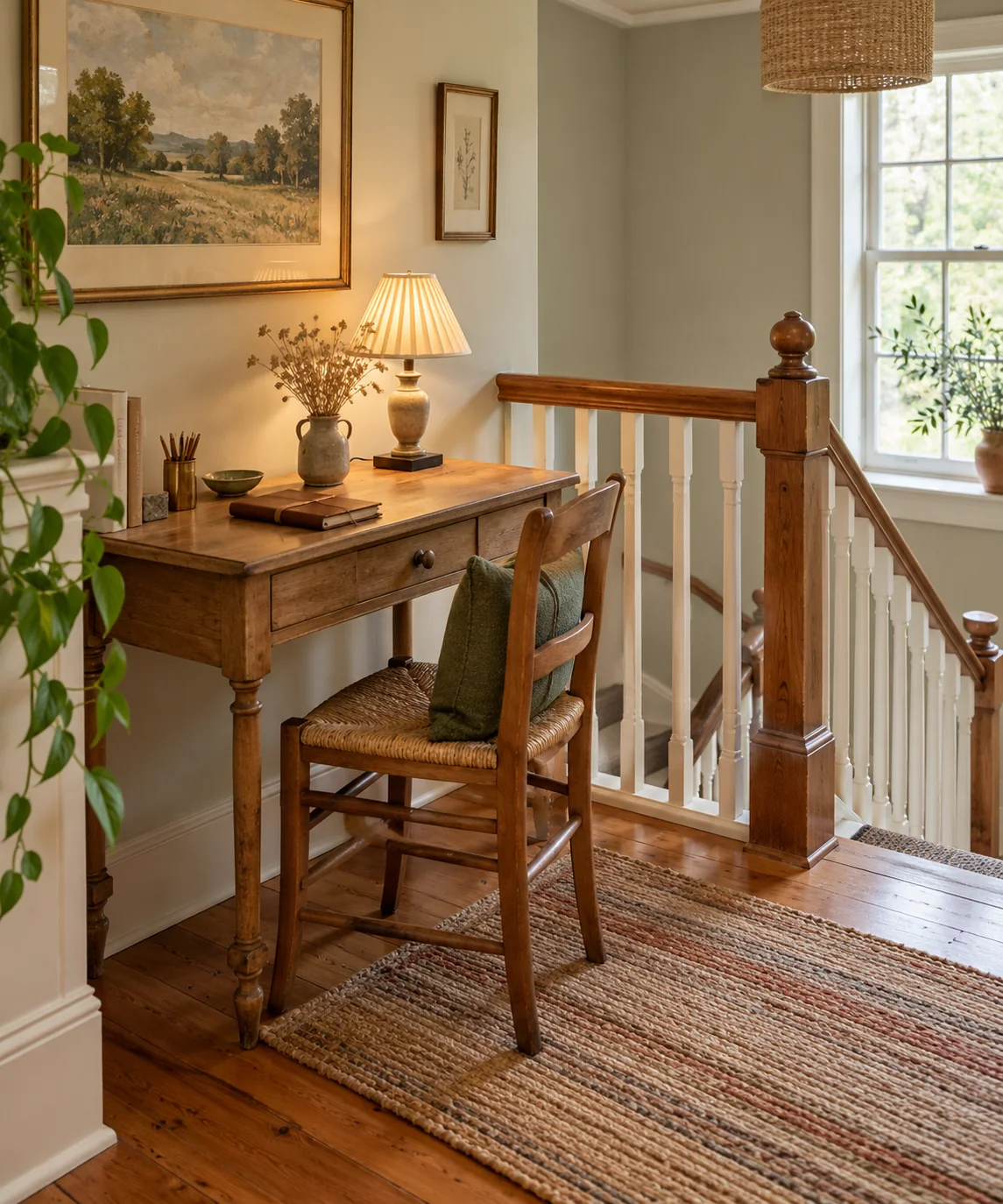
Review Local Egress Codes and Building Restrictions
Stairways and landings function as primary exit corridors during emergencies, meaning local fire codes and municipal building regulations take absolute precedence over decor. Many multi-family dwellings and local ordinances strictly ban all freestanding furniture, rugs, or storage units on landings regardless of remaining floor area. Before planning a setup, verify property management policies and local egress codes. If regulations allow furnishings, keep the transit path completely direct and wide open, ensuring that personal items, table legs, or seating never intrude upon the natural line of travel between stair flights or impede access to handrails.
Select Shallow, Reversible Freestanding Furniture
If a landing is approved for light furnishings, avoid heavy desks or standard office workstations. Choose a shallow console table with rounded corners to minimize the risk of bumps or snags during transit. Pair the surface with a backless stool or compact ottoman that slides entirely beneath the table frame when not in active use. Wheeled office chairs should be avoided, as casters can shift unexpectedly toward step edges. Prioritize lightweight, freestanding pieces that can be relocated instantly without altering walls or structural woodwork.
Manage Natural Daylight and Task Lighting Safely
Stair landing windows often introduce harsh daylight that creates screen glare, but window coverings must comply with manufacturer specifications and lease agreements. Use existing or landlord-approved diffusing window treatments rather than attempting complex alterations in high stairwells. For task lighting, select a low-profile, stable lamp with a broad base that resists tipping if lightly brushed. Keep light directed downward onto the work surface to prevent casting distracting glare or deceptive shadows across step treads, which can create missteps for people using the stairs.
Organize Cords and Supplies to Prevent Hazards
Loose items and electrical cables pose significant hazards on staircases. Running extension cords across landings or down steps introduces severe trip dangers and may violate residential safety standards. Instead, operate portable electronics from internal battery packs or rechargeable power accessories positioned securely on the tabletop. Restrict office accessories to enclosed drawer trays or shallow bins kept strictly within the table's perimeter. Avoid wall hooks, peg rails, or open organizers where hanging straps could catch on clothing during transit.
Observe Sound Transmission and Transit Routines
Open stairwells naturally act as acoustic channels, projecting keyboard tapping, phone alerts, and voices between building levels. Treat an approved landing station as a quiet zone reserved for quick administrative tasks like mail review, calendar planning, or short notes rather than continuous calls. If using a small floor mat, select a flat-weave runner secured with a manufacturer-approved non-skid backing to keep edges flat against the flooring. Monitor household traffic patterns over several weeks to confirm the setup never impedes convenient, safe movement.
YOUR STARTING POINT
A little checklist.
Original editorial guidance. Images are AI-generated concepts, not photographs of completed projects. Our sources and approach.
Questions to consider
Is it generally legal to put furniture on an apartment stair landing?
In most jurisdictions and multi-family residential buildings, fire and life safety codes strictly forbid placing any furniture, planters, or personal items on stairways and landings because they serve as designated emergency egress paths. Always consult your property management team or local fire marshal before placing any items on a landing.
How can I power a laptop without creating a tripping hazard?
Do not run power cords or extension cables across landing walkways or stair treads. Instead, charge your laptop in another room and operate it on battery power, or use a certified portable power bank that rests entirely on the tabletop during use.
Why are rolling desk chairs discouraged on stair landings?
Chairs with caster wheels can roll or shift unexpectedly under shifts in weight or drafts, creating a severe fall hazard near the edge of descending stairs. Stationary seating with slip-resistant feet provides far greater stability in transit areas.