Pantry Organization · THE GUIDE
Convert a Narrow Hallway Linen Closet into a Functional Food Pantry
When apartment kitchens lack adequate cabinet space, an underused hallway linen closet offers an effective alternative for storing non-perishable groceries. Fixed wooden linen shelves are often deep and widely spaced, designed originally for folded towels rather than food boxes. Adapting this structure into a functional satellite pantry requires intentional zoning, protective barrier liners, and modular containment to manage depth. By establishing distinct category shelves, maintaining hallway traffic clearances, and tracking dry inventory methodically, you create a secondary food storage station that keeps cooking supplies accessible while blending smoothly into your residential living space.
Jump to the checklist ↓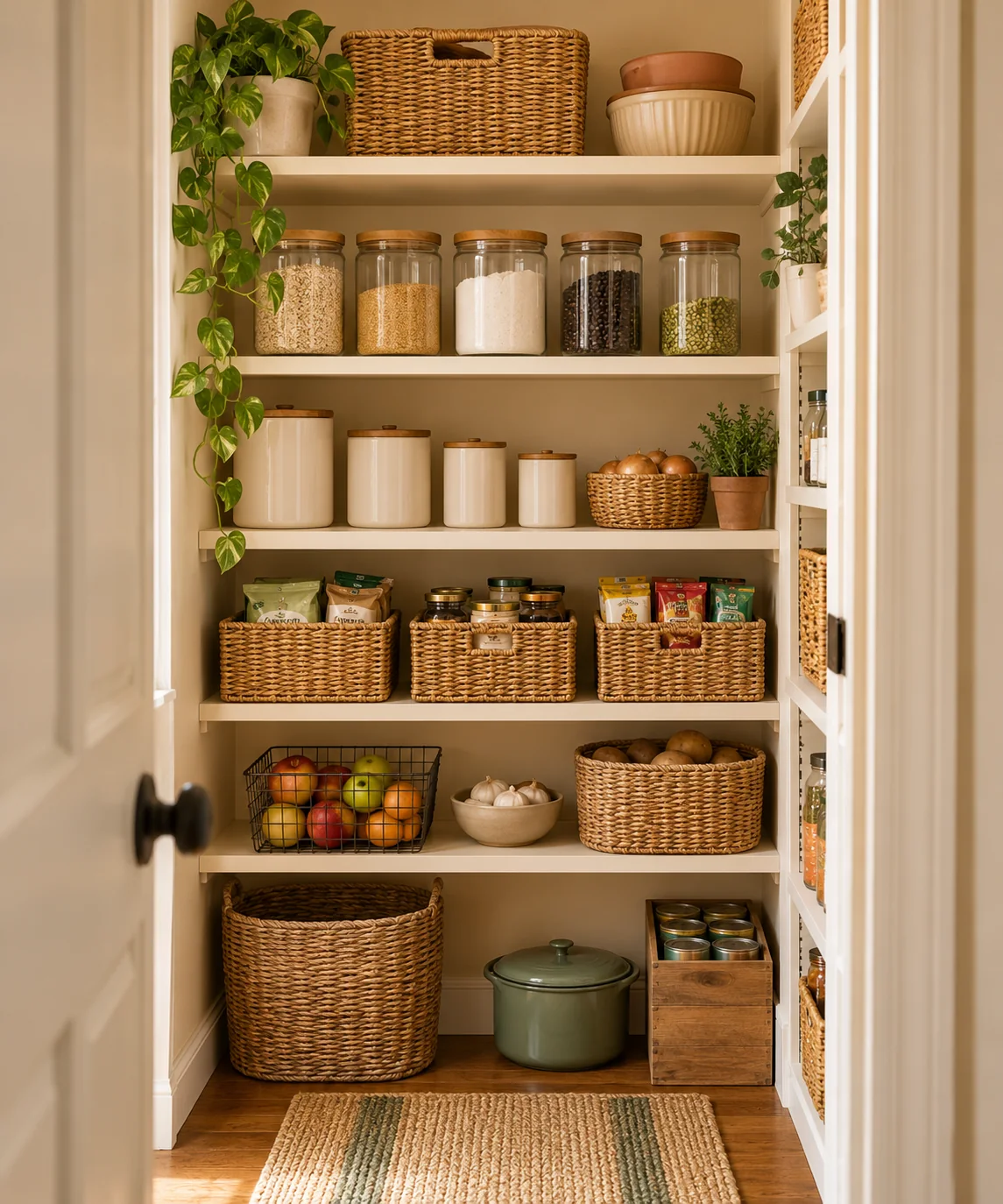
Mapping Zones to Fixed Shelf Heights
Linen closets typically feature fixed shelving supported by wall cleats designed for lightweight linens, towels, and bedding rather than heavy pantry staples. Evaluate the construction of your closet before assigning inventory. Use the closet floor for heavier items such as beverage packs or bulk dry goods, keeping weight off elevated shelves whose fastening strength and load ratings may be unknown or unrated. Designate primary eye-level shelves for lightweight daily essentials like breakfast cereals, pasta boxes, and snacks. Reserve upper, less accessible shelves for lightweight backstock, paper goods, or dry goods stored in lightweight containers to avoid exceeding shelf load limits.
Lining Slatted or Painted Wooden Shelves
Older linen closet shelves often feature painted surfaces or spaced wooden slats that can catch package corners, collect grain dust, or absorb oil from food packaging. Applying non-adhesive, removable shelf liners creates a continuous, wipeable surface without damaging the underlying rental finish. Rigid plastic or heavy vinyl liners bridge gaps between wooden slats, providing a flat plane that keeps spice jars, bottles, and canisters upright. Liners also contain minor spills, making routine wipe-downs straightforward while protecting closet carpentry from stains.
Adding Front-to-Back Containment Bins
Hallway closets often feature deep shelving, making it easy for loose packages to get pushed toward the back wall where they are forgotten. Dividing shelf depth into distinct channels with narrow, deep storage bins or plastic organizers helps maintain visibility. Sliding a single bin forward allows you to inspect items in the rear row without disarranging surrounding supplies. Grouping related items together—such as baking supplies in one bin and dried goods in another—prevents loose products from scattering across wide shelf expanses and simplifies regular restocking.
Monitoring Temperature and Odor Exposure
Hallway closets exist in a different microclimate than dedicated kitchen pantries. Check that the closet does not share an uninsulated wall with a furnace, water heater, heating duct, or laundry dryer vent, as elevated temperatures accelerate the degradation of dry ingredients, nuts, and cooking oils. To keep food aromas from spreading through the hallway corridor and protect dry staples from ambient household odors or humidity, transfer opened dry goods into airtight food-grade containers with reliable silicone seals rather than relying on folded paper packaging.
Managing Satellite Pantry Traffic Flow
Running an auxiliary food pantry in a residential corridor requires maintaining clear passage to adhere to hallway clearance and avoid trip hazards. Keep the floor immediately inside and outside the doorway free of loose footstools or oversized crates that could impede hallway movement when the closet door swings open. Posting an updated inventory sheet on the interior door panel helps household members check available ingredients before opening the closet, reducing unnecessary corridor congestion during busy meal preparation times.
YOUR STARTING POINT
A little checklist.
Original editorial guidance. Images are AI-generated concepts, not photographs of completed projects. Our sources and approach.
Questions to consider
Can fixed linen closet shelves support the weight of canned food?
Linen closet shelves and supporting wall cleats are typically engineered for light textiles rather than heavy grocery stock. Thin plywood, particleboard, or slatted wood can sag or pull away from wall anchors under concentrated loads. Check with property management or inspect the bracket installation before loading shelves, and keep heavy canned goods, liquids, and bulk grains at floor level.
How do I protect open food packages from ambient household odors in a hallway?
Transfer opened grains, dried legumes, and snacks into airtight plastic or glass containers equipped with silicone gaskets. Sealed storage keeps food aromas from escaping into living corridors while shielding dry goods from ambient humidity, dust, and household odors.
What is the most effective way to organize deep, narrow linen closet shelves?
Use modular, deep storage bins that match the depth of the shelf to function like pull-out drawers. Pulling a single bin forward lets you view and access items stored at the rear of the closet without having to unstack or shift loose packages.