Garden Tool Organization · THE GUIDE
Convert a Shallow Divided Cutlery Tray for Potting Bench Drawers
Potting bench drawers often deteriorate into chaotic catch-alls filled with loose plant labels, rusty clips, tangled wire lengths, and blunt marking tools. Finding small supplies during active planting becomes frustrating when items drift together into untamed mounds. Repurposing a rigid, shallow divided cutlery tray offers an immediate, structured remedy for chaotic potting table drawers. By taking advantage of compartmentalized slots designed for spoons and forks, you can systematically sort tiny, easily scattered consumables. The result is an orderly drawer layout that streamlines spring planting and protects delicate planting tags from bending.
Jump to the checklist ↓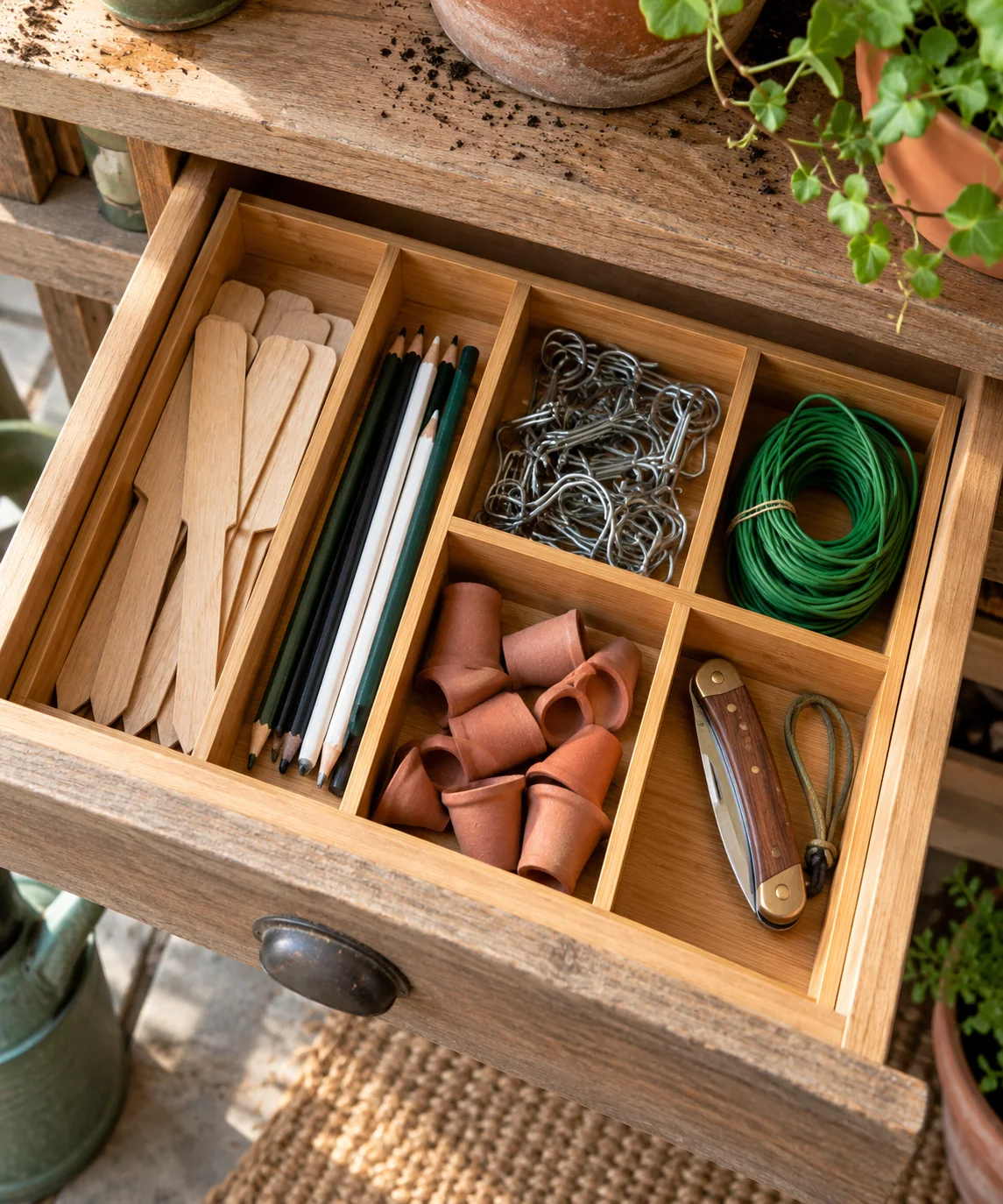
Measuring Drawers and Selecting Tray Materials
Begin by measuring the internal length, width, and vertical clearance of your potting bench drawer. Account for screw heads or underside drawer-runner tracks that might reduce usable interior height. Choose a tray material suitable for garden environments, such as wipe-clean molded plastic or sealed bamboo. Avoid raw, untreated pine trays, which readily absorb moisture and soil stains. Place a thin rubber drawer liner beneath the tray to prevent it from sliding backward whenever the drawer is pulled open.
Allocating Compartments by Task Frequency
Assign tray compartments systematically based on how frequently you reach for each item during potting tasks. Place high-use items, such as spring plant clips, soft rubber-coated twist ties, and pencil stubs, in the widest compartments nearest the front edge. Reserve deeper, elongated slots for stacks of clean wooden or slate plant markers, seed dibbers, and folding pocket knives. Keep the rear compartments for backup reserves like spare waterproof markers, line clips, and roll tape.
Managing Dirt Infiltration and Debris
Potting bench drawers inevitably collect loose soil, dried vermiculite, and peat fragments carried in on hands or tools. Because a drop-in cutlery tray is entirely modular, routine cleaning remains straightforward. Simply lift the entire tray out of the drawer without disrupting sorted items, tip out loose grit, and wipe down the drawer cavity with a dry hand broom. Wipe bamboo or plastic trays using a damp cloth, then dry them completely before reseating to deter mold.
Containing Pointed and Sharp Implements
Small gardening tools like folding budding knives, seam rippers, and pointed wooden dibbers require safe containment within drawer compartments. Store knives strictly in their folded position or within protective leather sheaths before placing them into the tray. Orient pointed wooden dibbers with their tips facing toward the back of the drawer to prevent accidental pricks when reaching in quickly. Avoid cramming compartments to capacity so that individual items can be grasped smoothly without dislodging neighbors.
Conducting End-of-Season Inventories
At the close of each growing season, empty the tray entirely to audit remaining garden supplies. Discard broken plastic clips, snapped labels, and depleted wire scraps that add unnecessary clutter. Group leftover wooden markers by size, wipe down chalk pencils, and re-bundle wire coils with reusable rubber bands. Storing clean, inventoried supplies throughout the winter dormancy period ensures you enter the subsequent planting cycle with a functional, ready-to-use potting bench workstation.
YOUR STARTING POINT
A little checklist.
Original editorial guidance. Images are AI-generated concepts, not photographs of completed projects. Our sources and approach.
Questions to consider
Are wooden or plastic cutlery trays better for potting drawers?
Sealed bamboo offers durability and moisture resistance, while heavy molded plastic allows effortless washing if exposed to wet compost. Untreated wood should be avoided as it absorbs garden stains and moisture.
How do I stop small wire ties from migrating between slots?
Use a tray with tall compartment dividers that reach close to the drawer top. Bundling short wire lengths with small silicone bands or stowing them in small tins prevents crossover.
What if my drawer is wider than standard cutlery dividers?
Use an expandable cutlery tray with sliding side wings, or center a fixed tray and use the remaining side gaps for bulkier flat items like seed packets or plant label boxes.