Compact Home Offices · THE GUIDE
Convert a Spare Dressing Closet into a Dual-Level Paperwork Station
Dressing closets often offer underutilized vertical space that can be adapted into an administrative nook. By planning a split arrangement—a stable primary worksurface paired with a compact secondary sliding tray—you separate active paperwork from desk peripherals while preserving archival storage above. Because closets lack the open proportions of standard rooms, successful adaptation relies on verifying shelf supports, respecting door clearances, and choosing reversible furnishings. When planned carefully, this concealed workstation provides a functional study space that closes out of sight at the end of the day without requiring permanent structural changes to the home.
Jump to the checklist ↓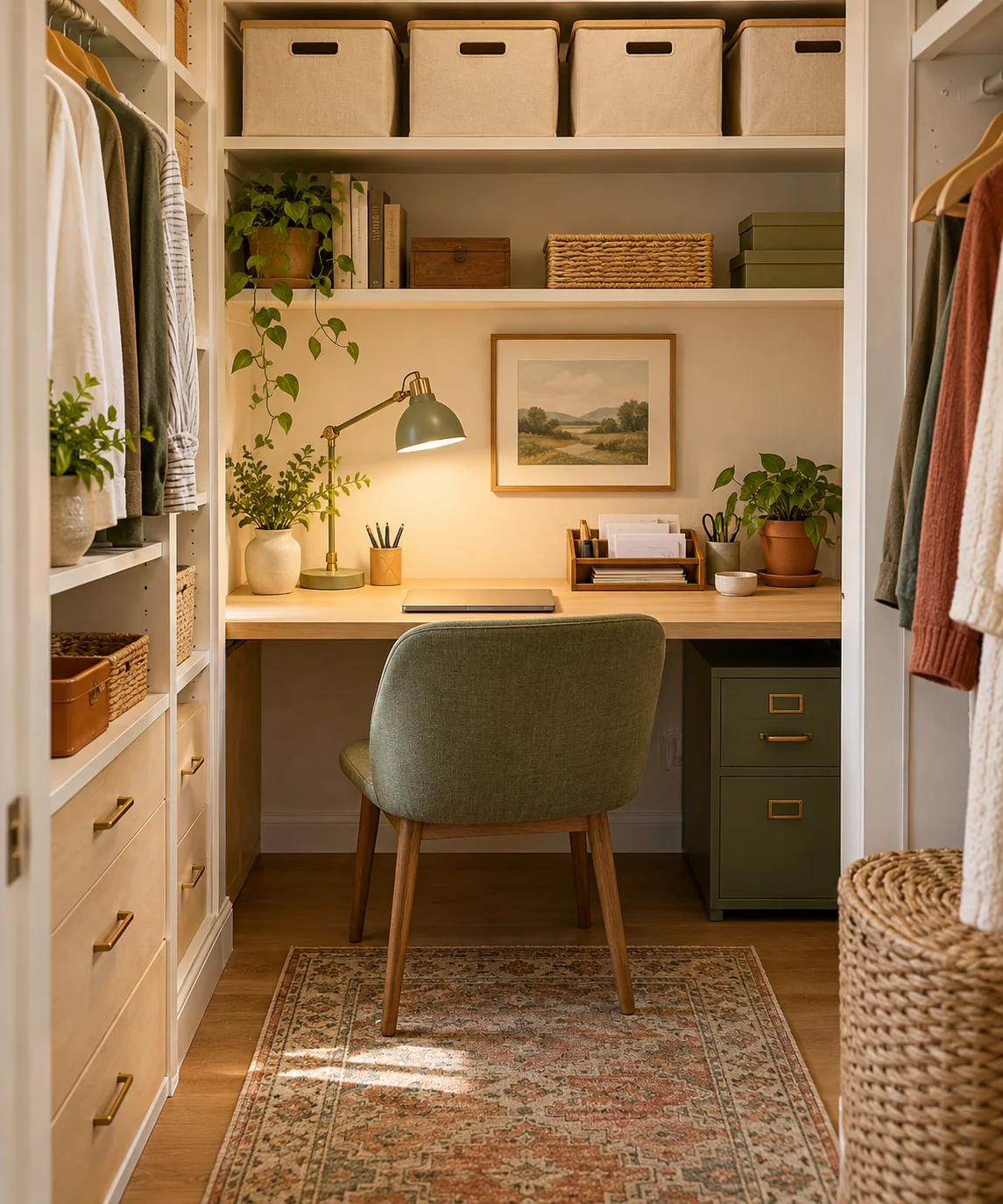
Vertical Planning and Clearance Assessment
Adapting a closet requires measuring the space against your specific seating and equipment rather than applying rigid commercial desk standards. Measure your seated elbow height while resting comfortably in your chosen chair to establish an ergonomic baseline for the primary working tier. Ensure that any secondary pull-out tier leaves adequate room for your thighs beneath it. Account for the depth and drop of existing closet shelving frames, hanging rods, and door headers. Planning clear vertical intervals between tiers ensures your display monitor, sorting bins, and task accessories fit comfortably without colliding when surfaces slide open or closed.
Worksurface Support and Dynamic Weight Limits
A sliding worksurface requires dependable hardware and a rigid substrate. Rather than fastening heavy runners directly into thin trim or unsupported paneling, inspect the closet interior to locate structural studs or evaluate the load capacity of existing built-in millwork. Consult manufacturer dynamic load ratings for any telescoping drawer glides, remembering that leaning on an extended keyboard shelf exerts rotational leverage on the fasteners. Where wall modification is restricted by lease agreements, freestanding modular shelving units sized to fit the closet cavity offer a stable, reversible alternative that carries weight directly to the floor.
Safe Lighting and Interior Power Planning
Closet interiors rarely feature dedicated electrical outlets, and standard building safety codes restrict running flexible cords or power strips across doorways where door edges can pinch and fray insulation. To illuminate deep recesses safely, utilize rechargeable, surface-mounted LED bars or battery-operated puck lights rated for enclosed closet spaces. If your closet already features a code-compliant overhead luminaire, ensure it uses fully enclosed LED fixtures to minimize heat buildup near paper files. Avoid modifying existing branch circuits or adding hardwired fixtures without a qualified electrician.
Upper Archival Storage and Weight Distribution
Upper closet shelves provide valuable utility for long-term records, but their load capacity depends on bracket spacing and wall anchors. Store inactive files, tax folders, and seasonal items in uniform, lightweight cardboard or fabric document boxes to keep visual clutter low. Distribute heavy paperwork evenly across the length of the high shelf rather than concentrating loaded archive binders in the center, which can bow standard wardrobe boards. Clearly label the front of each container so you can retrieve records without repeatedly shifting stacked boxes on step stools.
Door Swing and Retraction Clearance
The defining benefit of a closet office is the ability to conceal work materials behind closed doors. Confirm that the lower sliding leaf retracts completely behind the closet face frame before doors are shut. For hinged doors, check that inner door organizers, hanging hooks, or doorknobs do not hit desktop equipment when swinging closed. Bifold and pocket doors require clear tracks free of stray cables or paper debris. At the end of a session, tuck your chair aside, slide all movable leaves into their recessed home position, and verify the latch closes without resistance.
YOUR STARTING POINT
A little checklist.
Original editorial guidance. Images are AI-generated concepts, not photographs of completed projects. Our sources and approach.
Questions to consider
What shelf depth works best in a standard reach-in closet?
A primary desktop depth of fourteen to eighteen inches generally fits standard reach-in closets while leaving space for door hardware. Verify that your display base and paper trays fit comfortably within your available interior cavity depth.
How can I power a laptop in a closet without an existing outlet?
Charge your laptop outside the closet and operate it on internal battery power during work sessions. Avoid feeding extension cords across doorway thresholds, as doors can crush cable jackets and create fire hazards.
Can hanging clothing remain in the closet alongside the desk?
Yes, provided garments are separated from paper storage and task lighting. Use a freestanding vertical divider or install the desk within one distinct structural bay, keeping fabrics clear of movable desk parts and heat sources.