Indoor Plant Styling · THE GUIDE
Coordinate Unglazed Clay and Cream Stoneware on Open Kitchen Shelves
Open kitchen shelving offers a practical stage for marrying everyday culinary dishware with living greenery. Blending unglazed terracotta planters with smooth, cream stoneware bowls creates an organic, warm aesthetic rooted in timeless kitchen craft. The earthiness of porous clay contrasts softly against glazed ceramics, adding natural texture to utilitarian spaces. Executing this combination requires a deliberate balance between food-prep sanitation, shelf moisture management, and the specific sunlight requirements of culinary herbs. With structured layout decisions, you can showcase beautiful kitchen pottery while keeping both plants and tableware pristine and functional.
Jump to the checklist ↓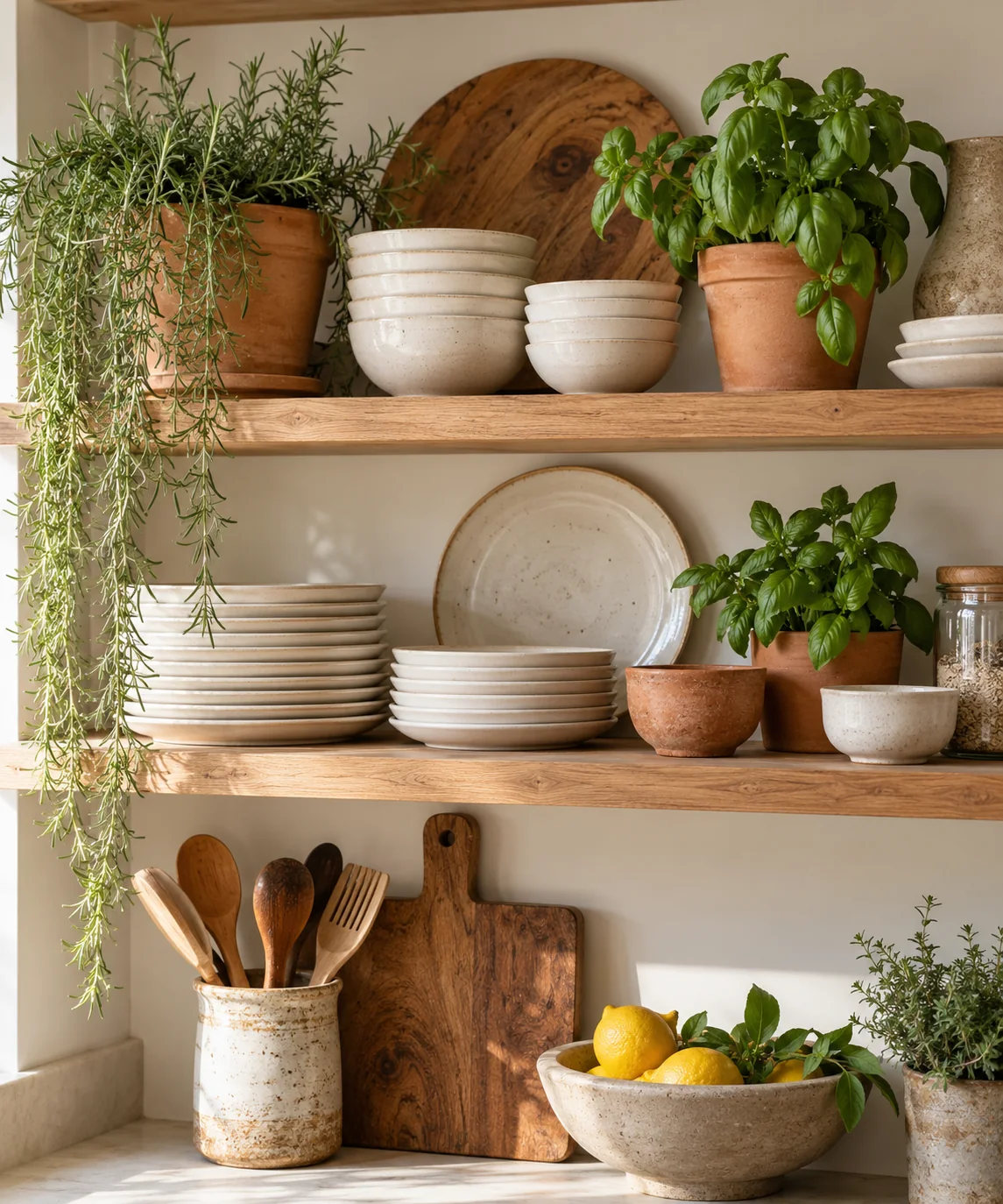
Balancing Visual Weight and Shelf Load Limits
Achieving visual balance on open kitchen shelving relies on alternating matte and glossy textures while respecting the physical weight limits of your shelving hardware. Distribute stacks of cream stoneware bowls and dinner plates across lower and mid-level shelves to keep heavier masses closer to wall supports. Intersperse unglazed terracotta planters as tonal warm accents alongside neutral dishware, rather than clustering all clay items onto a single span. Before loading shelves with dense ceramics and soil-filled pots, check the manufacturer's maximum weight rating for the brackets and wall anchors, especially on floating designs that lack vertical side brackets. Limiting planters to one or two per shelf keeps utilitarian kitchen items easily accessible without overloading fasteners.
Managing Terracotta Porosity and Surface Moisture
Raw terracotta is naturally porous, drawing moisture from potting soil and releasing it outward through pot walls. Placing an unglazed clay base directly onto sealed wood, painted surfaces, or laminate shelving can cause water rings, swelling, and persistent moisture issues. Seat terracotta containers inside glazed stoneware saucers or deep ceramic bowls with vitreous, non-porous bases. Glazed drip trays effectively isolate lingering moisture from the shelf surface while reinforcing the warm, two-tone cream and earthenware aesthetic. Check beneath saucers periodically during the initial weeks of use to confirm condensation is not collecting on shelf finishes.
Providing Adequate Light for Sun-Loving Culinary Herbs
Culinary herbs such as rosemary, basil, and thyme struggle in dim kitchen corners, requiring generous, direct light to maintain compact stems and healthy foliage. Reserve open shelving spans for live culinary herbs only if the shelving sits adjacent to an unshaded, high-exposure window where the plants receive several hours of direct daylight. If your open shelving is positioned farther back in the room or under low ambient lighting, style the shelves with shade-tolerant ornamental houseplants instead. Edible herbs can then remain on a dedicated, brightly lit window sill where their physiological light needs are properly met.
Maintaining Separation Between Soil and Tableware
Kitchen hygiene requires clear physical separation between potting soil and clean eating surfaces. Position potted plants on dedicated shelves away from immediate dishware stacks, or leave generous horizontal spacing so foliage and potting media cannot contact food prep items. Handling, pruning, or loose peat movement can shed particles onto adjacent surfaces. Storing bowls upside down or placing plants on higher open shelves above daily plates prevents falling debris from entering clean containers. When working with soil or applying liquid plant feeds, keep all tableware covered or set aside until the area is tidy.
Establishing a Practical Rotation and Cleaning Workflow
Cooking residues, moisture, and airborne oils settle on open kitchen shelving over time. Take terracotta pots down to the sink for routine watering, allowing excess water to drain through drainage holes completely before returning the containers to their display saucers. This practice keeps shelf surfaces completely dry and prevents standing water from sitting near stored dishes. Periodically wipe down both the shelf surfaces and unglazed pot exteriors with a clean, slightly damp cloth to clear accumulated dust and grease films. Rotate potted plants regularly toward available window light to encourage balanced, even growth alongside your ceramic collection.
YOUR STARTING POINT
A little checklist.
Original editorial guidance. Images are AI-generated concepts, not photographs of completed projects. Our sources and approach.
Questions to consider
Can I grow culinary herbs on open kitchen shelves away from a window?
No. Culinary herbs like basil, rosemary, and thyme require strong direct sun to survive. In low-light areas, they quickly become leggy and weak. Place shade-tolerant foliage plants on interior shelves, reserving sunny locations for culinary herbs.
How do I remove water marks if terracotta bleeds onto timber shelving?
Allow the wood to dry completely, then clean gently with a wood-safe cleaner and a soft cloth. Prevent future marks by placing dense cork pads or non-porous glazed stoneware saucers beneath all terracotta pots.
Will cooking grease damage unglazed terracotta pots?
Cooking vapors can stain porous terracotta over time. Position plants several feet away from cooktops, maintain active range hood ventilation, and wipe pot surfaces regularly with a warm, damp sponge to prevent oil buildup.