Small Kitchen Organization · THE GUIDE
Corner Countertop Wooden Tiered Shelf for Everyday Oils and Salt
Deep kitchen counter corners frequently become neglected dead zones or catchalls for random clutter. When positioned near a cooking range, this triangular pocket provides valuable staging real estate for essential ingredients if arranged with intentional verticality. A dedicated corner countertop wooden tiered shelf elevates cooking oils, salt cellars, and pepper mills, turning an awkward recess into an organized prep station. By utilizing shallow stepped tiers, cooks keep daily seasonings accessible without impeding cutting board work areas. Planning the setup requires evaluating appliance heat clearances, surface protection, and wood care for long-term kitchen tidiness.
Jump to the checklist ↓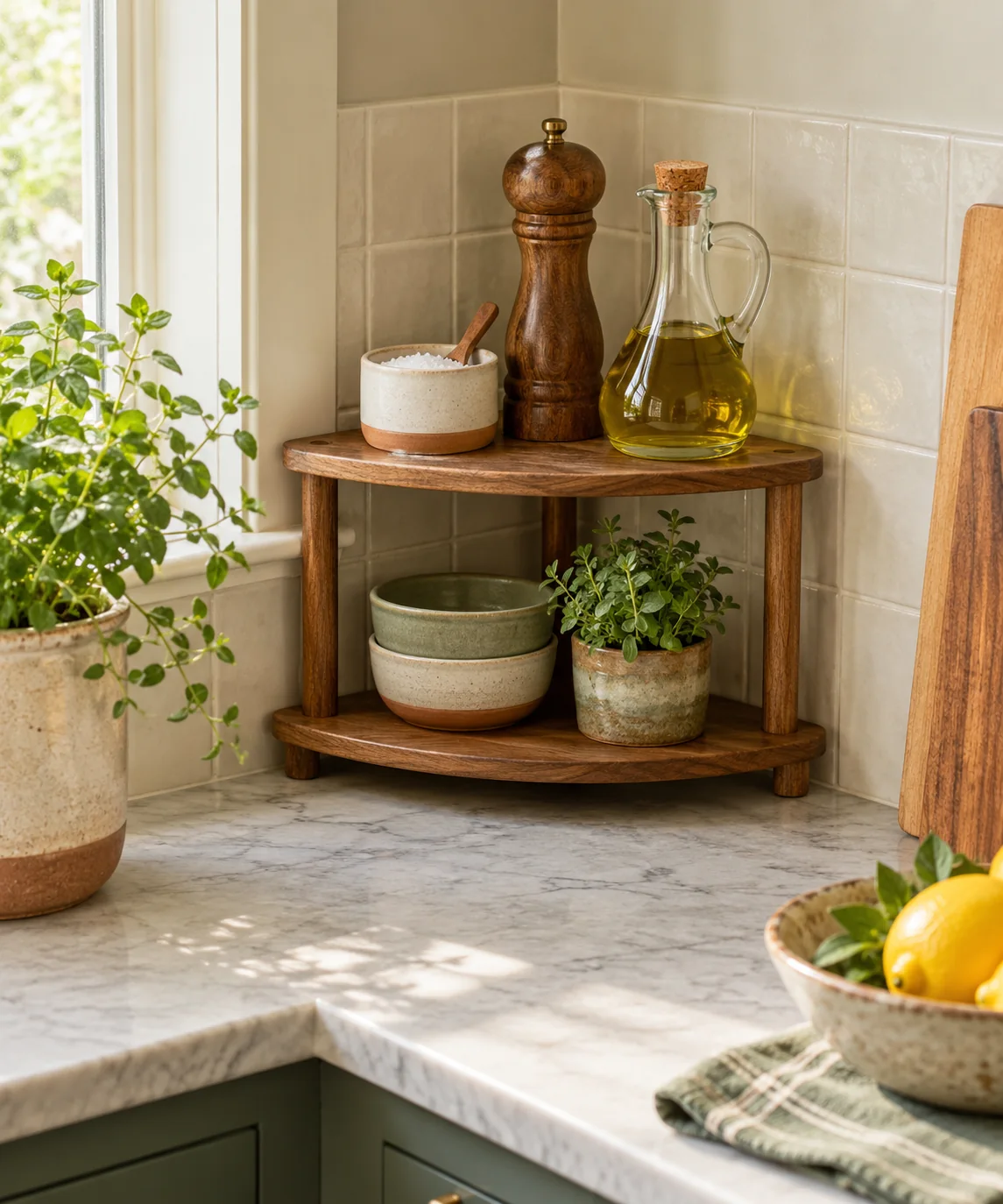
Measuring Counter Depth and Checking Appliance Clearances
Before introducing a tiered wooden organizer to a kitchen corner, assess the counter space and surrounding layout. Cooktop manufacturers and municipal fire codes specify required horizontal and vertical clearances between cooking appliances and nearby combustible items. Review your specific range manual and local regulations to determine safe setbacks, as wooden stands and stored oils should never sit in areas exposed to open flames, direct heat vents, or hot cookware overhangs. Measure depth from the corner intersection forward to ensure the organizer fits without projecting into essential prep surfaces.
Arranging Frequently Used Ingredients
Plan the tier configuration so high-turnover prep items remain within comfortable arm reach. A lower tier often accommodates frequently used salt cellars, coarse pepper mills, and daily cooking oils, while a secondary upper level can stage finishing vinegars or specialty seasonings. Grouping items by prep sequence avoids leaning over cookware to retrieve ingredients. Placing non-porous ceramic saucers or silicone pads under liquid bottles protects the wooden tiers from slow drips and residue accumulation.
Evaluating Wood Characteristics and Protective Finishes
Counters near food prep areas experience ambient steam, moisture, and occasional liquid splatters. Dense, tight-grained hardwoods such as maple, beech, or oak generally offer greater stability in kitchen environments than unsealed softwoods or porous composite boards. Ensure any purchased or selected wooden riser features a durable, water-resistant, food-contact-safe protective finish. Inspect the surface periodically to confirm moisture continues to bead rather than soak into the grain or corner joinery.
Assessing Prep Flow and Physical Reach
Before settling on a fixed organizer footprint, evaluate your daily prep routine and physical reach. Positioning mock containers or using low-tack tape to mark the proposed base helps verify that your prep cutting board, knife motion, and mixing bowls maintain clear clearance. A tiered shelf should allow you to lift taller oil dispensers or grinders cleanly out of their slots without brushing against the undersides of wall cabinets or risking collisions with nearby pots.
Routine Surface Cleaning and Timber Care
Airborne grease and everyday dust naturally settle on exposed countertop surfaces, particularly in corner areas. Clean the wooden tiers regularly using a soft cloth lightly dampened with warm water and a mild, neutral dish detergent, drying the wood immediately with a clean towel. Avoid abrasive scrubbers, harsh degreasers, or prolonged moisture exposure that could degrade protective coatings. Reapply manufacturer-recommended food-grade mineral oil or conditioning wax according to the product care guidelines.
YOUR STARTING POINT
A little checklist.
Original editorial guidance. Images are AI-generated concepts, not photographs of completed projects. Our sources and approach.
Questions to consider
How close can cooking oils and wooden organizers sit near a range?
Clearances depend strictly on cooktop specifications, burner heat output, and local building or fire codes. Always consult the appliance manufacturer manual for mandatory spacing from combustible materials, and position oils far enough from heat sources to avoid thermal degradation.
How can you protect a wooden corner shelf from oil absorption?
Use decanters fitted with reliable pour spouts to limit drips, and place washable silicone or ceramic coasters beneath each bottle. Clean any accidental spills promptly with a damp cloth and mild soap before liquids penetrate the finish.
What are the advantages of a corner-shaped organizer over a rectangular riser?
A corner-angled profile aligns flush against converging wall surfaces, utilizing recess depth without extending awkwardly forward into central chopping and prep areas.