Container Vegetable Gardens · THE GUIDE
Corner Tiered Plant Stand for Bush Beans and Herbs
Balcony corners are often underutilized areas where standard rectangular tables or broad planters may interrupt walkways or exterior doors. A freestanding quarter-circle tiered plant stand can adapt an open ninety-degree intersection into an organized vertical garden without permanently modifying the floor or adjacent walls. By stepping upward across progressive levels, tiered corner stands expose multiple containers to incoming natural light while grouping productive edible crops in a compact footprint. Combining self-supporting bush beans with culinary herbs such as sweet basil and thyme provides fresh kitchen produce, provided overall structural limits, container weights, and localized sunlight conditions are evaluated carefully before planting.
Jump to the checklist ↓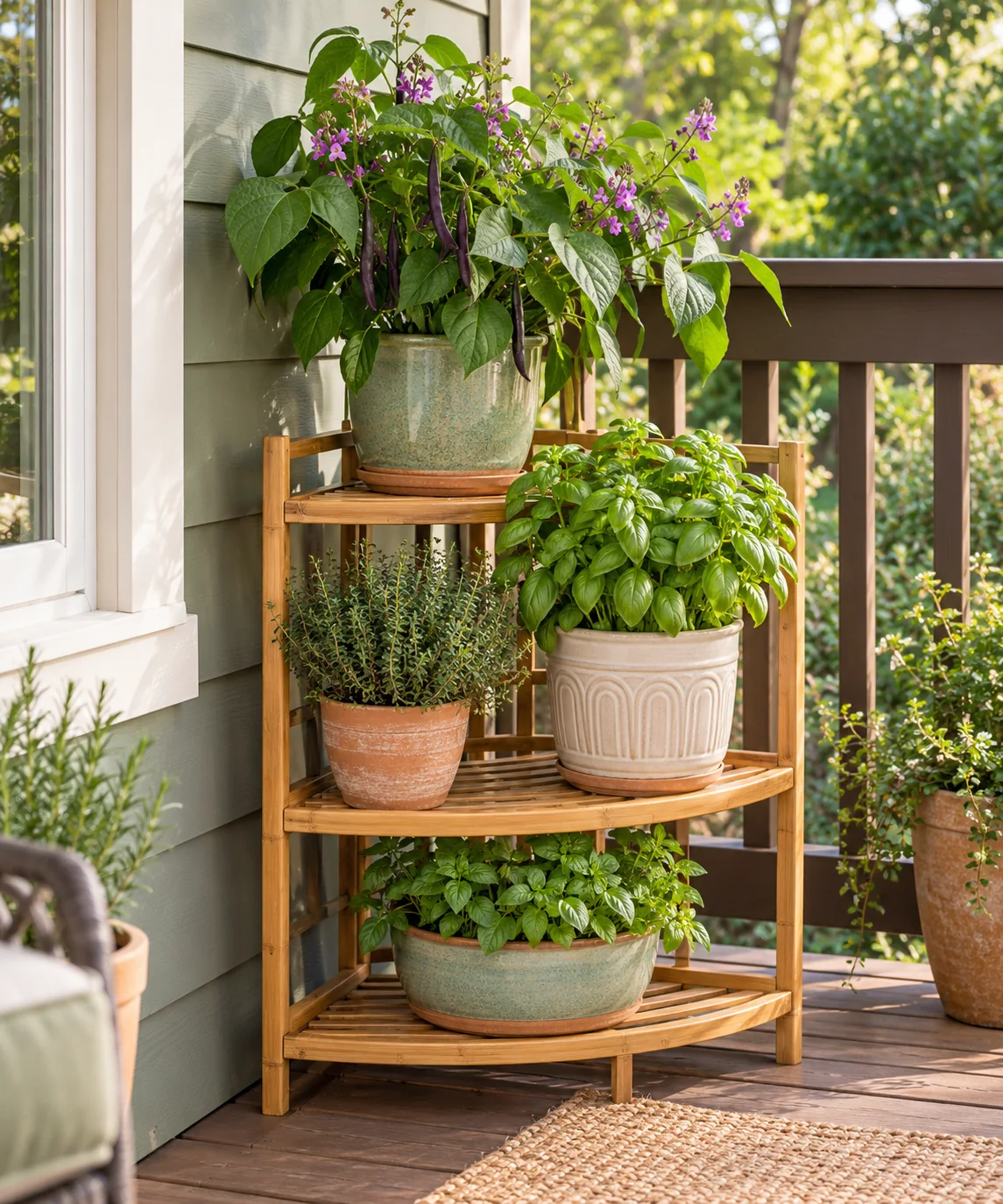
Selecting Sturdy Quarter-Circle Outdoor Shelving
Freestanding plant stands must withstand outdoor moisture, sun exposure, and the cumulative weight of wet potting media and containers. Look for stands made from powder-coated metal, rot-resistant wood like cedar, or weather-sealed composite materials rated explicitly by the manufacturer for outdoor use. Check the manufacturer's total and per-tier weight capacities before purchasing. Because wet potting soil, water reservoirs, and earthenware or plastic containers accumulate significant mass, always consult your building rules, lease terms, or a qualified professional regarding balcony floor load limitations rather than relying on stand position or visual inspection alone. Ensure the unit rests on a stable, level surface where it will not wobble or tip during wind gusts.
Organizing Crops by Height and Light Needs
Tiered shelving allows container gardeners to arrange plants according to their natural habit and sun exposure needs. Sweet basil and thyme thrive with generous direct sunlight and benefit from placement on upper or outward-facing tiers where taller neighbors will not cast persistent shadows. Bush bean varieties generally maintain a compact, self-supporting form compared to pole beans, but their spreading foliage still requires ample room. Placing wider bean pots on lower or middle tiers keeps the center of gravity closer to the ground, improving physical stability while ensuring leafy bean canopies do not block light from smaller herb pots below.
Container Sizing for Bush Beans and Herbs
Selecting the right container size directly influences root volume, watering frequency, and stand balance. Bush beans develop moderately deep root networks and generally perform best in containers that provide adequate volume without exceeding shelf depth limits. Thyme and basil tolerate shallower, moderately sized pots, making them suitable for upper levels. Always measure the usable depth and width of each tier to ensure every pot base sits completely flat on the shelf surface without overhanging edges. Overhanging containers create tripping hazards, risk shifting in strong wind, and place uneven mechanical strain on individual shelf slats or frame connections.
Watering Logistics and Runoff Management
Watering vertically arranged containers requires attention to runoff to prevent nutrient-rich moisture from cascading onto foliage or deck surfaces below. Equip every container with its own drainage saucer or tray to capture excess water before it drains onto lower tiers. Using a watering can with a targeted, narrow spout allows precise soil application without wetting upper leaves, which reduces the potential for fungal problems. Check saucers after watering and empty stagnant runoff to avoid waterlogged root zones. Elevated slatted shelving promotes drainage under pots, but moisture should never be permitted to puddle against balcony walls or structural decking.
Airflow, Clearances, and Routine Care
Balcony corners often receive less natural air movement than open railings, creating microclimates where humidity and heat can linger. Position the stand with enough gap from exterior walls to allow ambient air to circulate freely around foliage and behind the frame, following any building clearance guidelines. Periodically turn smaller herb containers to encourage balanced leaf growth and avoid one-sided stretching toward the light source. Routine care includes harvesting outer bean pods as they mature, trimming basil stems before they flower to sustain vegetative growth, and checking the stand frame periodically for signs of loose fasteners or structural wear.
YOUR STARTING POINT
A little checklist.
Original editorial guidance. Images are AI-generated concepts, not photographs of completed projects. Our sources and approach.
Questions to consider
Can bush beans be grown reliably in containers on a plant stand?
Yes, compact bush bean varieties are well-suited to container culture because they do not require tall trellises or stakes. Providing containers with sufficient root volume and good drainage on sturdy lower tiers allows them to produce reliable crops without top-heavy tipping risks.
How much direct sunlight do potted herbs and beans need on a balcony?
Both bush beans and sun-loving culinary herbs like sweet basil and thyme perform best when receiving several hours of direct, unfiltered light daily. Track your balcony corner’s sun patterns across the day to ensure surrounding walls or overhead eaves do not block necessary exposure.
How can I maintain an outdoor wooden or metal tiered plant stand?
Follow the stand manufacturer's maintenance recommendations. Clean debris and pooled water from shelves periodically, inspect structural joints and hardware seasonally for tightness or corrosion, and use protective drip trays beneath pots to prevent prolonged moisture contact with shelf surfaces.