Warm Neutral Living Rooms · THE GUIDE
Corral Living Room Clutter with a Floor-Standing Woven Seagrass Basket
Living rooms easily accumulate casual clutter throughout the day, particularly loose sofa throws, spare accent pillows, and reading materials. Without an intuitive storage spot, these items end up piled on sofa arms or tossed over chair backs, disrupting the calm of a neutral living area. A floor-standing woven seagrass basket provides a functional, textured receptacle that simplifies daily tidying. By utilizing durable plant fibers and an open-top design, you establish an effortless drop zone right beside seating. This guide reviews size selection, fabric protection, placement safety, and fiber care.
Jump to the checklist ↓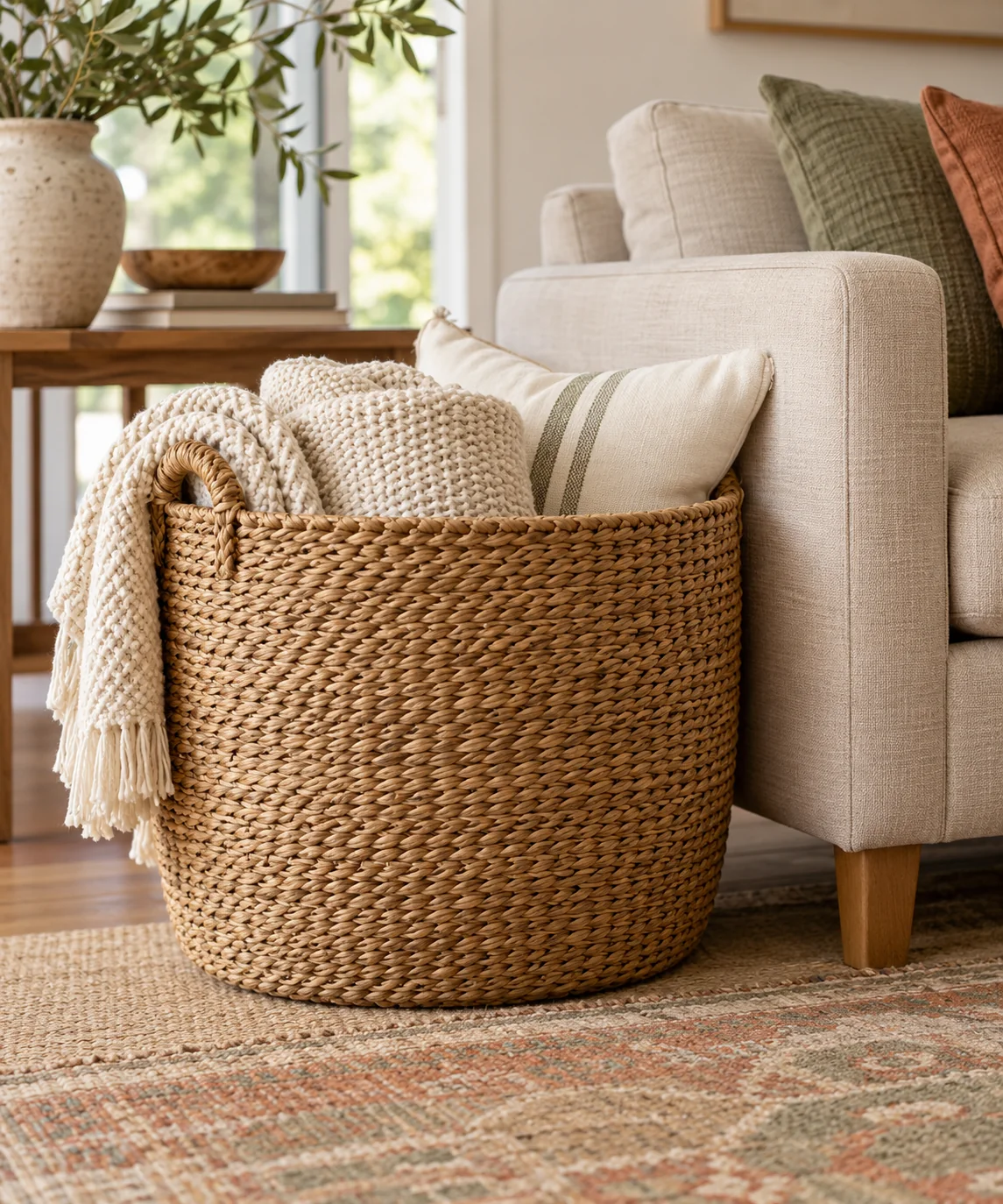
Choosing Dimensions and Basket Proportions
Select a seagrass basket that aligns with the scale of your sofa arm. A basket measuring approximately fourteen to eighteen inches in diameter and roughly sixteen inches in height accommodates two rolled blankets and an accent pillow without tipping easily. Choose models that remain level with or lower than the sofa arm cushion to keep reaching down comfortable and maintain visual balance. A broad, flat circular or oval base provides better physical stability when dropping heavy blankets inside during quick cleanups.
Placement Logistics and Traffic Clearance
Position the basket directly adjacent to the sofa end or nestled between the couch frame and a side table. Keep the container situated outside primary circulation routes so household members can walk past without catching footwear on the woven handles or base. Ensure the basket does not block access to wall outlets, return grilles, or floor vents that require open airflow. If your sofa features elevated legs, resting the basket alongside the corner frame utilizes floor space while keeping textiles within arm's reach.
Preventing Snags and Protecting Textiles
Natural woven seagrass features an appealing organic texture, but loose fiber ends can occasionally catch on delicate knit blankets, embroidered linens, or loose-weave fabrics. Inspect the interior of the basket before loading it, carefully trimming any stiff, protruding reed ends flush with small snips. For delicate knits, insert a fitted, washable cotton liner or place a smooth canvas cloth along the inner floor and sides. Storing throws neatly rolled rather than jammed inside minimizes friction against the woven reed surfaces.
Floor Protection and Fiber Care
Unsealed natural basket bottoms can abrade delicate polyurethane or wax finishes on hardwood floors over time. Place an adhesive felt pad or thin cork sheet beneath the basket base to buffer the contact surface when shifting the container during regular cleaning. Keep the basket situated away from direct heat registers, baseboard heaters, or radiators, as concentrated warm airflow can cause dried plant fibers to turn brittle and split prematurely over extended periods.
Establishing an Intuitive Tidy Routine
An open floor basket functions effectively because it introduces minimal friction when putting items away at the end of the evening. Fold throws into long vertical strips and loosely roll them before setting them upright in the basket. This vertical arrangement keeps every blanket visible and individually accessible so anyone can lift one out without disturbing the surrounding layers. Reserve the basket exclusively for clean textiles to keep household paperwork, small toys, and stray electronics from migrating into the storage container.
YOUR STARTING POINT
A little checklist.
Original editorial guidance. Images are AI-generated concepts, not photographs of completed projects. Our sources and approach.
Questions to consider
How do I remove dust from a woven seagrass basket?
Vacuum the woven crevices every few weeks using a soft brush attachment. Alternatively, take the empty basket outdoors and tap the bottom gently to dislodge trapped lint and dust particles.
What can I do if the seagrass basket arrives slightly misshapen?
Lightly dampen the fibers using a fine water spray bottle, gently reshape the walls with your hands, and stuff the interior tightly with dry towels until the seagrass dries into form.
Can seagrass baskets be used on heated floors?
Radiant floor heating can dry out natural reeds over time. Place a dense felt trivet or thick protective mat beneath the basket to insulate the grass fibers from continuous direct heat.