Bookshelf Styling · THE GUIDE
Corral Loose Office Supplies on Open Shelves with Seagrass Trays
Open shelving in a home workspace frequently devolves into visual chaos when small office essentials like clips, pens, and notepads are left loose. Shallow woven seagrass trays provide an organic, textured container that groups scattered tools into distinct, styled units. By setting physical boundaries for tiny desk accessories, you eliminate surface drift while keeping frequently needed supplies accessible. Combining the rich fiber tones of woven grass with structured rows of bound volumes balances utilitarian workstation demands with refined bookshelf aesthetics, creating an organized, functional, and visually cohesive environment.
Jump to the checklist ↓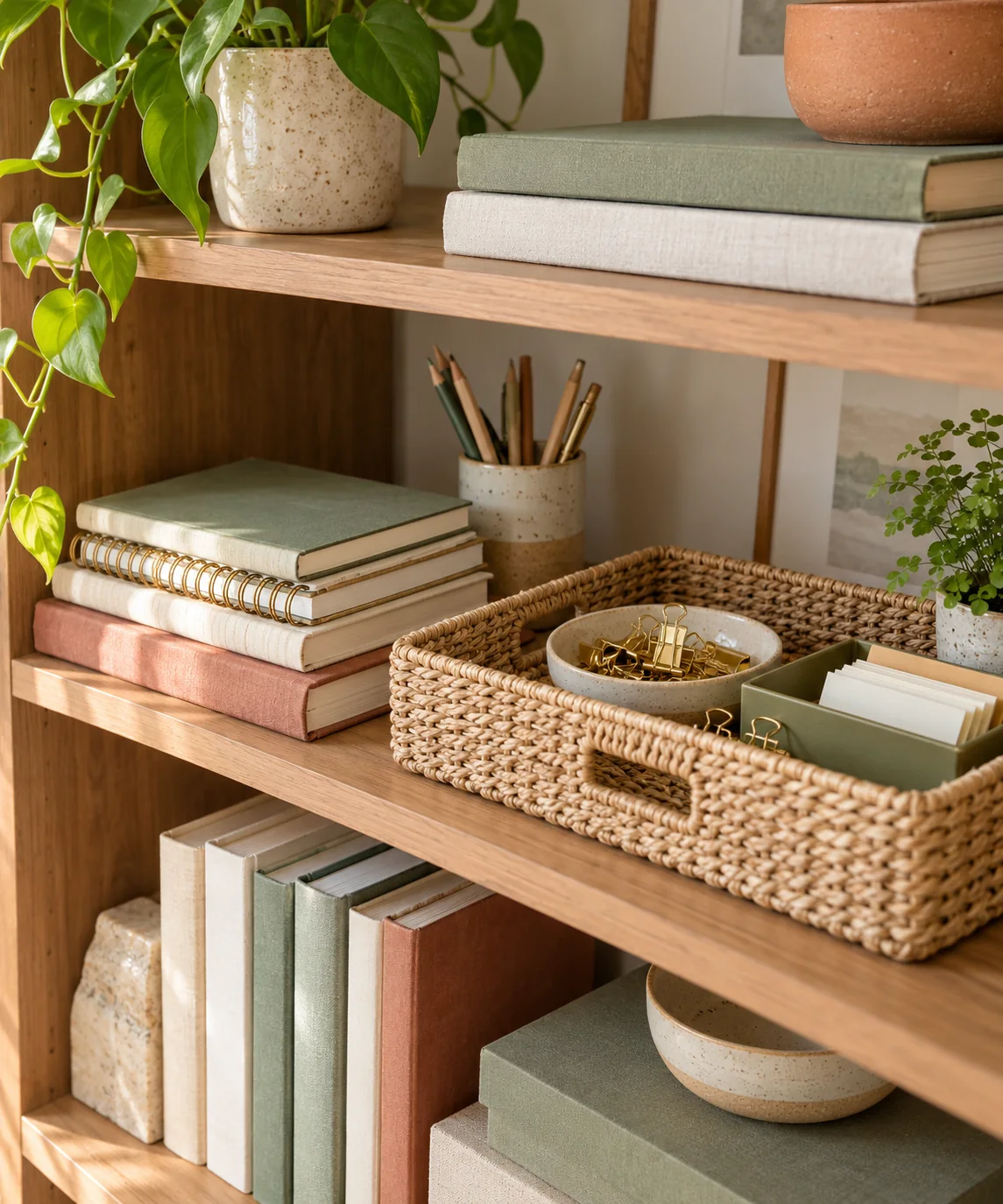
Selecting Tray Dimensions and Proportions
Choose shallow seagrass trays with sturdy, wire-reinforced structures and low outer rims. A low-profile rim keeps supplies accessible without requiring you to lift the entire tray off the shelf whenever you need an eraser or paperclip. Measure shelf depth and vertical clearance prior to purchasing; placing the tray comfortably inside the shelf perimeter prevents items from snagging on sleeves when walking past, while leaving ample headroom makes retrieving pens and tools straightforward.
Categorizing Small Work Essentials
Organize small supplies into clear functional categories before arranging them in the tray. Petite internal containers, such as repurposed ceramic dishes, small metal tins, or divided inserts, keep pushpins, binder clips, and erasers from sliding together across the woven bottom. Align writing tools in parallel arrangements rather than piling them loosely. Leaving modest breathing room around individual items keeps the tray functional and prevents it from turning into an untidy catch-all.
Integrating Trays Beside Bound Volumes
Position the woven tray alongside upright books or small stacks of notebooks to introduce contrasting textures onto the shelf. The woven texture of natural seagrass provides visual warmth against smooth paper spines and cloth-bound covers. Placing the tray on the side of the shelving unit closest to your seating area allows for convenient reach, while counterbalancing it with horizontal notebooks or reference volumes on the opposite side helps distribute visual weight evenly across the shelf tier.
Maintaining Woven Fibers and Shelf Surfaces
Natural plant fibers tend to collect ambient room dust between the woven cords over time. Clean the tray periodically by removing the contents and gently brushing the interior weaves with a soft, dry bristle brush or using a vacuum wand with a dusting attachment. Avoid damp cloths or liquid cleaning solutions, as excess moisture can linger in densely twisted grasses, potentially causing discoloration, mold growth, or moisture transfer to wood shelving surfaces underneath.
Understanding Storage Limitations
Recognize the practical limitations of shallow, open basket storage on display shelving. Unlined seagrass trays are best reserved for clean, dry, and frequently handled implements. They are ill-suited for loose, uncontained liquids, fountain pen inks, or uncapped markers that could permanently stain absorbent natural reeds. For surplus stock, extra printer cables, or sensitive documents, opt for closed storage boxes, reserving the open tray for curated daily items that benefit from immediate visibility.
YOUR STARTING POINT
A little checklist.
Original editorial guidance. Images are AI-generated concepts, not photographs of completed projects. Our sources and approach.
Questions to consider
Can I use seagrass trays on painted white shelves without scratching?
Seagrass fibers have a slightly rough texture that can scuff painted surfaces when slid repeatedly. Attach small felt pads or adhesive clear silicone bumpers to the bottom corners of the tray frame to protect the paint.
How do I prevent the seagrass from drying out and cracking?
Keep natural woven baskets away from direct heat sources like baseboard radiators or direct midday sun. Normal indoor humidity is generally sufficient; never spray oils, polishes, or excessive water onto natural woven grass storage.
What is the best way to store tall pens inside a shallow tray?
Lay writing instruments flat in parallel rows along one side of the tray. This preserves the low visual profile and prevents pens from tipping over the shallow rim, maintaining a clean, intentional workspace aesthetic.