Pantry Organization · THE GUIDE
Corral Odd-Shaped Dried Goods in Cohesive Paper-Fiber Storage Cubes
Commercial snack packaging comes in irregular foil bags, cardboard cartons, and crinkly plastic wrappers that create visual chaos on pantry shelves. Because these packages cannot easily stack or stand upright independently, they slump over and slide behind other items. Opaque paper-fiber storage cubes provide an orderly barrier that hides graphic labeling and uneven shapes while maintaining immediate accessibility. By consolidating awkward bags into uniform, neutral bins, you establish clean sightlines across open pantry shelving. This organizational approach preserves original packaging and nutrition labels without requiring delicate dry goods to be decanted into rigid containers.
Jump to the checklist ↓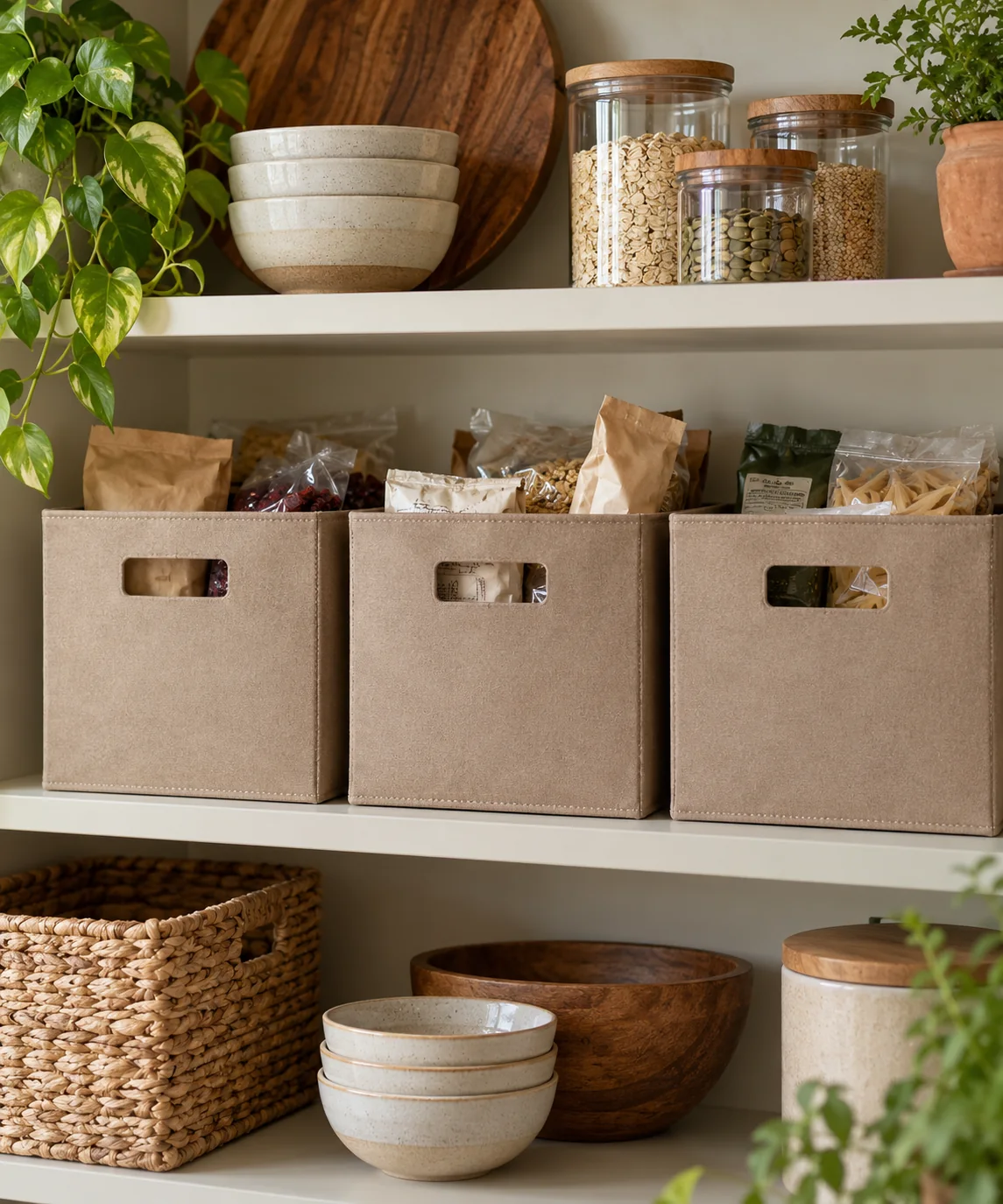
Assessing Shelf Clearance and Bin Dimensions
Before purchasing paper-fiber cubes, measure the vertical shelf clearance and depth. Account for the shelf lip and allow at least 2 inches of overhead space above the cubes so bags can slide out smoothly without scraping the shelf above. A standard shelf depth of 12 to 14 inches accommodates 10- to 11-inch square or rectangular bins comfortably. Check that the bins do not hang past the front edge, which can destabilize the containers and impede door swing in enclosed pantries.
Testing Capacity with Existing Containers
To confirm how many cubes you need, gather cardboard delivery boxes or shoe boxes of comparable size and stage them on your pantry shelf. Group your bagged snacks, such as potato chips, pretzels, and microwave popcorn boxes, into these mock bins. This trial run reveals whether family-sized bulk bags fit vertically or if they demand wider dimensions. Staging items temporarily prevents overbuying and ensures you assign appropriate space for snacks before committing to a specific bin material.
Sorting Snacks by Consumption Frequency
Organize dry items logically across the cubes rather than mixing heavy and fragile bags together. Reserve one cube for delicate, air-filled chip bags standing upright to prevent accidental crushing. Use a second cube for sturdy boxes of crackers and popcorn packets, and a third for opened pretzel bags sealed with clips. Position the most frequently used cube at arm level. Keeping similar product types grouped together speeds up daily meal prep and inventory checks while preserving snack texture.
Maintaining Paper-Fiber Bins and Cleanliness
Paper-fiber cubes offer sturdy, lightweight structure, but they require dry maintenance because moisture weakens woven paper cords or pressed fiberboard. Never wash these bins with running water or wet sponges. Instead, clean the interior periodically by tipping out loose crumbs over a trash can and wiping the inner lining with a dry microfiber cloth. If crumbs settle into bottom seams, use a handheld vacuum with a soft brush attachment. Ensure all internal snack bags are tightly clipped to prevent grease leaks.
Understanding Limitations and Ventilation
While opaque bins conceal clutter effectively, completely hiding contents can lead to forgotten food if bins become bottomless catch-alls. To avoid waste, enforce a single-layer vertical filing system where tops of bags remain visible upon peering into the bin. Avoid packing bins so tightly that airflow is restricted in humid pantries, and keep paper bins away from any damp exterior pantry walls. If pests or grease are persistent issues in your home, consider that paper fiber offers less barrier protection than metal.
YOUR STARTING POINT
A little checklist.
Original editorial guidance. Images are AI-generated concepts, not photographs of completed projects. Our sources and approach.
Questions to consider
How do I prevent small items from vanishing inside deep cubes?
Store taller snack bags along the rear and place smaller packages, such as single-serve dried fruit packs or snack bars, upright near the front edge. Avoid stacking items on top of one another to maintain visibility.
Can paper-fiber bins hold heavy canned goods or jars?
These bins are designed primarily for lightweight dry packaging like chip bags and cracker boxes. Heavy canned goods or glass jars can bow the fiber base, distort the bin shape, and cause premature wear along the seams.
Do paper-fiber cubes attract pantry pests?
Paper fiber does not naturally attract pests, but unsealed food debris inside the bins can invite insects. Always clip open bags tightly and vacuum crumbs regularly to maintain a clean, pest-free storage environment.