Small Kitchen Organization · THE GUIDE
Countertop Bread Box with Built-In Cutting Board Lid
Bulky bakery loaves and partially sliced sandwich rounds quickly clutter scarce counter space in small kitchens, while standalone bread boards consume dedicated drawer space. A modern countertop bread bin equipped with an integrated wooden cutting board lid consolidates storage and prep into a single modest footprint. By concealing baked goods inside a ventilated container and utilizing the rigid cover as an immediate carving surface, you protect bread from premature staling while preserving valuable work space. Thoughtful placement and sensible board maintenance keep this multi-functional storage piece both hygienic and effortlessly functional.
Jump to the checklist ↓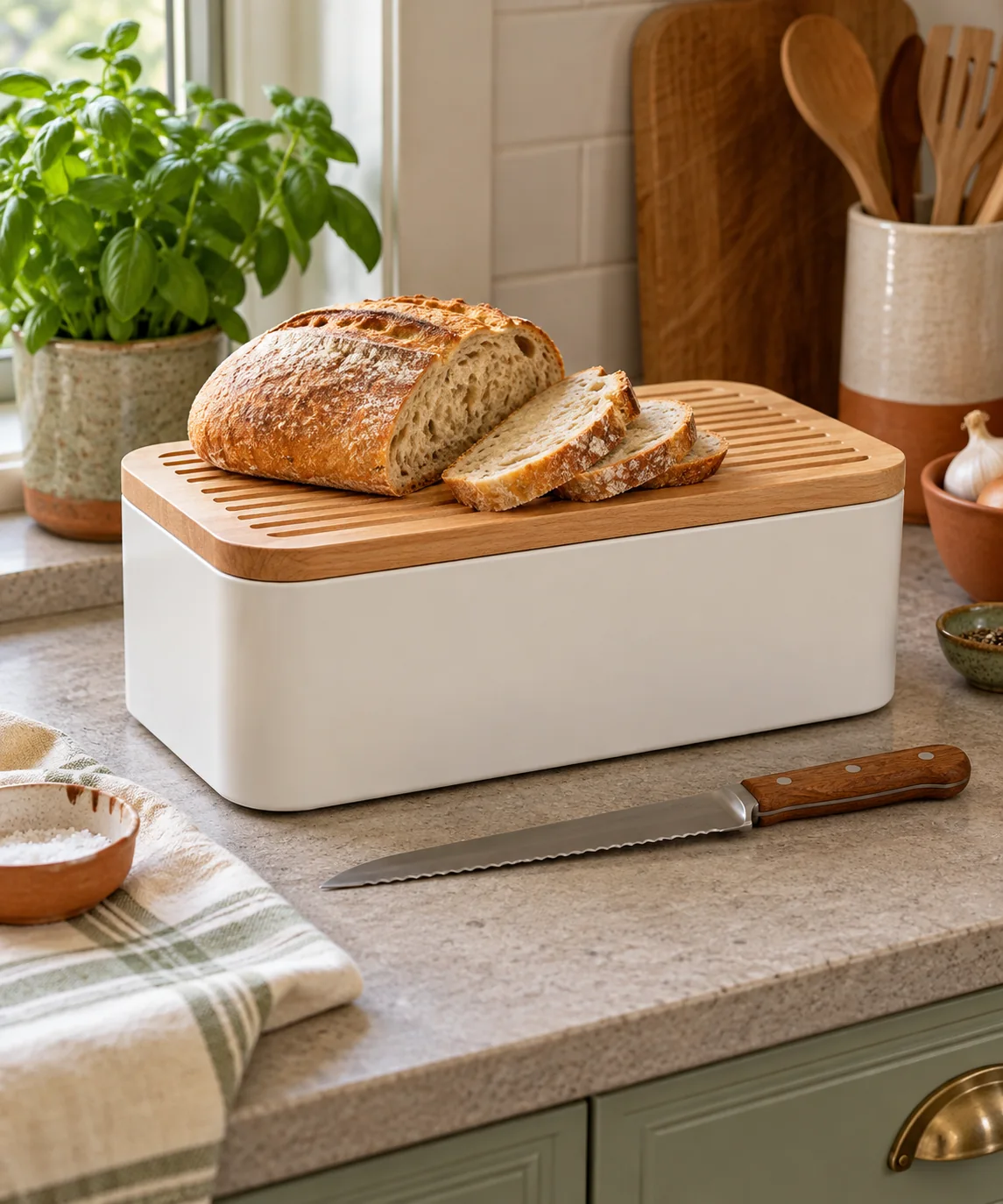
Footprint and Vertical Clearance Planning
Before selecting a dual-purpose bread container, measure the clearance beneath your upper kitchen cabinets. Most bins measure roughly twelve to fifteen inches wide and eight to ten inches deep. Ensure you have at least eight vertical inches of open airspace above the closed box so you can lift away the wooden lid without scraping cabinet moldings. If counter space is scarce, place the box directly adjacent to your toaster to establish an efficient, localized breakfast prep hub.
Airflow and Crumb-Catching Grooves
Unlike plastic bags that trap humidity and accelerate mold, or open air that dries out the crumb, a proper bread bin maintains balanced internal air exchange. Look for boxes featuring discreet ventilation holes along the rear or side panels. The underside of the wooden lid typically features recessed horizontal channels. When flipped over for slicing, these precise grooves trap loose breadcrumbs, preventing them from scattering across your clean countertops and making crumb disposal straightforward.
Managing Daily Workflow and Retrieval
Using the lid as a prep board alters your slicing sequence slightly. Remove the lid completely and place it flat on the counter next to the open box rather than attempting to slice bread resting across the rim. Cut your required slices using a serrated bread knife, slide the loaf back inside the bin, tap the board's crumb channels over the sink, and replace the cover. This simple sequence keeps the container stable and crumbs out of the interior.
Simulating Space with Existing Cutting Boards
Confirm whether your counter can comfortably accommodate a bread box by testing the footprint first. Lay an existing bread cutting board with similar exterior dimensions flat on your chosen counter area for three days. Observe whether the occupied surface interferes with meal assembly, appliance cords, or mixing bowl clearance. If the space feels constricted, you may need to relocate small appliances before committing to a permanent countertop bread station.
Wood Conditioning and Interior Sanitizing
The cutting board lid requires regular upkeep to avoid drying, warping, or absorbing bread moisture. Treat the raw beech or bamboo surface every few months with food-grade mineral oil, applying a thin sheen and buffing away the excess. Never submerge the wooden lid in water; instead, wipe it clean using a damp cloth after each use. Empty stray crumbs from the metal or ceramic bin interior weekly to discourage pantry pests and maintain clean storage.
YOUR STARTING POINT
A little checklist.
Original editorial guidance. Images are AI-generated concepts, not photographs of completed projects. Our sources and approach.
Questions to consider
Can I store warm, freshly baked bread inside the bread box?
No. Allow fresh loaves to cool completely to room temperature before placing them inside. Storing warm bread releases steam that condenses against the cool bin walls, which creates moisture pockets and accelerates mold development.
Will a bread box keep store-bought sandwich bread fresh?
Yes, but keep commercial sandwich bread wrapped loosely in its original bag inside the bin. The box buffers against temperature swings, while the bag preserves the high moisture content required for commercial sliced loaves.
How do I remove oily residue or stains from the wooden lid?
Scrub the board surface lightly using a paste of baking soda and water, wipe clean with a damp towel, and dry immediately. Reapply food-grade mineral oil once the wood is completely dry to restore its barrier.