Kitchen Herb Gardens · THE GUIDE
Countertop Cloche Microclimate for Starting Tender Cilantro
Starting delicate cilantro seeds on an active kitchen island often exposes delicate sprouts to rapid moisture loss from ambient cooking drafts and climate control airflow. Cilantro requires steady surface humidity during its initial germination phase before demanding vigorous air exchange and strong light as foliage emerges. Utilizing a clear glass bell cloche fitted with an adjustable top vent over a sturdy stoneware base provides a controlled microclimate. This setup protects the soil surface from drying into a crust, stabilizing the germination environment while preserving a clean, reversible footprint on meal preparation surfaces.
Jump to the checklist ↓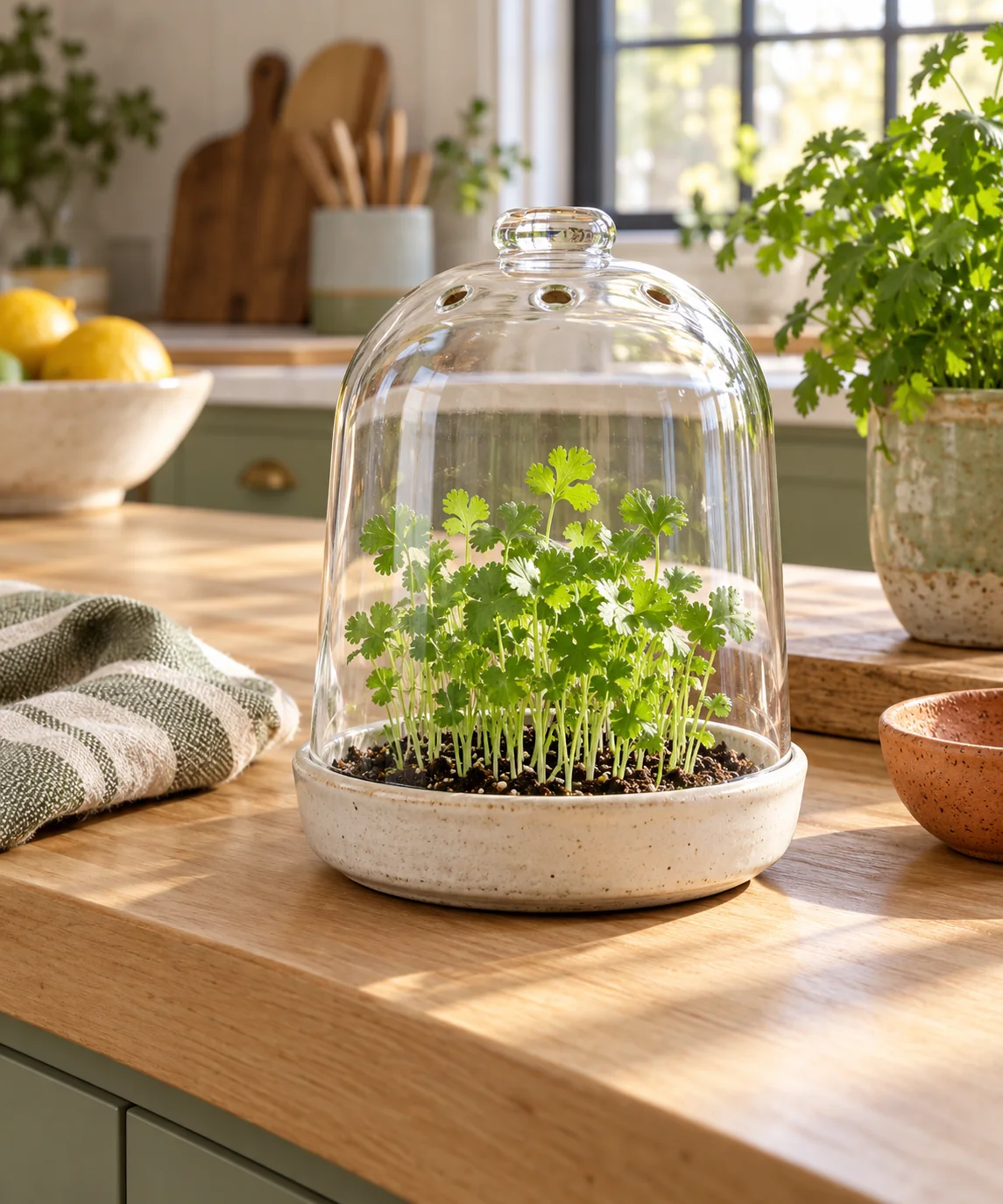
Buffer Against Kitchen Air Movement
Central kitchen islands frequently sit in the direct cross-path of ceiling fans, HVAC vents, and range hood exhaust currents. These air patterns dry out seed starting media rapidly, preventing cilantro seeds from breaking their outer husks. A vented glass cloche creates a localized boundary layer that shields the substrate from moving air currents. By reducing evaporation, the cloche ensures the top half-inch of soil maintains uniform dampness without requiring constant misting that could disturb delicate root structures.
Ventilation and Humidity Regulation
Excessive, stagnant humidity under an unvented dome encourages fungal damping-off, which collapses young cilantro stems overnight. Select a cloche featuring integrated top ventilation holes or an adjustable brass damper. If using an unvented glass bell, insert two small wooden craft picks between the stoneware base and the glass rim to maintain a continuous lower air gap. The interior glass should show light misting, but heavy water droplets running down the glass indicate an urgent need for increased airflow.
Stoneware Base Selection and Protection
Use a glazed stoneware saucer or shallow ceramic dish with a defined lip to capture the cloche rim cleanly. Stoneware offers thermal mass, moderating slight temperature swings on cold countertops overnight. Verify that the bottom of the ceramic vessel is fully glazed or apply self-adhesive felt disks to the base. This barrier prevents moisture condensation from sweating through porous clay, protecting solid butcher block or quartz island counters from long-term water discoloration.
Managing Sunlight and Heat Build-Up
Direct southern sunlight shining through an enclosed glass cloche generates rapid heat accumulation that can cook tender cilantro sprouts in hours. Cilantro prefers cool root temperatures and bolts quickly under heat stress. Keep the covered dish in bright, indirect light until the seed leaves fully emerge from the soil. Once green cotyledons appear, remove the cloche entirely and move the seedlings into direct, strong sunlight to promote sturdy, non-elongated stem development.
Hardening Off Sprouted Stems
Wean cilantro seedlings off their protected microclimate systematically over three days. On day one, open the cloche vent completely to drop humidity levels. On day two, prop the cloche up halfway for daylight hours and replace it loosely at night. By day three, remove the glass cover completely so the foliage develops strong cell walls capable of withstanding normal household airflow. Maintain soil moisture carefully as the exposed container dries faster.
YOUR STARTING POINT
A little checklist.
Original editorial guidance. Images are AI-generated concepts, not photographs of completed projects. Our sources and approach.
Questions to consider
Can I leave the cloche on mature cilantro plants?
No. Mature cilantro needs dry, freely circulating air and strong sun. Trapping mature foliage inside a cloche creates excessive humidity that promotes powdery mildew, stem rot, and premature flowering, destroying the herb's delicate flavor.
How often should I water seedlings under a glass cloche?
Water only when the surface soil begins to lighten in color. Because the dome traps evaporating moisture, the potting mix stays damp significantly longer than open seed trays, often requiring water only every few days.
Why did my cilantro seedlings develop fuzzy white mold?
White mold indicates poor air circulation and excessive humidity. Remove the cloche immediately, increase airflow across the soil, scoop away visible surface fungal growth, and allow the top layer of potting mix to dry out slightly.