Entryway Organization · THE GUIDE
Create a Backdoor Mudroom Zone for Gardening Footwear
Secondary entryways connecting back gardens to domestic interiors frequently collect soil, dried leaves, and damp dirt. Without a designated boundary, yard debris travels rapidly through hallways and living spaces. Establishing a practical mudroom zone at the threshold separates working garden apparel from routine domestic life without requiring built-in structural carpentry. By positioning shallow trays, dedicated footwear holders, and breathable utility hooks along the immediate entry path, you preserve indoor floor cleanliness. Careful planning around door swings and clearance ensures the backdoor remains functional while containing muddy footwear efficiently.
Jump to the checklist ↓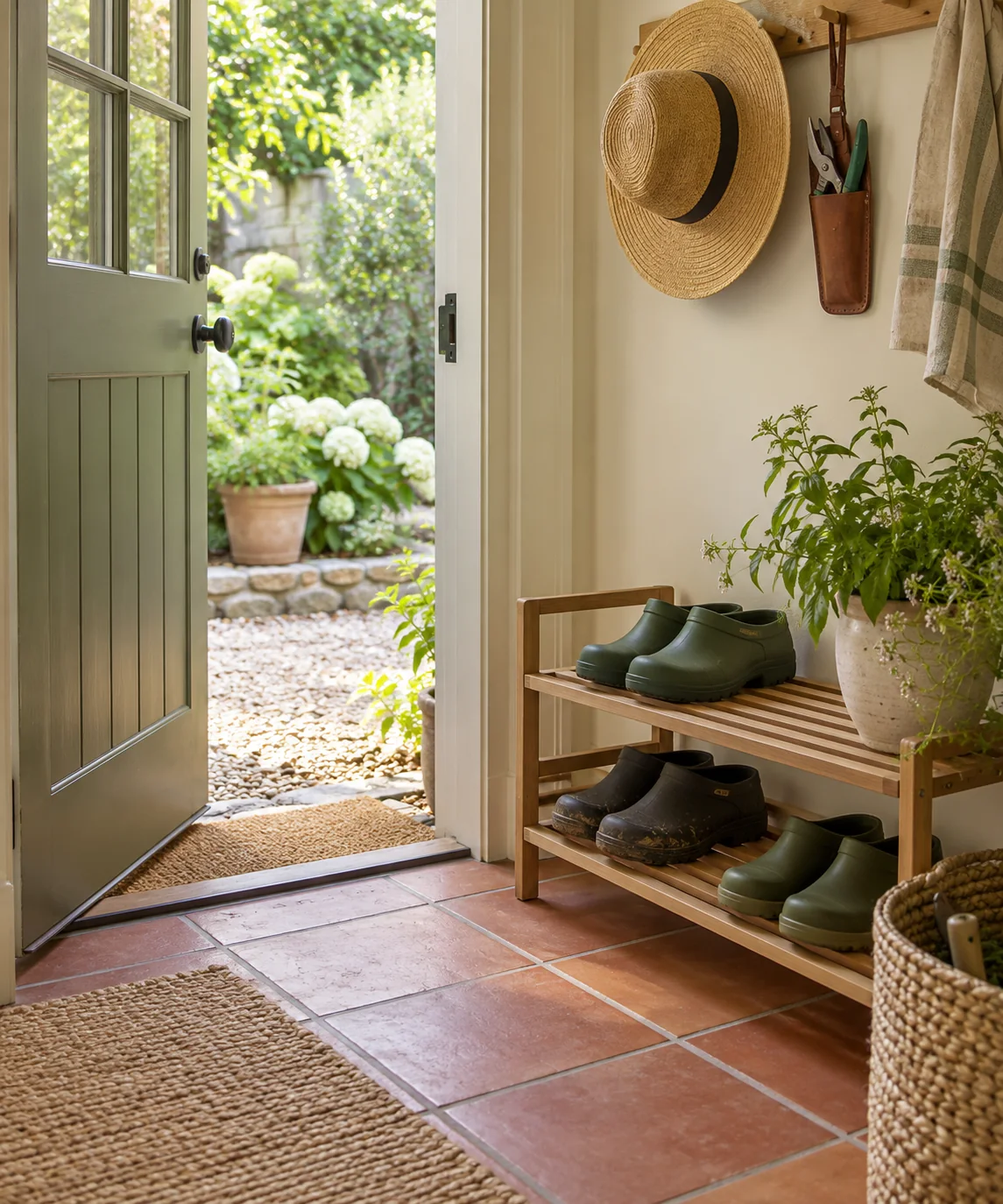
Define the Threshold Boundary
A functioning back entry begins with a visible division between wet garden access and indoor flooring. Observe the complete door swing arc to ensure floor surfaces and potential tray locations remain entirely clear of the opening path. Placing a durable scraping mat directly inside or outside the door creates an immediate capture zone for loose soil. Keeping this transition consolidated near the doorway prevents garden grit from spreading into adjoining living areas. Test your floor layout while wearing your bulkiest work boots to verify that natural movement remains unhindered.
Select Washable Boot Trays
Muddy rubber boots and clogs need non-porous resting surfaces that trap moisture and dried soil. Heavy-duty molded polypropylene or natural rubber trays with raised perimeter rims prevent water and mud runoff onto timber or tile flooring. Avoid textured fabric mats that absorb saturated moisture and require frequent laundering cycles. Choose tray dimensions proportional to household footwear needs, allowing boots to stand upright without overhanging the rim. Rinse trays outdoors periodically to prevent dried soil from caking and transferring back onto clean shoes.
Incorporate Raised Air Circulation
Enclosed shoe cabinets trap moisture and cause outdoor shoes to dry slowly. A slatted wooden or coated wire shoe rack positioned near the boot tray permits continuous air circulation around soles and uppers. Lifting damp garden clogs off solid wet surfaces allows ambient air movement to dry footwear between yard sessions. Select rack depths that fit the entryway footprint without projecting into primary walking paths, ensuring family members navigate the doorway safely without tripping over utility gear.
Organize Hanging Gear Safely
Hats, utility aprons, and pocket clippers often gather soil during routine garden work. Utilize freestanding coat stands or reversible over-door hanging rails placed adjacent to footwear storage rather than directly above clean shoes. If mounting wall hooks, follow manufacturer fastener guidance and verify wall framing to support loaded garments safely. Space hooks sufficiently so damp canvas outerwear can air out without overlapping. If storing sharp pruning snips or hand tools, keep them secured in fitted protective sheaths to prevent accidental contact.
Establish a Sweeping Routine
Even well-designed backdoor zones accumulate loose dry soil during peak growing periods. Store a compact, long-handled dustpan and stiff-bristle hand brush immediately beside the tray so cleanup takes moments after yard chores. Brush heavy crusts off boots directly into garden beds before crossing the threshold. Sweeping the immediate boundary regularly prevents abrasive grit from scratching interior floor finishes while preserving a tidy, functional secondary entry that handles heavy seasonal traffic cleanly.
YOUR STARTING POINT
A little checklist.
Original editorial guidance. Images are AI-generated concepts, not photographs of completed projects. Our sources and approach.
Questions to consider
How do I prevent moisture from sitting under boot trays?
Place low-profile rubber bumper pads beneath the tray corners. This elevates the basin slightly above the subfloor, allowing ambient air to circulate beneath and helping prevent condensation from remaining trapped against delicate indoor floor finishes.
What size clearance is needed around the back entry door?
Clearance requirements depend on door swing width, corridor layout, and household movement needs. Ensure the door opens fully without striking mats or trays, and maintain an unobstructed path wide enough to navigate comfortably when carrying garden baskets or tools.
How can I clean dried clay from mudroom shoe racks?
Allow the mud to dry completely, then gently loosen it with a dry stiff brush directly over an outdoor bin. Wipe the surfaces with a lightly dampened cloth without abrasive detergents to protect rack finishes.