Indoor Plant Styling · THE GUIDE
Create a Baker's Rack Herb-Cutting Station in a Sunny Corner
Small kitchens often lack sufficient horizontal counter space for growing fresh culinary ingredients within easy reach. Positioning a compact, freestanding metal baker's rack near a bright patio door or south-facing window allows you to reclaim vertical territory for edible greenery. The upper slatted shelves provide abundant light penetration and natural airflow, creating an organized indoor cutting station for daily cooking needs. By pairing practical clay pots with dedicated harvesting tools on a single unit, you streamline food preparation while keeping soil, moisture, and kitchen implements off your primary meal prep surfaces.
Jump to the checklist ↓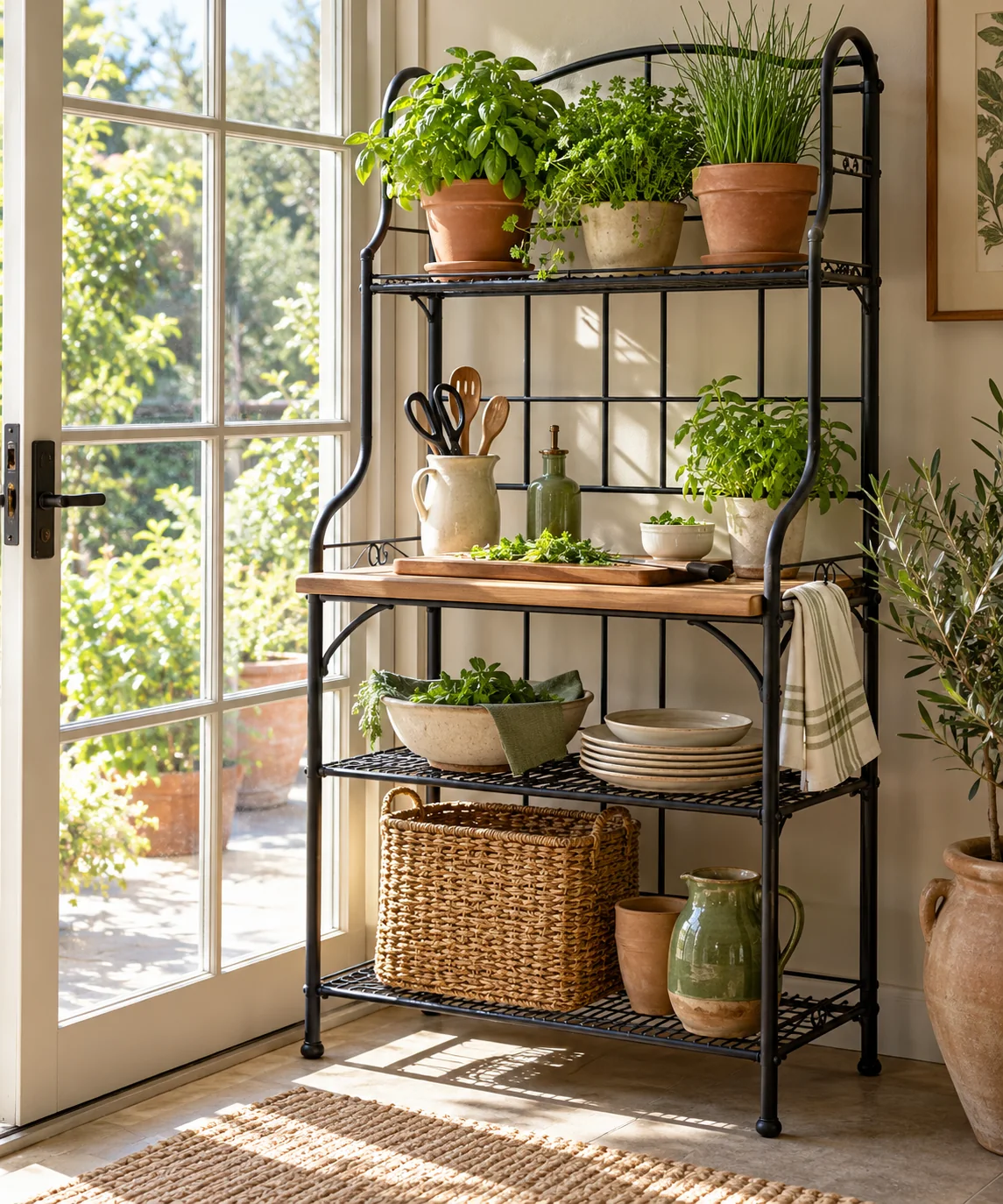
Assessing Sunlight and Placement
Culinary herbs such as basil, chives, rosemary, and flat-leaf parsley generally perform best with abundant natural sunlight when grown indoors. Position your baker's rack directly adjacent to a bright, unobstructed south-facing or west-facing window where light exposure remains consistent throughout the day. Avoid placing the shelving unit in dim recesses, deep interior alcoves, or beneath hanging kitchen cabinetry where natural illumination drops off sharply. When planning the station's location, confirm that the frame will not interfere with doorways, sliding patio tracks, or everyday footpaths between appliances. Maintain comfortable walking clearance around the front of the unit so you can work, water plants, and move past without bumping tiers or snagging clothing.
Selecting Clay Pots and Saucers
Unglazed terracotta and porous clay containers work well for kitchen herbs because their breathable walls allow moisture exchange and help prevent root zones from staying waterlogged. Choose pots sized appropriately for the mature root mass of each herb, such as wider pots for vigorous basil and moderate containers for chives, mint, or thyme. Ensure every planter features an open drainage hole. Pair each pot with an individual, glazed clay saucer, deep ceramic coaster, or plastic drip tray to capture excess water before it can run through the slatted metal shelving onto kitchen prep supplies or dry goods stored on lower tiers.
Upper Shelf Arrangement
Reserve the highest shelf of the baker's rack for your sun-demanding herbs to capture the strongest daylight available near the window header. Arrange pots in a single rank or an open offset pattern rather than crowding them in dense clusters, placing taller specimens like rosemary or mature upright basil near the outer corners where they will not overshadow smaller companions. Position lower, mounding herbs like curled parsley or creeping thyme where light reaches them unobstructed. Leaving moderate breathing room between containers encourages gentle air movement across the leaves and facilitates quick inspection for pests or drying soil.
Integrating Prep Tools Safely
Transform the herb stand into an efficient kitchen harvesting point by storing clean harvesting implements directly on the unit. Suspend stainless steel herb snips from an S-hook hooked onto an exterior side rung, keeping the blades clean, dry, and away from damp potting mix. Dedicate a small wooden or composite cutting board on a nearby shelf to receive freshly clipped sprigs during food prep. Store cutting blades well out of the reach of small children or household pets, and wipe shears completely dry after washing to help prevent mineral deposits and surface corrosion on metal hinges.
Watering Routine and Runoff Management
Careful water management is essential when placing potted plants above kitchen storage shelves. Direct water slowly around the base of the soil with a narrow-spouted watering can to saturate the root zone without splashing soil or soaking the upper foliage. After watering, allow moisture to drain through completely, then monitor the saucers and empty standing runoff using a turkey baster or by carrying individual saucers directly to the sink. Removing excess water prevents trays from overflowing onto lower tiers and keeps root balls from resting in stagnant pools that can lead to root deterioration.
YOUR STARTING POINT
A little checklist.
Original editorial guidance. Images are AI-generated concepts, not photographs of completed projects. Our sources and approach.
Questions to consider
Can culinary herbs grow on lower baker's rack shelves?
Lower shelves generally receive insufficient natural sunlight due to shadowing from upper tiers. Keep culinary herbs on top wire shelves where light exposure is strongest, reserving lower tiers for dry kitchen storage.
How do I keep water from dripping through wire shelves?
Place glazed saucers or clear acrylic plant trays beneath every pot. Empty water trays promptly after watering to ensure excess moisture never overflows onto shelves or kitchen equipment stored underneath.
Which herbs perform best together on an indoor rack?
Basil, flat-leaf parsley, chives, and thyme thrive together when positioned in direct sun. Group them by watering needs, keeping drought-tolerant thyme separate from thirstier broadleaf herbs like basil and parsley.