Reading Corners · THE GUIDE
Create a Child-and-Parent Shared Reading Floor Corner
Sharing books with a young child requires a comfortable arrangement that accommodates different body sizes without cluttering living spaces. Standard armchairs often restrict movement or make holding wide picture books awkward for two readers. Creating an intentional floor corner offers an informal, low-slung reading environment where an adult can recline comfortably while a child moves freely to select titles. By pairing an ample floor mat with supportive back cushions and low, open wooden bins, households can establish an organized reading zone that encourages daily reading while remaining easy to reset.
Jump to the checklist ↓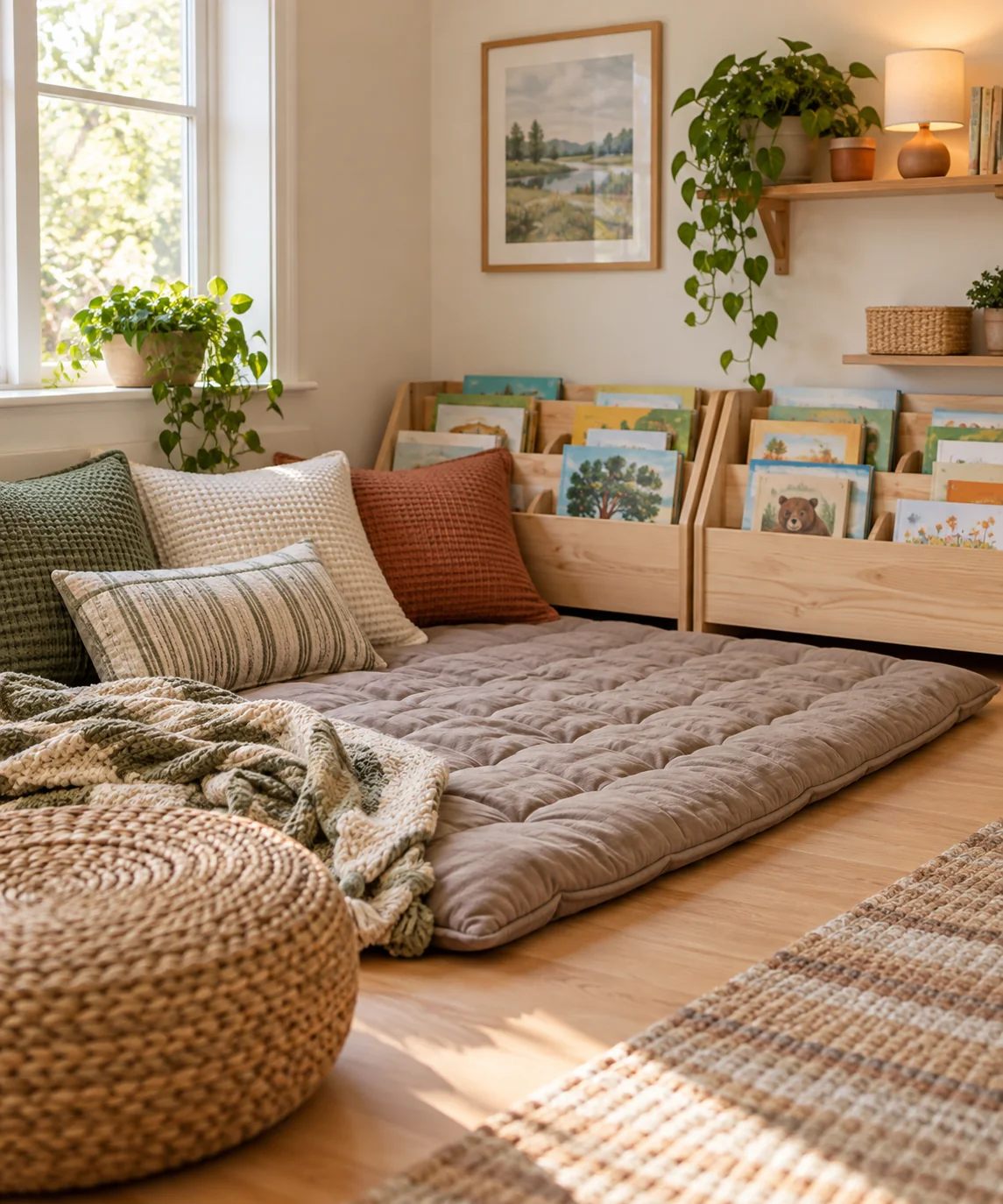
Footprint and Clearance Planning
Identify a quiet corner situated away from active footpaths and door swings. The floor layout should provide adequate width for an adult and child to sit side by side comfortably while leaving a clear approach path so legs can stretch without obstructing walking routes. Test the proposed space by spreading an existing folded quilt on the floor before purchasing furnishings, ensuring the arrangement fits the room without crowding nearby storage or doorways.
Selecting Cushions and Floor Back Support
Single thin floor pillows tend to compress under adult weight, providing inadequate insulation from hard floorboards. Opt for a dense, layered floor cushion or tufted floor mattress that maintains its loft over extended periods. Support for the adult spine is essential; place firm wedge cushions, cylindrical bolsters, or dense euro-style pillows directly against the wall baseboard. Position a non-slip rug pad beneath the floor mat to prevent lateral shifting during movement.
Arranging Low Wooden Storage Bins
Young children identify books primarily by their cover art rather than thin spine lettering. Position low-profile wooden storage troughs or open book crates directly on the floor beside the seating area. Bins with low front edges let children browse and return titles independently without needing to stand. Keep compartments moderately spaced so small hands can easily flip through covers without wedging books tightly against the bin edges.
Curating a Manageable Book Rotation
Floor-level book bins can accumulate clutter quickly if filled beyond capacity. Limit the active display to a manageable collection of fifteen to twenty books, mixing oversized picture volumes with shorter readers. Store excess titles in a nearby cupboard or closet and swap books every couple of weeks. This simple rotation sustains interest, protects paper covers from creasing, and keeps daily cleanups quick and straightforward.
Daily Maintenance and Fabric Care
Floor-level seating gathers dust, lint, and household debris faster than elevated furniture. Choose cushion covers sewn from sturdy, washable textiles such as cotton canvas or heavy linen, equipped with durable zippers for easy removal. Incorporate a brief daily reset into your routine: return books to their bins, prop the floor cushion upright against the wall when not in use, and sweep or vacuum the floor beneath to prevent grit buildup.
YOUR STARTING POINT
A little checklist.
Original editorial guidance. Images are AI-generated concepts, not photographs of completed projects. Our sources and approach.
Questions to consider
What type of floor cushion provides adequate comfort on hard floors?
A dense multi-layer foam mat, futon cushion, or bonded batting pad measuring several inches thick provides reliable separation from hard surfaces and maintains its shape during seated reading.
How can paperback picture books be kept upright in open floor bins?
Choose storage bins featuring built-in internal dividers, or place fabric-covered wooden blocks between book groups to keep thin covers upright when nearby titles are removed.
What is the best way to handle a cold wall when reading on the floor?
Lean a firm, high-density bolster pillow or upholstered foam wedge directly against the baseboard. This creates an effective thermal buffer and comfortable back support without wall-mounted hardware.