Reading Corners · THE GUIDE
Create a Cookbook Consultation Nook in a Kitchen Pantry Margin
Kitchen pantries often contain perimeter margins or dead corners that can serve functions beyond bulk food staging. Planning a modest cookbook consultation station within or directly beside a pantry offers a dedicated place for reviewing recipes, making grocery lists, and planning weekly meals. By combining a compact counter stool that can tuck away with a shallow freestanding or existing work surface, you establish a functional reading station without disrupting everyday kitchen traffic. Designing this zone thoughtfully keeps culinary references accessible while protecting dry goods and maintaining orderly pantry circulation.
Jump to the checklist ↓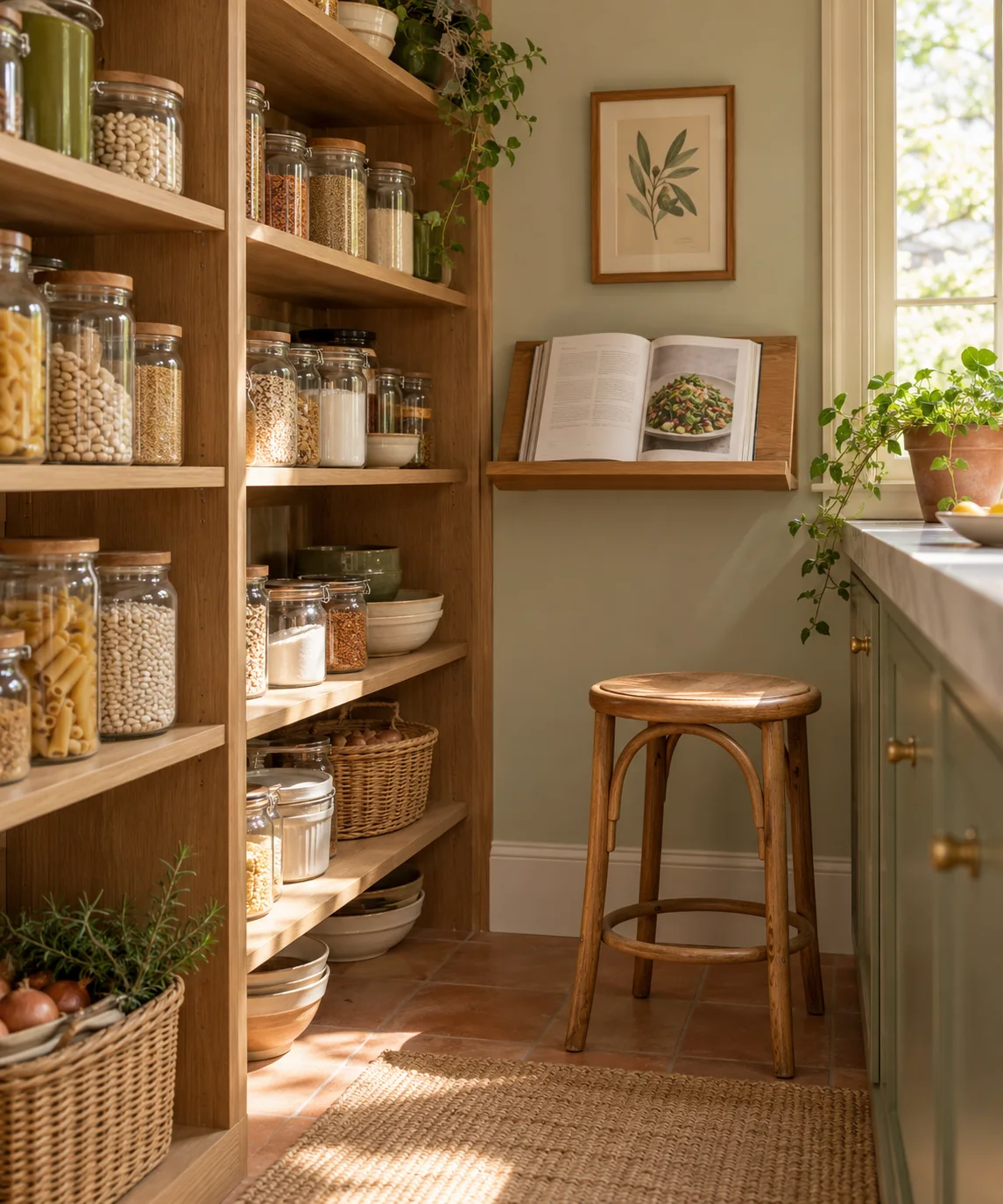
Evaluating Pantry Layout and Circulation Paths
Before introducing seating or a reading surface, observe how household members move through the pantry during meal preparation. Passageways must remain clear so that doors can open fully and supplies can be reached without obstruction. Look for an unused perimeter wall, recess, or end-cap where a stool can be stowed when not in use. Positioning the reading station away from high-traffic zones, such as primary snack shelves or daily cooking staples, prevents congestion during busy kitchen hours.
Selecting Stool Dimensions and Storable Seating
Choose seating proportioned to your consultation surface so it can slide out of the way when you finish reading. A backless counter-height stool works well in compact pantries because it fits flush beneath a work surface, keeping floor space unobstructed. Look for wipeable materials such as smooth faux leather, finished wood, or treated canvas that withstand kitchen conditions. Ensure the seat height allows comfortable leg clearance beneath the surface without forcing you to hunch while reading.
Determining Usable Surface Depth
A recipe planning surface only needs enough depth to support an open volume and a small notepad. A shallow ledge or table surface allows you to prop open a cookbook without encroaching on the central walkway. Check that the vertical space above the work surface accommodates open books resting on an angled stand without bumping into upper storage shelves or wall brackets. Keeping the depth lean ensures the station remains practical without dominating limited floor area.
Protecting Books and Maintaining Food Hygiene
Because this reading nook shares space with pantry goods, sensible storage separation helps keep both ingredients and books in good condition. Store dry staples such as flour, sugar, and grains on upper shelves in sealed, airtight containers to guard against accidental spills. Avoid placing cooking oils, vinegars, or honey directly above the reading rest where leaks could damage paper. Keeping open food sealed preserves food hygiene and prevents pests from entering the nook.
Routine Cleaning and Clutter Prevention
A pantry reading station functions best when kept tidy and free of temporary household drop-off items. Use a compact folding bookstand to support cookbook spines, and fold it flat when the surface is needed for staging groceries. Wipe down the counter and stool weekly with a mild, food-safe surface cleaner to remove kitchen dust and stray flour. Regularly return consulted volumes to their regular shelf locations so the work surface remains ready for meal planning.
YOUR STARTING POINT
A little checklist.
Original editorial guidance. Images are AI-generated concepts, not photographs of completed projects. Our sources and approach.
Questions to consider
How deep does a pantry reading surface need to be for cookbooks?
A surface depth sufficient to hold an open culinary reference and an angled bookstand is usually adequate. Keeping the surface relatively shallow preserves walking space while still providing stable support for recipe notes.
How can I protect delicate cookbook pages in a pantry environment?
Using a clear acrylic bookstand with an integrated shield protects pages from stray splashes or flour dust while keeping recipes visible at eye level.
What should I consider when pairing a stool with a pantry counter?
Check the height between the stool seat and the underside of the work surface to ensure adequate legroom, and verify that the stool base can tuck away completely when not in use.