Pantry Organization · THE GUIDE
Create a Dedicated Nut and Seed Shelf with Small Matching Weck Jars
Nuts and seeds contain delicate natural oils that spoil rapidly when exposed to fluctuating pantry temperatures and excessive air. Small, matching glass Weck jars equipped with rubber rings and metal clamps create a secure seal that protects dry goods from stale air while maintaining an orderly aesthetic. Dedicating a single, shallow shelf zone to uniform glass jars eliminates half-used commercial packets and prevents small seeds from spilling across shelves. By consolidating chia, flax, walnuts, and pepitas into visible, standardized vessels, you simplify everyday meal assembly and keep track of actual ingredient volumes at a glance.
Jump to the checklist ↓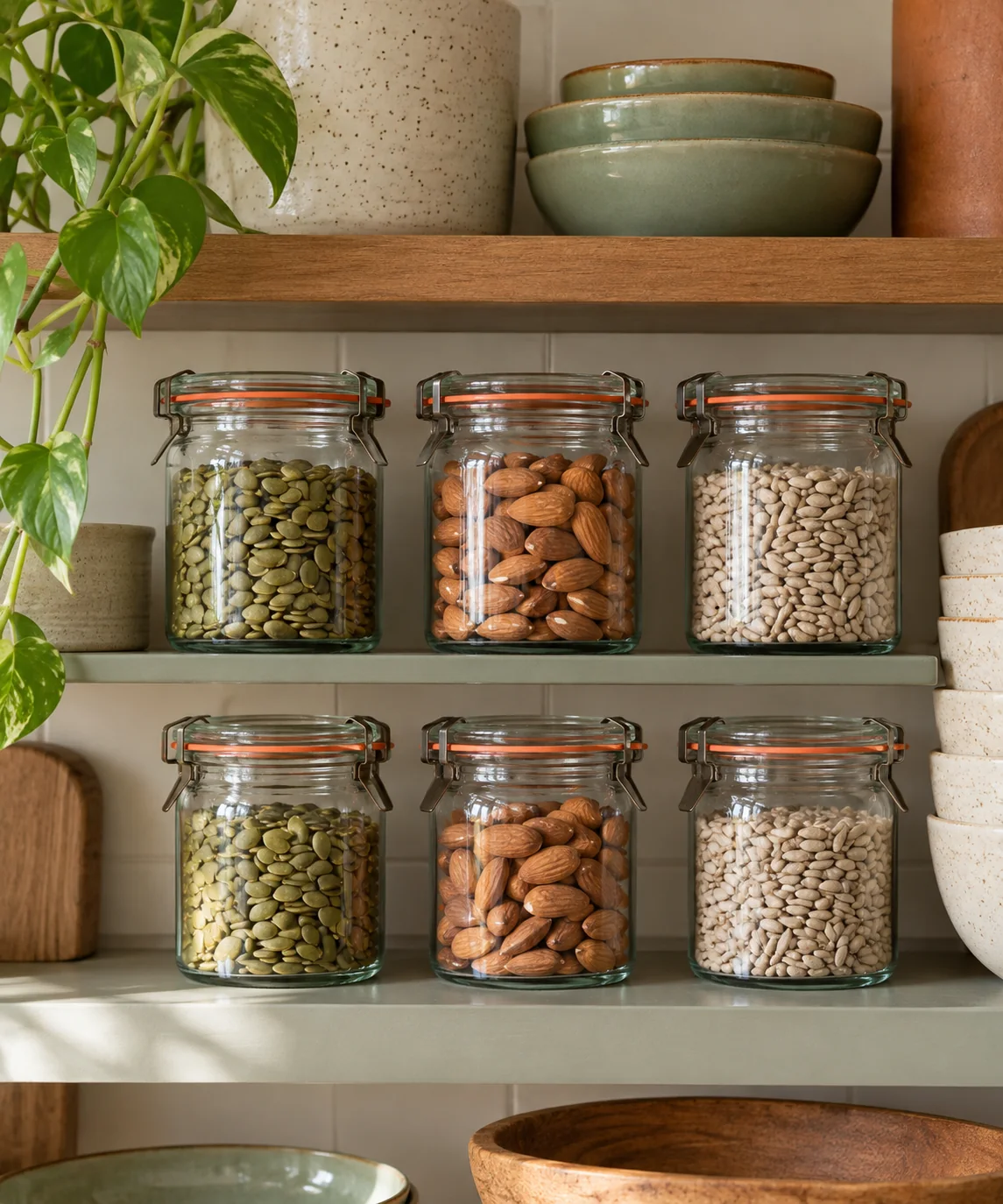
Selecting Jar Volumes and Measuring Shelf Depth
Select jar capacities that match your actual weekly consumption rates rather than storing bulk surplus on active pantry shelves. Small jars ranging from one-fifth to one-half liter accommodate standard bags of chia seeds, sesame, and shelled walnuts without leaving excessive air pockets. Measure shelf depth to determine whether single- or double-row staging works best. Allow sufficient vertical clearance between the top jar clips and the shelf above to permit safe, two-handed lifting without snagging adjacent glass lids or scraping cabinet surfaces.
Testing Staging and Jar Access with Existing Glassware
Before investing in a full collection of specialty jars, test the layout using your existing drinking glasses or clean jam jars. Arrange them along the designated shelf to check sightlines and reach. Practice removing jars from the back row to verify that your hand fits comfortably around the rim without knocking forward jars. If your pantry shelf is deep, consider a shallow, non-slip tiered riser to elevate the back row, making all seed varieties immediately visible and accessible.
Optimizing Seal Integrity and Handling Clips
Weck jars utilize glass lids, natural rubber sealing rings, and stainless steel spring clamps. When decanting nuts and seeds, inspect the rubber gasket for flexibility and wipe the glass rim completely free of seed dust before fastening the clamps. Fine particles of flax meal or chia can break the airtight barrier if caught along the seal rim. Fasten two clamps on opposite sides of the lid to distribute downward pressure evenly, keeping pantry humidity away from the stored oils.
Managing Rotation and Sunlight Exposure
Because nuts and seeds degrade under bright light and heat, locate your jar collection on a dark, cool pantry shelf away from oven heat walls or direct window sun. Store whole nuts rather than chopped pieces when possible, as less surface area slows down oxidation. Always practice strict stock rotation: wash and thoroughly dry jars before refilling, and consume older batches before adding new seeds. Never top off half-empty jars with fresh stock, which buries aging ingredients at the bottom.
Acknowledging Weight and Breakage Constraints
Glass jars add noticeable weight to pantry shelving compared to original plastic bags. Ensure your shelf supports are securely seated in their bracket pins before loading multiple filled glass jars side by side. Avoid sliding glass bases across hard composite shelves; lift each jar directly up and out to prevent scratching or chipping. For households with young children, place the nut and seed shelf at adult chest height to prevent accidental drops while maintaining easy visual access for cooks.
YOUR STARTING POINT
A little checklist.
Original editorial guidance. Images are AI-generated concepts, not photographs of completed projects. Our sources and approach.
Questions to consider
How many metal clips are required per Weck jar for dry goods?
Two metal spring clips positioned opposite each other provide sufficient downward tension on the rubber gasket for dry storage. This creates an airtight seal that shields seeds and nuts from ambient pantry humidity.
Should whole nuts be stored in the pantry or refrigerator?
High-oil nuts like walnuts keep well in airtight pantry jars for up to three months if kept cool and dark. If you purchase bulk quantities, store the excess in the freezer and refill small pantry jars as needed.
How do I label jars without ruining their clean aesthetic?
Apply small paper tape labels or grease pencil markings directly to the bottom exterior of the jar or under the glass lid. This keeps ingredients identifiable and dates recorded without obscuring the visibility of the seeds.