Small Balcony Layouts · THE GUIDE
Create a Ground-Level Lounging Platform with Pallet Cushions
Compact balconies often feel crowded when furnished with standard upright patio dining sets or deep armchairs. A low-profile lounging area using modular floor risers and firm outdoor cushions offers a relaxed alternative that keeps sightlines open and preserves visual space. Lower seating arrangements can provide a grounded feel, but they require thoughtful layout planning to maintain adequate walking space, manage rainfall drainage, and comply with safety requirements. Understanding material durability, moisture management, and railing proximity helps create a comfortable, low-maintenance outdoor seating corner.
Jump to the checklist ↓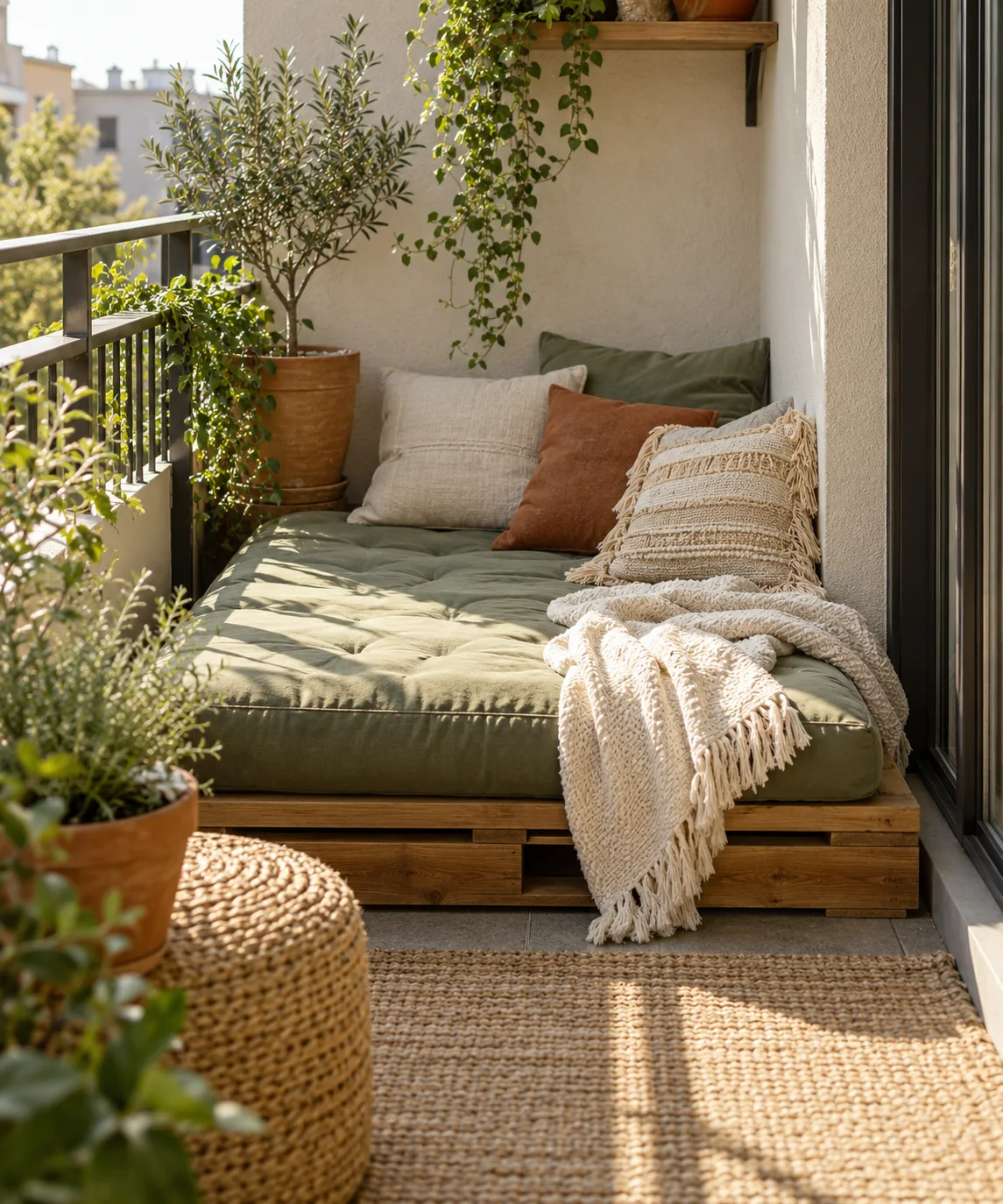
Balcony Circulation and Egress Planning
Establishing a floor-level seating area begins with assessing the usable footprint of the balcony. Outdoor cushions intended for pallet-style layouts often have substantial dimensions, which can dominate narrow floor plans if not carefully planned. Before purchasing materials, map out potential configurations to verify that access to doorways, utility closets, and drainage paths remains unencumbered. Seating should be positioned to allow smooth, natural movement without forcing occupants to squeeze past edges or step over platform corners.
Railing Proximity and Climbability Hazards
Safety regulations for residential balconies strictly address railing heights to protect occupants from fall hazards. Placing platforms, benches, or stacked cushions adjacent to balcony railings is unsafe because any elevated surface can serve as an unintentional step, effectively reducing the protective height of the barrier. Position all low-profile seating against solid interior building walls and well away from railing perimeters. Review local building codes and property regulations regarding furniture placement near perimeter barriers before finalizing your arrangement.
Platform Materials and Moisture Separation
Placing outdoor cushions directly onto concrete or tiled balcony surfaces can trap condensation and rainwater, leading to fabric staining, mold, and slab efflorescence. Modular interlocking deck tiles or manufactured slatted bases can be used to raise cushions slightly off the floor, allowing air to circulate. Select clean, splinter-free, weather-resistant materials such as sealed outdoor timber or composite slats. Avoid raw, discarded shipping pallets, which may harbor chemical treatments, rough splinters, or hidden hardware that could puncture fabrics or damage flooring.
Outdoor Fabric Performance and Weather Protection
Balcony textiles face direct ultraviolet radiation, humidity, and windborne soot. Choose cushions constructed with solution-dyed acrylic or marine-grade polyester covers designed specifically for exterior use. These textiles resist moisture absorption and are less prone to sun fading than standard indoor fabrics. Look for removable covers with corrosion-resistant zippers to facilitate routine washing. During persistent rainfall or humid stretches, store cushions in a water-resistant storage trunk or indoors to prolong the life of the internal foam cores.
Drainage Flow and Routine Slab Cleaning
Low-profile platforms sit close to the balcony deck, where organic debris and dust can accumulate unnoticed beneath the framework. Inspect the area beneath the seating base regularly to ensure water flows freely across the sloped deck toward drainage outlets or scuppers. Blocked drainage can cause stagnant puddles, creating slip hazards and potentially damaging structural coatings over time. Lift the platform components periodically to sweep away leaves and grit, keeping the deck clean and allowing structural surfaces to dry thoroughly.
YOUR STARTING POINT
A little checklist.
Original editorial guidance. Images are AI-generated concepts, not photographs of completed projects. Our sources and approach.
Questions to consider
Why should cushions not be placed directly on the balcony floor?
Direct contact traps water and prevents airflow, creating conditions where mildew and mold can develop on the cushion backing. It can also trap moisture against balcony tiles or concrete, potentially causing surface discoloration.
Can pallet-style seating be left outdoors all year?
While outdoor fabrics repel light moisture, sustained precipitation and freezing temperatures will degrade foam inserts and wooden supports over time. Cushions should be stored indoors or in a weatherproof storage box when not in active use.
How can cushions be kept from shifting on a wooden base?
Using non-adhesive, open-weave mesh grip liners designed for outdoor furniture between the cushion and the platform helps prevent sliding while still allowing water and air to pass through.