Garden Tool Organization · THE GUIDE
Create a Labeled Tin Station for Spare Hardware and Garden Nozzle Parts
Garden watering systems rely on minor components that are easy to misplace between seasons. Spare O-rings, dripper stakes, hose washers, coupling bands, and replacement spray wand springs frequently migrate to the bottoms of buckets or clutter potting benches. Establishing a designated tin station brings order to these micro-hardware pieces without consuming valuable work surfaces. Using a set of uniform or repurposed metal tins creates an opaque, pest-resistant barrier that shields delicate rubber and plastic from sun degradation. A clearly labeled system ensures you locate critical fittings instantly when repairing mid-season leaks or reconfiguring irrigation layouts.
Jump to the checklist ↓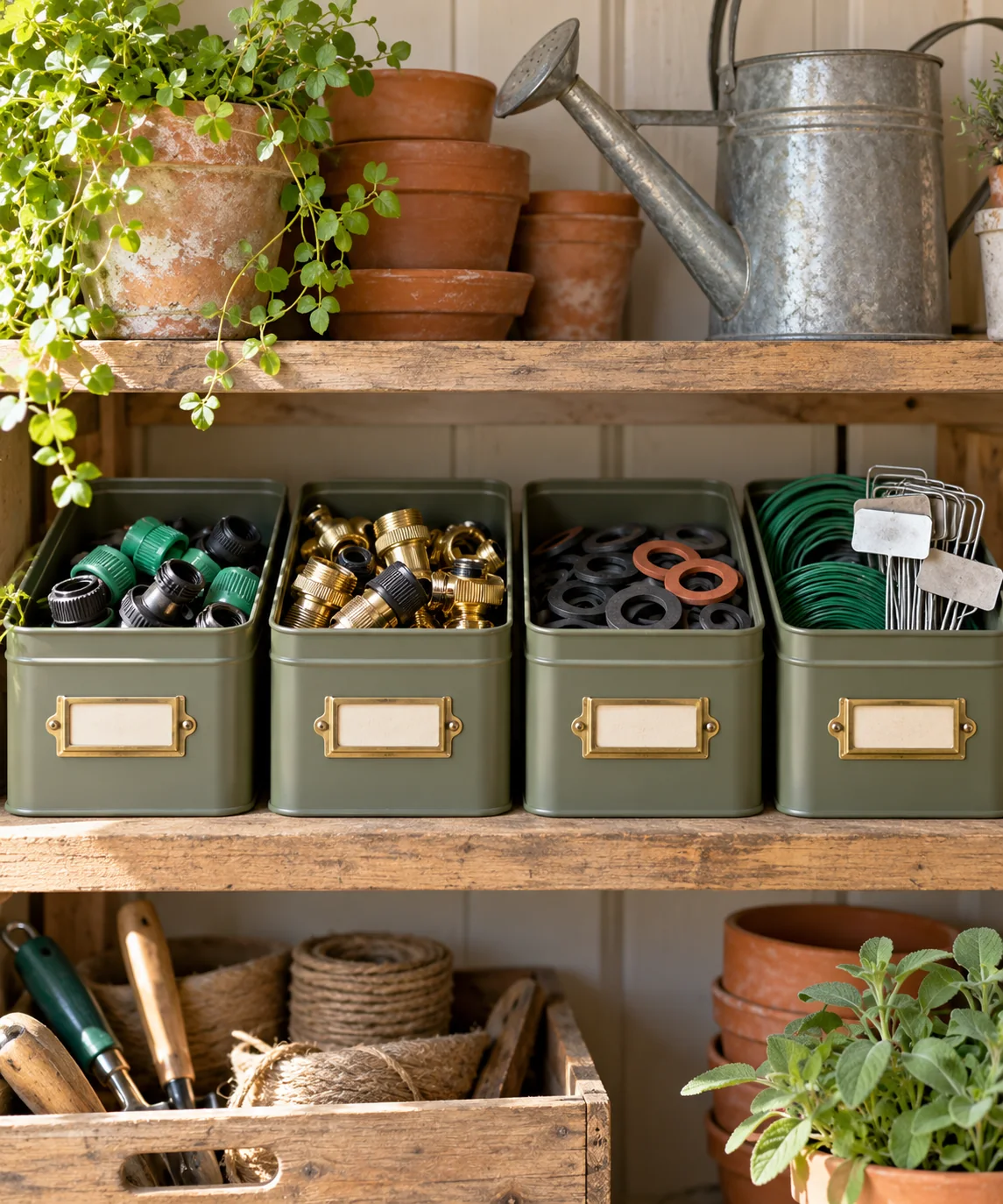
Sorting and Categorizing Small Fittings
Group spare irrigation components by functional category before designating containers. Gather rubber hose washers, silicone O-rings, replacement valve springs, barbed drip emitters, and small hose clamps into separate piles. Inspect existing parts to identify worn inventory; discard brittle, flattened, or cracked rubber washers and deformed plastic emitters that cannot provide a dependable seal. Grouping identical components helps you gauge the required container volume and prevents fragile O-rings from being crushed beneath heavier metal fittings.
Tin Selection and Shelf Footprint
Choose shallow, broad metal tins instead of deep canisters so small washers and emitters remain easy to see and retrieve. Clean tea tins, mint boxes, or lidded metal craft boxes fit conveniently onto standard potting bench shelving. Measure shelf spacing to ensure lids can be lifted or removed comfortably without catching on upper supports or adjacent storage containers. Metal containers shield interior contents from ambient ultraviolet light, helping prevent the premature drying and cracking that often affects rubber gaskets stored in transparent jars on bright shed ledges.
Clear Labeling and Internal Liners
Label both the front face and lid of each tin to maintain clear visibility whether tins are arranged side-by-side or stacked. Water-resistant adhesive tape, card labels, or grease pencils hold up well against the fluctuating humidity typical of garden sheds and garages. Inside the tins, placing a thin protective liner—such as craft foam, heavy paper, or silicone matting—cushions items, minimizes rattling, and catches residual moisture from previously used fittings to help preserve tinplate finishes.
Moisture Protection and Maintenance
Unheated sheds and outdoor workrooms experience wide humidity swings that can cause condensation and encourage surface oxidation on steel springs or bands. Ensure all salvaged or rinsed fittings dry thoroughly on an absorbent towel before placing them into closed tins. Adding a small desiccant packet to containers holding steel hardware helps absorb ambient moisture and reduce rust risks. Periodically inspect the station before spring watering begins, wiping away dust and checking that stored gaskets have remained supple.
Station Limitations and Practical Organization
Compact tin systems work best for miniature fittings, couplings, and maintenance accessories rather than heavy brass splitters or long spray nozzles. For larger components, use dedicated tool racks or open bins instead of forcing oversized hardware into light metal tins. If your spare parts collection expands, add matching containers horizontally along the shelf where practical. Stacking tins too deeply can make accessing lower containers awkward, so keeping frequently used washers and seals within immediate reach supports smoother repair work.
YOUR STARTING POINT
A little checklist.
Original editorial guidance. Images are AI-generated concepts, not photographs of completed projects. Our sources and approach.
Questions to consider
Can repurposed food tins be used safely for garden hardware storage?
Yes, clean biscuit, tea, or mint tins are suitable once thoroughly washed and dried. Make sure all food residue and oils are completely removed so they do not attract moisture, pests, or garden debris into the storage area.
How can rubber hose washers be protected from degrading during storage?
Keep rubber washers stored away from direct sunlight, extreme heat sources, and ozone-generating equipment. Metal tins provide an effective barrier against UV radiation. Store washers clean and dry at ambient temperatures without applying petroleum-based oils, which can degrade rubber compounds.
What is an effective way to organize multiple fitting sizes within a single container?
Small paper envelopes, partitioned craft boxes, or folded cardstock dividers allow different fitting diameters to remain organized inside one tin. Clearly writing the diameter or part type on each divider prevents mixed fittings from tangling during handling.