Garden Tool Organization · THE GUIDE
Create a Leather Sheath Rail for Sharp Edged Garden Weeders
Specialized weeding hand tools like serrated soil knives, Japanese sickle blades, and crack weeders require thoughtful storage to prevent blade dulling and accidental cuts. Stashing sharp tools loose in bins exposes vulnerable cutting edges to friction and creates reach-in hazards. A dedicated leather sheath rail offers an adaptable solution by encasing exposed edges within durable, forgiving pockets. Heavy hide protects fine bevels while keeping active hand tools visible and organized along a shed bench edge or tool cabinet panel. This setup preserves blade sharpness, streamlines bench space, and ensures safe access during busy planting and weeding sessions.
Jump to the checklist ↓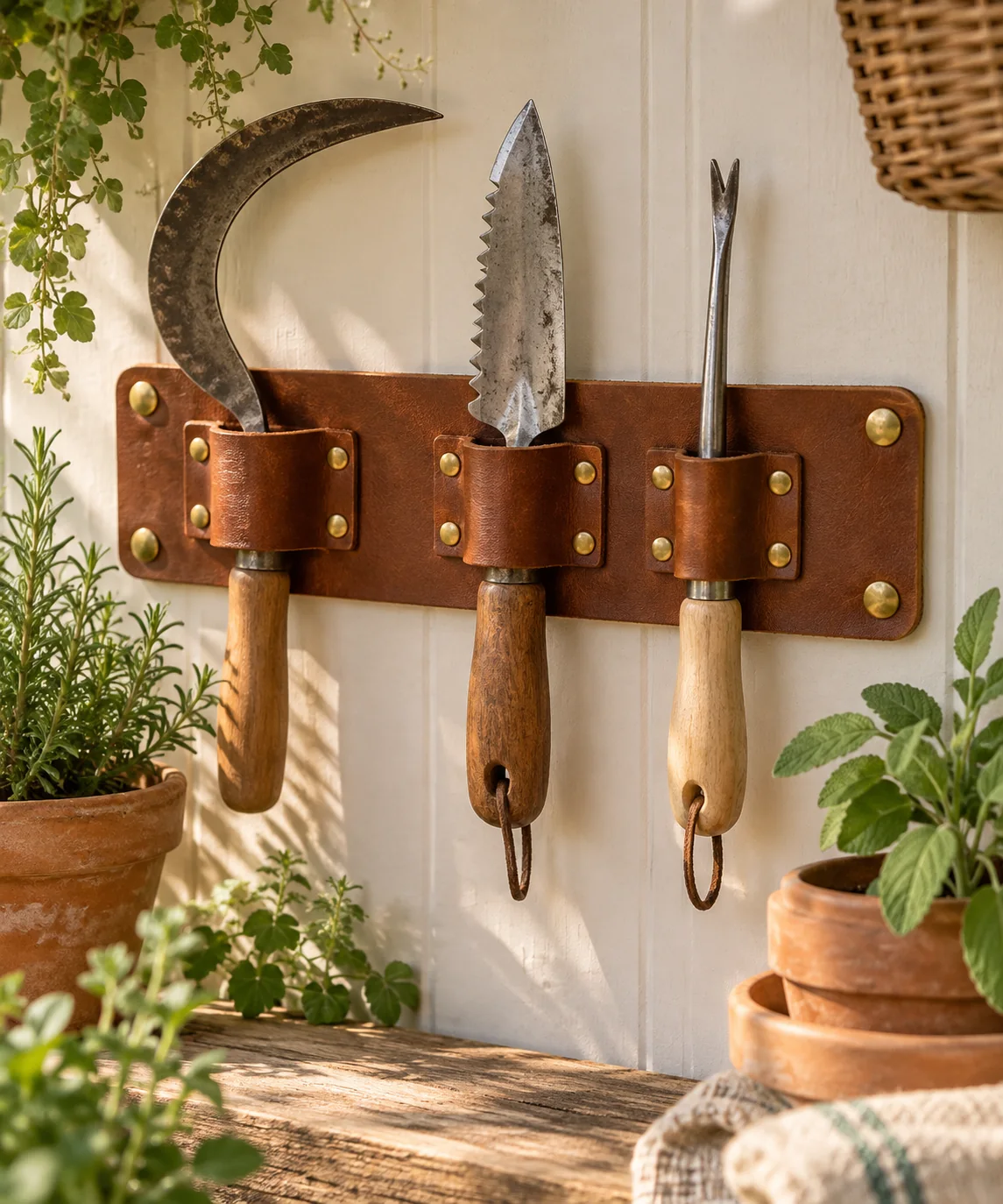
Assessing Tool Profiles and Pocket Proportions
Before constructing or selecting a sheath rail, audit the specific hand weeders you intend to store. Note the width, blade curvature, and handle balance of each item, including Japanese weeding sickles, hori-hori knives, and crack weeders. Curved or flared blades require generous pocket clearance so cutting edges slide in without abrading pocket edges or snagging interior stitching. Space tool locations so handles remain separated, allowing your fingers to grasp a single tool without brushing against adjacent cutting edges or handles during busy gardening tasks.
Selecting Leather Weight and Fastening Hardware
Durable, medium-to-heavy vegetable-tanned leather scraps provide sufficient firmness to hold pocket shapes without collapsing. Lightweight garment or thin upholstery leathers lack sufficient puncture resistance and may allow sharp serrated edges to pierce the sheath during insertion. Heavy-duty copper or brass two-piece tubular rivets, or robust hand-stitching with waxed thread, create secure dividers. Ensure the internal pocket depth encloses the primary cutting edges while leaving the handle and bolster accessible for a firm, safe grip.
Ergonomic Placement and Vertical Clearance
Carefully consider tool placement along your workbench fascia or wall-mounted tool board. Mounting the sheath rail along a workbench face keeps sharp points directed downward below the primary work surface. If placing the rail on an upright tool board, position it at a comfortable reach that avoids high overhead lifting. Ensure adequate vertical clearance above the rail so longer weeding tools can be lifted straight up and out without striking overhead shelves, light fixtures, or hanging hardware.
Dry Fitting and Clean Blade Storage Habits
Test pocket fit using clean, dry tools before permanently securing all fasteners. Slide each blade in and out deliberately to verify smooth clearance and confirm that serrations do not bind along seams. Storing tools coated in damp soil or garden grit introduces moisture and abrasives into leather pockets, accelerating carbon steel rust and degrading the hide. Wipe blades clean with a dry cloth or stiff brush before returning them to their sheaths to keep both the steel and leather in good condition.
Material Care and Environmental Limitations
Natural leather responds to ambient humidity and can absorb moisture or develop mildew if kept in poorly ventilated, damp garden outbuildings. Position sheath rails away from open doorways where driven rain might reach them. If the leather stiffens over time, conditioning it lightly with leather balm or wax helps maintain suppleness. For unusually heavy, long, or forward-weighted weeding implements, standard leather pockets may stretch, making dedicated rigid wall brackets or tool clips a more secure alternative.
YOUR STARTING POINT
A little checklist.
Original editorial guidance. Images are AI-generated concepts, not photographs of completed projects. Our sources and approach.
Questions to consider
Can synthetic materials be used instead of natural leather for tool rails?
Heavy synthetic materials like reinforced canvas or dense ballistic nylon can work well if rated for puncture and abrasion resistance. However, thin vinyl or basic faux leather is prone to tearing when contacting sharp serrated garden edges.
How do I prevent corrosion on tools stored in leather sheaths?
Never insert wet or soil-covered tools into enclosed sheaths. Leather can trap residual moisture against steel surfaces, promoting rust. Ensure tools are completely dry, and apply a light coat of camellia or mineral oil to carbon steel blades periodically.
What types of tools are best suited for a leather sheath rail?
The rail is ideal for compact hand weeders, soil knives, paving weeders, and sickle blades with well-defined handles. Avoid storing heavy axes, large shears, or tools with loose heads that could tilt forward or exceed the pocket's holding capacity.