Pantry Organization · THE GUIDE
Create a Modular Baking Zone with Scoop-Friendly Canisters
Scattering baking powders, sugars, and extracts across different pantry shelves slows prep time and leads to messy spills. Establishing a dedicated baking zone consolidates essential dry goods into wide-mouth canisters that accommodate full-sized measuring cups. Storing flour, granulated sugar, brown sugar, and leaveners together creates an efficient modular station that streamlines kitchen workflow. By choosing airtight, wide-opening containers paired with designated scoops, you eliminate awkward pouring and minimize counter cleanup. This structured shelf setup protects bulk staples from pantry pests and creates a functional, repeatable baking layout without requiring permanent kitchen modifications.
Jump to the checklist ↓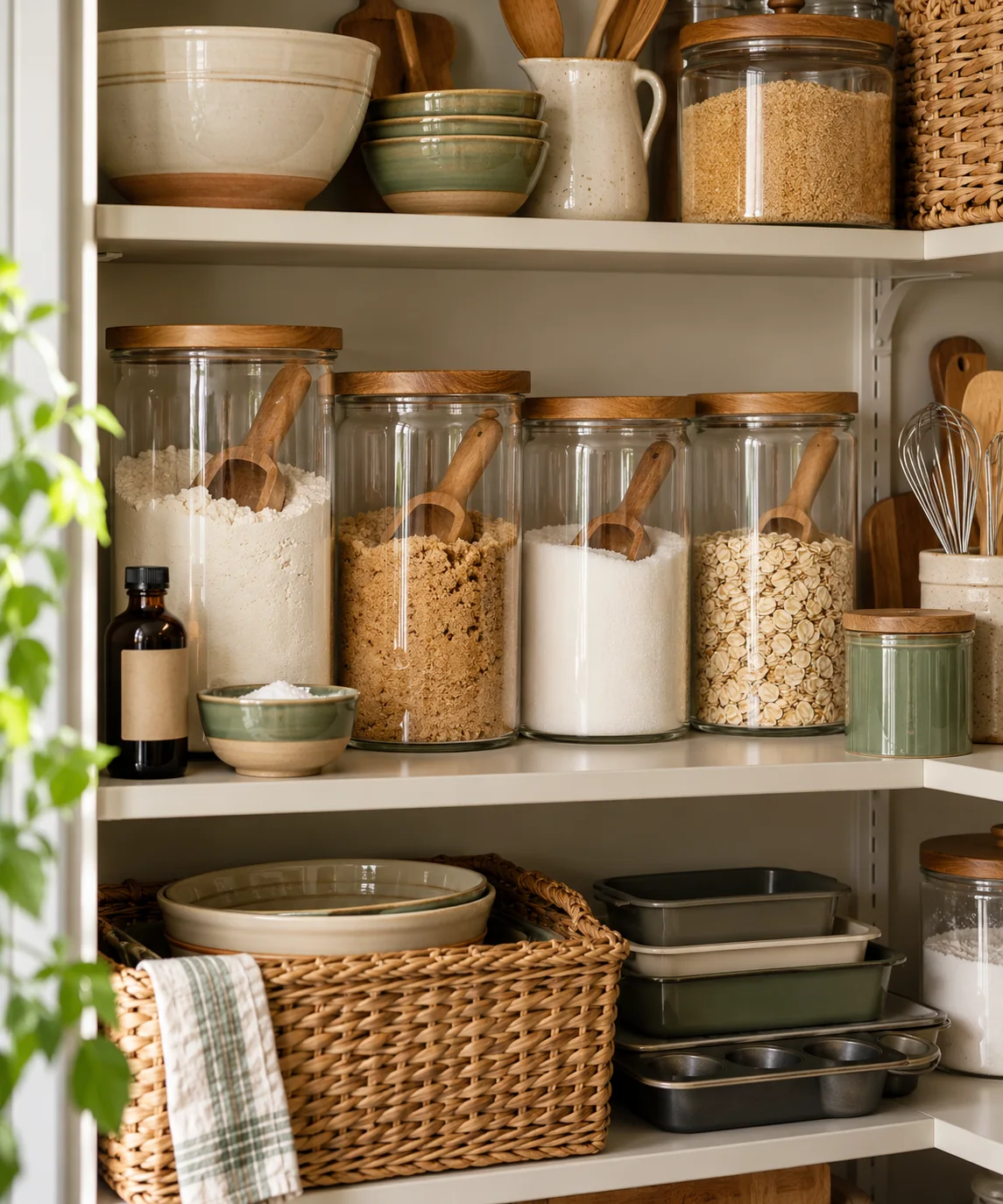
Selecting Wide-Mouth Canister Profiles
Choose storage vessels with openings measuring at least 4.5 inches across to allow a standard 1-cup scoop to sweep inside cleanly. Canisters with narrow necks or tapered tops force bakers to tip containers, resulting in airborne flour clouds and counter mess. Opt for straight-sided cylindrical or square containers that sit flush against one another to maximize shelf real estate. Transparent glass or clear BPA-free plastics allow instant visual checks of remaining dry ingredient quantities, eliminating the need to unseal lids merely to check staple volumes.
Arranging Core Ingredients by Use Frequency
Organize the shelf based on physical reach and container weight. Heavy canisters holding all-purpose flour and granulated sugar belong centered in the prime reach zone, roughly mid-chest height. Flank these with secondary essentials such as confectioners' sugar, cocoa powder, and rolled oats. Keep smaller jars containing baking soda, cornstarch, and baking powder lined up in a neat front row directly beside the main canisters. This graduated layout prevents small spice-sized tins from becoming hidden behind substantial bulk flour tubs.
Incorporating Dedicated Measuring Scoops
Equip each main canister with its own permanent measuring scoop stored directly inside the vessel. Storing stainless steel or smooth wooden scoops in the flour and sugar bins saves prep steps and stops cross-contamination between different starches. Select scoops with flat rims to facilitate easy leveling against canister interior edges or built-in scraper bars. Make sure each scoop’s handle fits entirely beneath the lid seal without pressing against the gasket, ensuring the airtight container closure remains completely intact against outside air.
Containing Leaveners, Extracts, and Chocolate
Group delicate flavorings, extracts, and smaller components into a shallow corral tray placed beside the bulk canisters. Pure vanilla extract, food colorings, and small tins of baking powder remain stable inside a non-skid tray, preventing slender bottles from tipping over when you slide flour containers outward. Use airtight latch jars for baking chips, chocolate bars, and nuts to protect their sensitive fats from absorbing ambient pantry odors, keeping them fresh and isolated from humidity fluctuations.
Preserving Ingredient Freshness and Seals
Maintain dry goods by routinely inspecting the silicone or rubber gaskets on your canister lids. Wipe the rim of each container dry before resealing, as stray flour dust or sugar crystals along the rim can degrade the airtight seal over time. Store brown sugar with a soaked terracotta disc or an ultra-tight clamp lid to preserve essential moisture. Label canisters clearly on both the lid and body, noting the staple variety and the purchase date for simple FIFO inventory rotation.
YOUR STARTING POINT
A little checklist.
Original editorial guidance. Images are AI-generated concepts, not photographs of completed projects. Our sources and approach.
Questions to consider
Which canister shape works best for small pantry shelves?
Square and rectangular canisters make the most efficient use of shelf space by eliminating dead space between vessels. They pack together tightly, maximize depth, and prevent smaller items from falling into round gaps between curved jar profiles.
How do I keep brown sugar from turning rock hard?
Store brown sugar in a container with a heavy-duty silicone gasket. Adding a food-safe rehydrated terracotta disc inside the canister maintains ideal humidity levels, keeping the sugar soft and scoopable without altering its distinct molasses flavor profile.
Can I leave metal scoops buried inside dry flour containers?
Yes, food-grade stainless steel scoops can remain safely inside dry flour or white sugar indefinitely. Ensure the scoop is completely dry before placing it inside the canister so trapped moisture does not cause dry powders to clump together.