Small Balcony Layouts · THE GUIDE
Create a Perimeter Edible Garden with Uniform Rail Planters
Growing culinary greens on a small balcony often competes with valuable seating space. Lining the perimeter with uniform trough planters creates an orderly edible border while keeping interior floor tiles completely open. By utilizing matching containers secured strictly to the interior face of your railing structure, you establish a streamlined visual edge that maximizes sunlight exposure. Most popular culinary herbs and edible greens demand robust, direct sunlight, making the railing boundary an ideal microclimate. A disciplined, uniform layout turns an underutilized perimeter into an accessible harvest zone without cluttering everyday walking paths.
Jump to the checklist ↓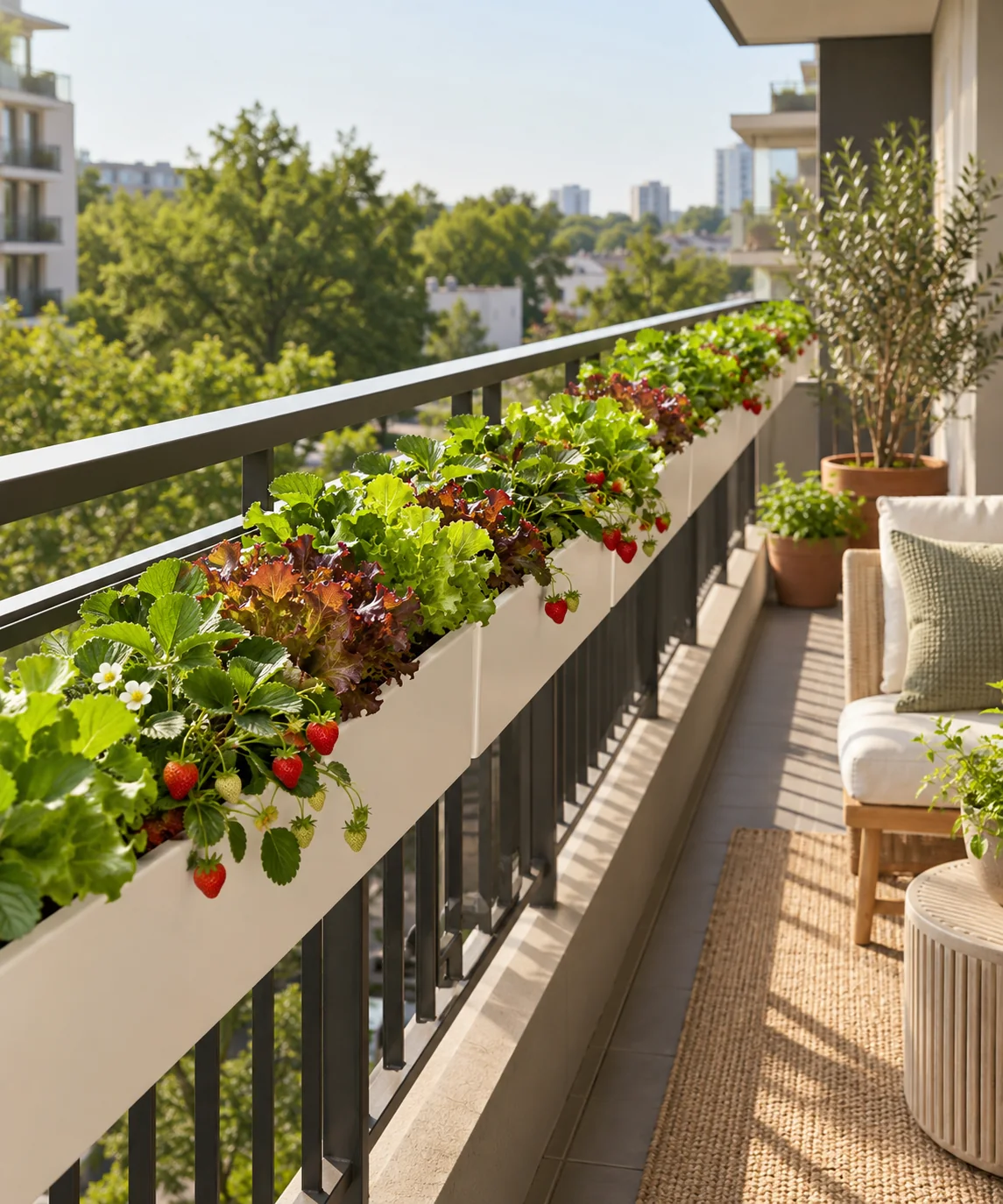
Checking Balcony Rules and Trough Selection
Before planning perimeter planters, consult building bylaws, lease agreements, or property management rules regarding items placed near or mounted to railings. Many residential communities regulate or strictly prohibit balustrade attachments due to falling object hazards or facade maintenance restrictions. Where allowed, look for containers designed specifically with dedicated, manufacturer-tested brackets suited to your specific railing design. Selecting matching rectangular troughs made from UV-stabilized polypropylene or lightweight coated metal creates an orderly perimeter while keeping containers contained within the inner boundary.
Weight Management and Structural Guidance
Balconies are engineered with specific structural load limits. Because saturated soil, plant material, and water accumulate substantial weight, consult property management or qualified structural guidance to confirm permissible loads before lining an entire railing boundary. To keep overall weight manageable, use a lightweight soilless potting mix made from peat moss or coconut coir blended with perlite or vermiculite rather than dense garden loam. Avoid adding heavy stones or gravel layers to container bases, relying instead on proper container drainage.
Sunlight Demands for Edibles
Culinary crops require specific light thresholds to produce flavorful foliage. Most culinary herbs—including basil, thyme, rosemary, and oregano—need strong sun for at least six hours daily to flourish. Leafy salad greens like loose-leaf lettuce, chard, and spinach tolerate slightly less exposure but still require bright ambient light. Position your uniform troughs along the railing segments that capture uninterrupted southern or western light. If sections of your balcony perimeter receive deep shade, adjust your plant selection accordingly rather than expecting sun-demanding herbs to thrive.
Drainage Control and Runoff Management
Uncontrolled runoff dripping onto balconies below is a common source of tenant disputes and exterior staining. Planters positioned along the perimeter should incorporate integrated drip trays or saucers designed to catch excess drainage before water leaves the balcony boundary. Ensure the potting mix drains freely through interior drainage openings so plant roots do not drown, while verifying that catch trays can be emptied or checked easily. Rather than watering on a fixed schedule, monitor soil moisture manually before irrigating to reduce unnecessary overflow.
Perimeter Maintenance and Succession Care
An edible perimeter requires routine maintenance to remain neat and productive throughout the growing season. Harvest leaves from the outer edges of leafy greens to encourage upright renewal and prevent sprawling growth across walkways. Prune woody herbs regularly to maintain compact forms. At the end of the growing cycle, clear spent roots, amend the media according to seasonal needs, and clean the containers to prevent salt accumulation and pest carryover into the following year.
YOUR STARTING POINT
A little checklist.
Original editorial guidance. Images are AI-generated concepts, not photographs of completed projects. Our sources and approach.
Questions to consider
Can planters be attached directly to any balcony railing?
No. Many residential properties strictly prohibit attaching fixtures to railings due to fall hazards, balustrade wear, or facade regulations. Always check your building rules and verify the manufacturer specifications of the planter supports before introducing perimeter containers.
Do culinary herbs grow well in partially shaded railing areas?
Sun-loving herbs like thyme, rosemary, and basil generally become leggy and lose flavor in partial shade. In areas with fewer direct sun hours, more shade-tolerant edible greens like flat-leaf parsley, chives, mint, or leafy lettuces perform more reliably.
How frequently should perimeter planters be watered?
Containers positioned near railing perimeters dry rapidly because of increased air circulation and wind exposure. Check the top few centimeters of the growing mix by hand each day, watering thoroughly only when the surface feels dry, rather than adhering to an automatic schedule.