Indoor Plant Styling · THE GUIDE
Create a Plant Ledge on a Kitchen Island End Panel
Kitchen islands provide valuable central preparation space, but work surfaces often fill up quickly with cookware and ingredients. The end panel of an island is sometimes considered as an area for vertical display, including small potted plants. However, incorporating plants on or against cabinetry requires careful attention to cabinet construction, internal wiring, aisle clearance, and light availability. Rather than undertaking permanent alterations without planning, exploring appropriate placement—such as freestanding or manufacturer-approved accessories—allows you to enjoy greenery without compromising kitchen circulation, damaging delicate cabinet finishes, or interfering with internal island services.
Jump to the checklist ↓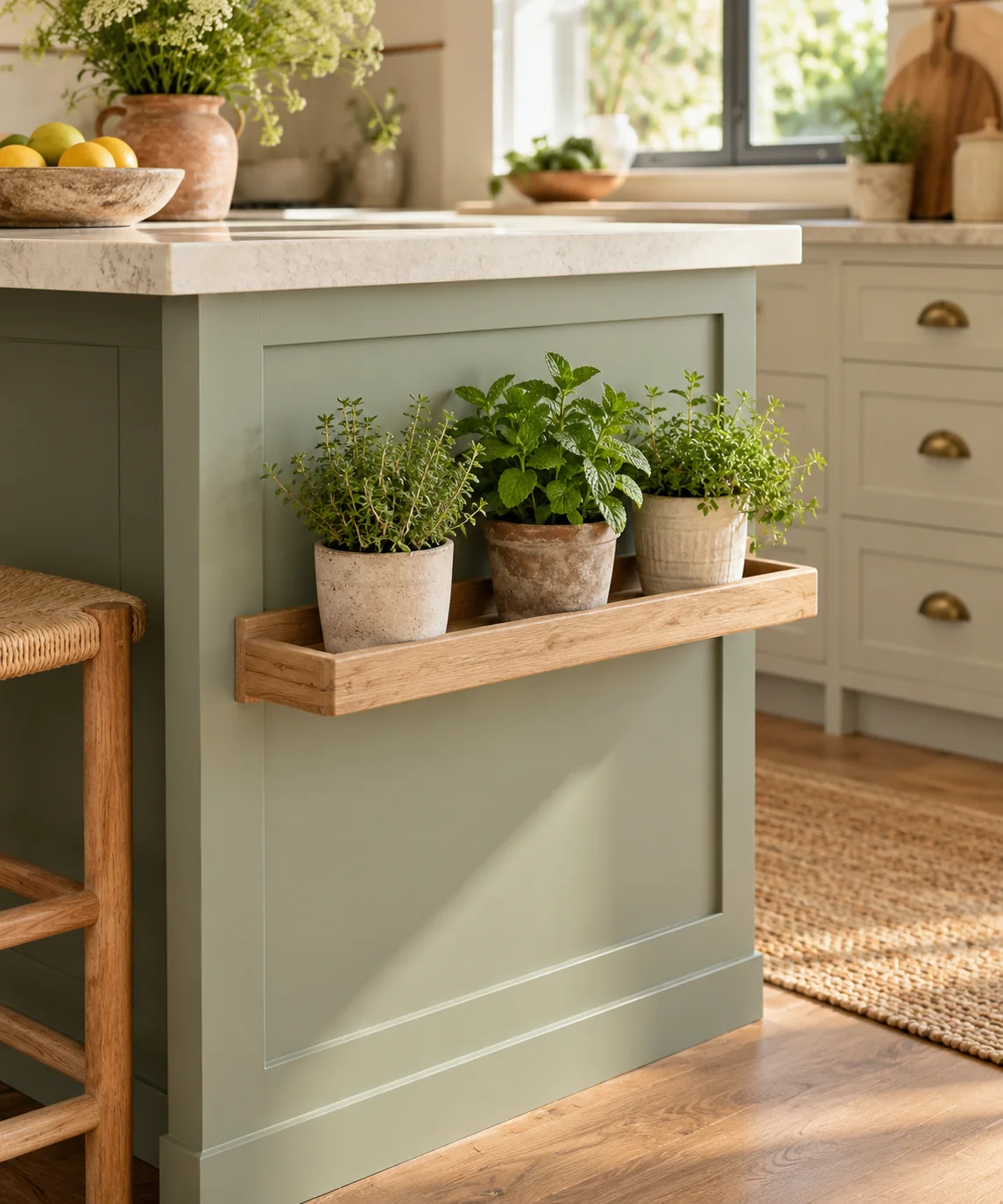
Assessing Cabinet Integrity and Concealed Services
Before considering any modification to an island end panel, investigate the structure of your cabinetry. Island end panels are often thin decorative veneer sheets, lightweight skins, or finished panels that lack the structural framing required to hold fastened weight securely. Furthermore, kitchen islands frequently house electrical runs, conduit, or junction boxes for required convenience outlets, making blind drilling hazardous. Consult your cabinet manufacturer, installer, or a qualified professional before attaching any hardware to confirm structural load capacity and ensure no concealed utilities are damaged.
Evaluating Kitchen Traffic and Aisle Clearances
Kitchen walkways must support safe circulation, especially around active cooking and prep zones where hot items and sharp tools are carried. Any projection from a cabinet panel can catch clothing, snag apron strings, or become a tripping hazard if it intrudes into primary thoroughfares. Observe your kitchen's natural workflow and measure your walkways according to local guidelines, keeping circulation paths open and unobstructed. Ensure that any plant display leaves ample room for nearby cabinet doors, drawers, and appliance doors to swing fully open without contact.
Realistic Light Assessment for Indoor Herbs
Culinary herbs such as basil, thyme, and rosemary typically require hours of strong, direct sunlight each day to maintain dense growth and robust flavor. In most kitchens, island end panels sit several feet away from exterior windows and receive only ambient or filtered daylight. Placing sun-loving herbs in low-light conditions often results in weak, elongated stems, leaf drop, and poor vitality. If your island does not receive adequate direct natural light, consider shade-tolerant decorative foliage plants or supplement with an appropriate, safety-certified indoor grow light.
Selecting Lightweight, Secure Containers
If your island configuration supports display ledges or adjacent side shelving, container selection is vital for safety. Choose lightweight, shatter-resistant vessels with flat, stable bases rather than heavy earthenware or top-heavy ceramics that could dislodge if brushed against. Ensure containers sit securely with raised lips or guardrails to prevent accidental sliding during active kitchen use. Keeping vessel sizes small minimizes overall load and reduces moisture demands in busy prep environments.
Moisture Barrier and Cabinet Finish Protection
Water exposure represents one of the fastest ways to damage cabinetry, leading to swollen MDF cores, peeling veneers, and water-stained wood finishes. Never water plants while they are resting on or against cabinetry panels. Use sealed cachepots with watertight liners, and transport potted plants to the kitchen sink for watering. Allow containers to drain completely and wipe all exterior surfaces dry before placing them back near wood surfaces to prevent trapped moisture from ruining the finish.
YOUR STARTING POINT
A little checklist.
Original editorial guidance. Images are AI-generated concepts, not photographs of completed projects. Our sources and approach.
Questions to consider
Can I drill into my kitchen island end panel to hang a shelf?
You should not drill into island cabinetry without first confirming the panel thickness, material structure, and the exact paths of internal electrical wiring or plumbing. Consult your cabinet manufacturer or a qualified tradesperson to evaluate whether the panel can safely support mechanical fasteners.
Why do culinary herbs often struggle when placed on kitchen islands?
Most culinary herbs require substantial direct sunlight to sustain healthy growth. Kitchen islands are often positioned in the interior of the room where light levels are primarily ambient and insufficient, leading to weak growth and foliage loss unless supplemental grow lighting is provided.
How can I prevent water damage to island cabinetry from nearby plants?
Always keep plants in watertight secondary containers, never water them in place against cabinetry, and immediately wipe away any accidental splashes. Periodically check contact points for condensation or moisture buildup to preserve the cabinet finish.