Pantry Organization · THE GUIDE
Create a School Lunch Assembly Caddy with Compartment Organizers
Morning school routines often stall when lunchbox items are scattered across different pantry shelves, drawers, and countertops. Consolidating single-serve items into a dedicated compartment storage caddy streamlines preparation by bringing all core components to the prep counter in one simple motion. Using a sturdy, handle-equipped plastic organizer establishes clear visual zones for sandwich wraps, crunchy snack packs, and dried fruit bars. Evaluating daily portion requirements, picking washable bin materials, and setting consistent restock habits turns this simple container into a reliable assembly station that children and parents can navigate quickly each morning.
Jump to the checklist ↓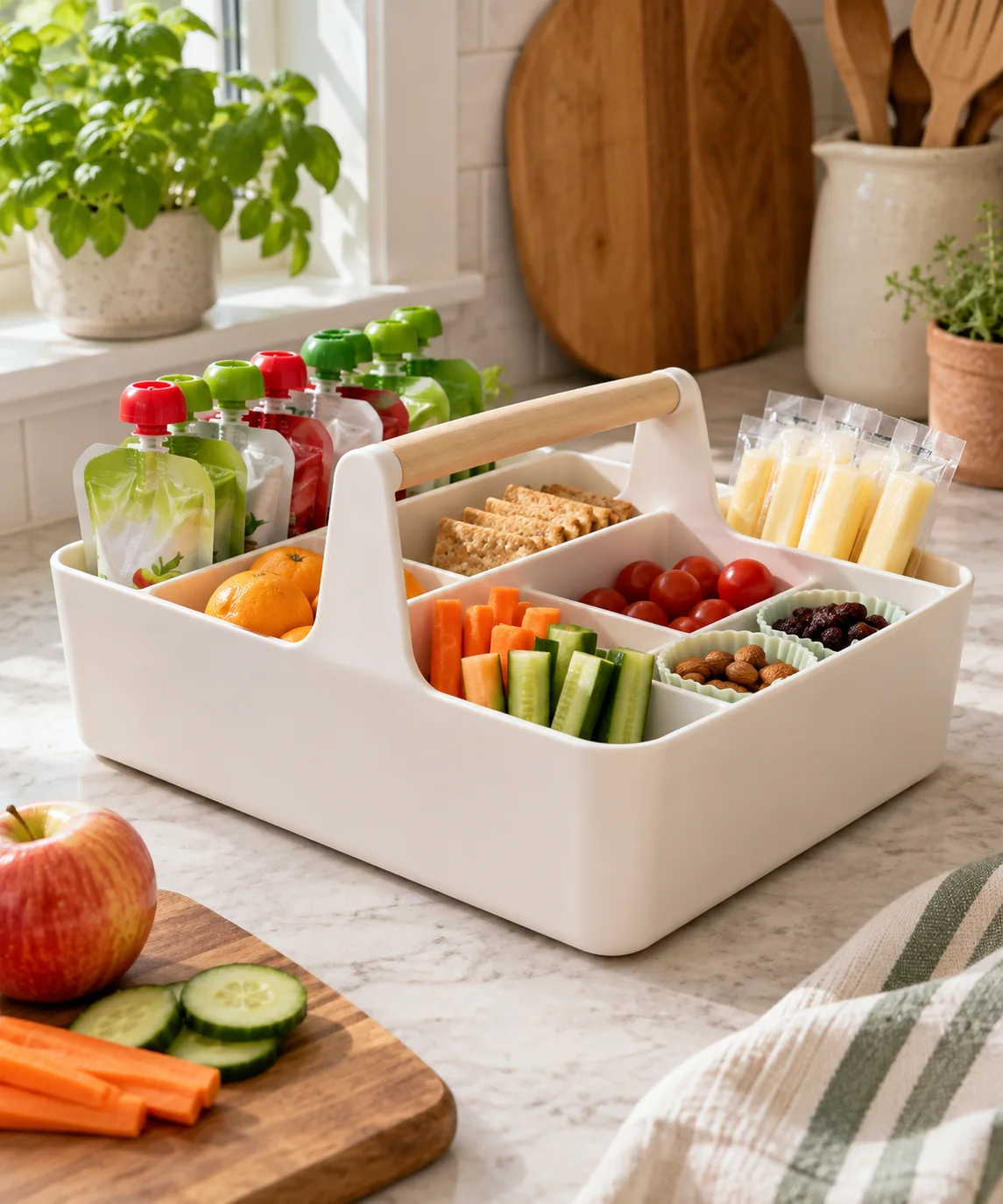
Selecting the Right Caddy Dimensions
Choose a rigid plastic organizer featuring an integrated center carry handle and at least three separate vertical compartments. Measure the depth of your pantry shelf before purchasing; the caddy should sit completely flat with its handle facing outward without overhanging the edge. Look for divided caddies with compartments deep enough—typically four to five inches—to support tall snack bags and wrapped tortillas upright. Heavy-duty polypropylene resists cracking under the weight of daily handling and withstands quick wiping when food residue appears.
Mapping Functional Snack Categories
Assign each compartment in the caddy to a distinct category rather than mixing items randomly. Dedicate the largest section to base lunch items like flatbread pouches, shelf-stable sandwich rounds, or crackers. Use adjacent narrow slots for portioned dried fruit bars, roasted seed packets, and single-serve pretzel bags. Keeping items categorized visually prevents duplicate selections and helps children assemble balanced lunches independently. Reserve smaller end compartments for lunchbox accessories, such as reusable silicone sauce cups, paper napkins, or cutlery sets.
Testing Capacity with Daily Packaging
Before permanently stocking the caddy, gather three days' worth of packaged school snacks to test physical fit. Place larger items upright at the rear of each compartment and shorter items toward the front so labels remain legible. Avoid overloading compartments beyond their vertical walls; overstuffed caddies cause items to catch on shelf boards above when pulling the organizer forward. If flatbread pouches curl or flop over, insert a rigid piece of washable plastic cardstock behind them for support.
Daily Workflow and Countertop Placement
Establish a designated spot for the assembly caddy on an easy-to-reach middle pantry shelf. During morning preparation, carry the caddy directly to the kitchen counter alongside the lunchboxes. Packing directly from the caddy eliminates repeated trips into the pantry and keeps work surfaces tidy. Once lunch containers are filled and zipped, return the entire caddy to its pantry home immediately. This single-movement workflow keeps open counters clear and ensures lunch components remain grouped together for the following morning.
Routine Restocking and Sanitization
Schedule caddy restocking for the evening or right after weekly grocery trips rather than during rushed morning departures. Discard empty wrappers, check product expiration dates, and wipe down the compartment floors with a damp, soapy cloth weekly to remove stray salt and crumbs. Avoid putting compartment caddies through high-heat dishwasher cycles, which can warp thin plastic dividers and twist handles out of shape. Thoroughly dry the organizer before loading dry paper-wrapped snacks to prevent moisture absorption.
YOUR STARTING POINT
A little checklist.
Original editorial guidance. Images are AI-generated concepts, not photographs of completed projects. Our sources and approach.
Questions to consider
How do I stop round sandwich wraps from bending inside the caddy?
Stand wrap packages vertically in the largest compartment alongside a firm box of crackers. Alternatively, store wraps flat in a shallow drawer and reserve the caddy strictly for portion-controlled side snacks and bars.
Can I store perishable items like cheese sticks in this pantry caddy?
No. This caddy is strictly for shelf-stable pantry snacks. For perishable items like string cheese or sliced fruit, set up a matching, separate clear bin inside the refrigerator to maintain proper food safety temperatures.
What compartment depth works best for standard children's snack packs?
A compartment depth of four to five inches provides sufficient vertical stability. This height prevents tall granola bar boxes and chip bags from falling outward while keeping shorter snack pouches readily visible and easy to grab.