Garden Tool Organization · THE GUIDE
Create a Seed-Starting Tool Drawer with Modular Clear Containers
Propagating seedlings involves an assortment of delicate, miniature supplies that easily disappear in deep utility totes. Setting up a dedicated seed-starting drawer using modular clear containers brings orderly visibility to wooden dibbers, cell tags, precision snips, and seed envelopes. Transparent acrylic inserts permit instant visual inventory without rummaging, shielding sensitive paper packets and tiny plant markers from soil grit and workshop dust. By allocating precise interior compartments for each propagation step, you can streamline spring sowing routines, protect seed viability, and maintain a calm, functional indoor workspace year after year.
Jump to the checklist ↓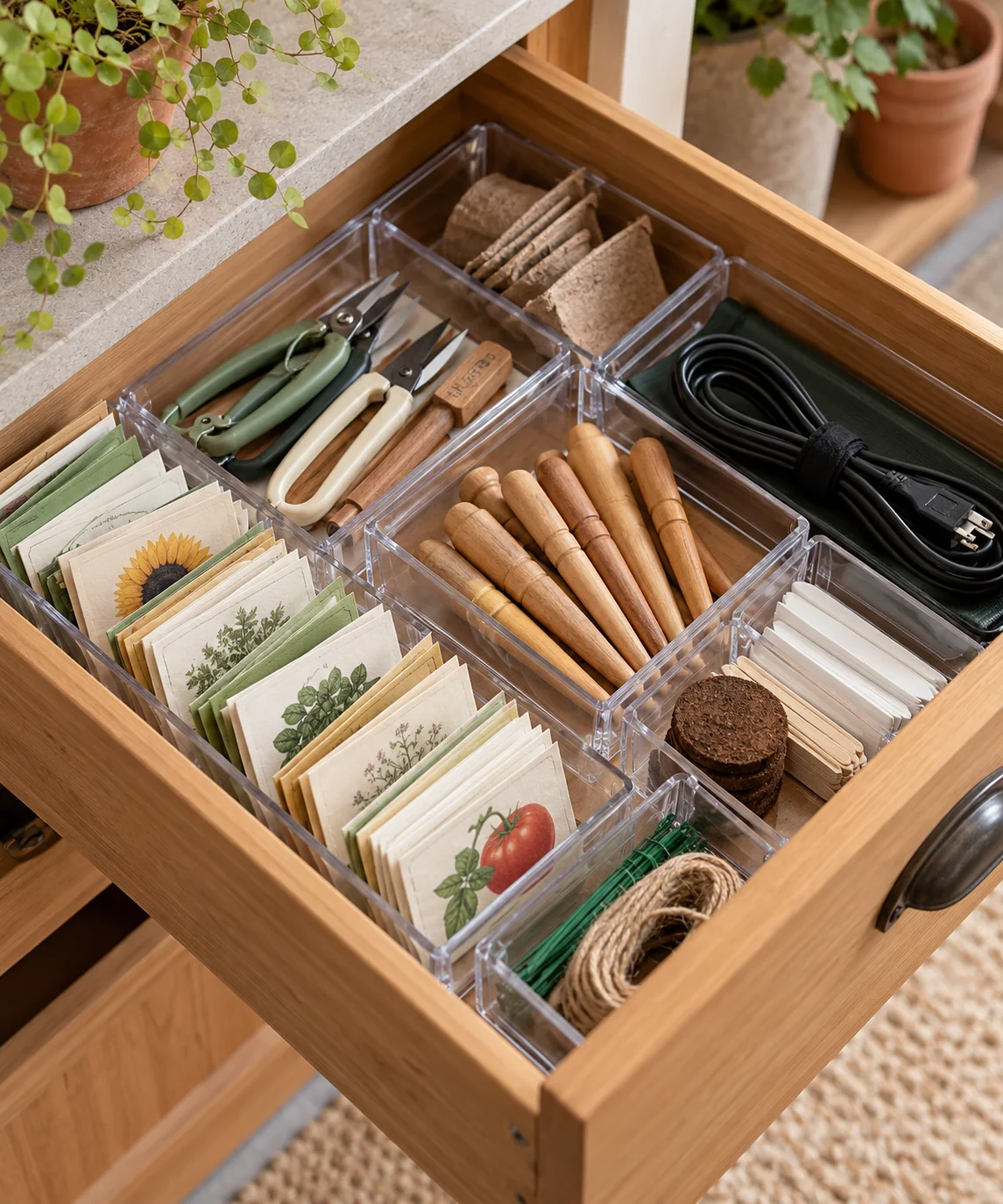
Evaluating Drawer Dimensions and Clearances
Measure drawer internal length, width, and vertical depth accurately before choosing organizer trays. Most seed-starting tools require only two to three inches of vertical clearance, making shallow desk or credenza drawers ideal. Check that drawer slides extend fully so back compartments remain visible and accessible. Test drawer opening actions to ensure partitions will not slide or overturn when pulled. Lining the drawer base with non-adhesive grip matting prevents individual containers from shifting as you open and close the drawer.
Dividing Tools by Seed-Starting Stages
Group propagation tools logically based on seedling development stages. Place measuring spoons, seed dispensers, and fine dibbers in a front tray for the initial sowing phase. Dedicate an adjacent section to plant labels, fine-tip waterproof marker pens, and wooden tags. In rear compartments, store items needed later, such as delicate thinning snips and heating mat power cords bundled with hook-and-loop ties. This workflow-driven arrangement reduces drawer searching while your hands are handling damp soil or fragile seeds.
Configuring Clear Modular Organizers
Use square and rectangular acrylic trays with straight sidewalls to eliminate wasted gaps between organizer edges. Clear walls let you inspect marker counts, seed varieties, and rubber band supplies from above without pulling trays out. Choose shallow long trays for narrow wooden dibbers and seed tweezers, and square bins for loose plastic cell markers. Avoid curved-edge baskets that waste interior perimeter space; interlocking modular bins create a custom grid that adjusts easily as your seed supply changes.
Protecting Stored Seed Packets from Damage
Keep current-season seed packets upright in deep rectangular containers separated from metal tools. Friction against metal tweezers or sharp scissor points can puncture seed envelopes, spilling tiny brassica or flower seeds across drawer corners. Group seed packets alphabetically or by planting date using stiff card dividers. Keep silica gel packs nestled inside the packet section to absorb residual humidity, guarding delicate seed stocks against damp conditions that could trigger premature decay or fungal growth.
Drawer Hygiene and Off-Season Storage
Seedling drawers must remain strictly dry and free of potting mix debris to prevent fungal contamination. Clean precision snips and wooden dibbers with a dry microfiber cloth before returning them to trays. Never stash damp potting soil samples or moist seed cell plugs in the drawer. At the end of the propagation window, wipe each acrylic tray clean, verify seed packet seals, and keep the drawer shut tight to protect sensitive tools from light and workshop dust.
YOUR STARTING POINT
A little checklist.
Original editorial guidance. Images are AI-generated concepts, not photographs of completed projects. Our sources and approach.
Questions to consider
Why are clear acrylic bins better than colored plastic organizers?
Transparent bins allow instant visibility of micro-tools, miniature tags, and seed labels from above. Colored plastic creates shadows inside dim drawers, making it difficult to locate tiny snips or read small packet labels quickly.
How should I store wrapped heat mat cables inside the drawer?
Coil cords loosely and secure them with reusable hook-and-loop straps rather than tight rubber bands. Lay them flat in a designated rear compartment to prevent wire crimping and avoid tangling around delicate dibbers.
Can I store open seed packets in this drawer indefinitely?
Open seed packets should only be stored for one or two seasons depending on the plant variety. Keep packets sealed with paperclips and store the drawer in a cool, dark, temperature-stable indoor room.