Small Balcony Layouts · THE GUIDE
Create a Symmetrical Green Frame Around the Doorway
Framing an exterior threshold with balanced greenery establishes a visual bridge between interior living rooms and open-air balconies. Placing matching containers on either side of the entrance anchors the doorway, drawing attention outward while maintaining a functional thoroughfare. On compact terraces, every object placed near the door must respect human movement. Selecting slender, vertical profiles allows you to introduce height, texture, and architectural balance without encroaching on required door clearances or obstructing regular residential egress during everyday use.
Jump to the checklist ↓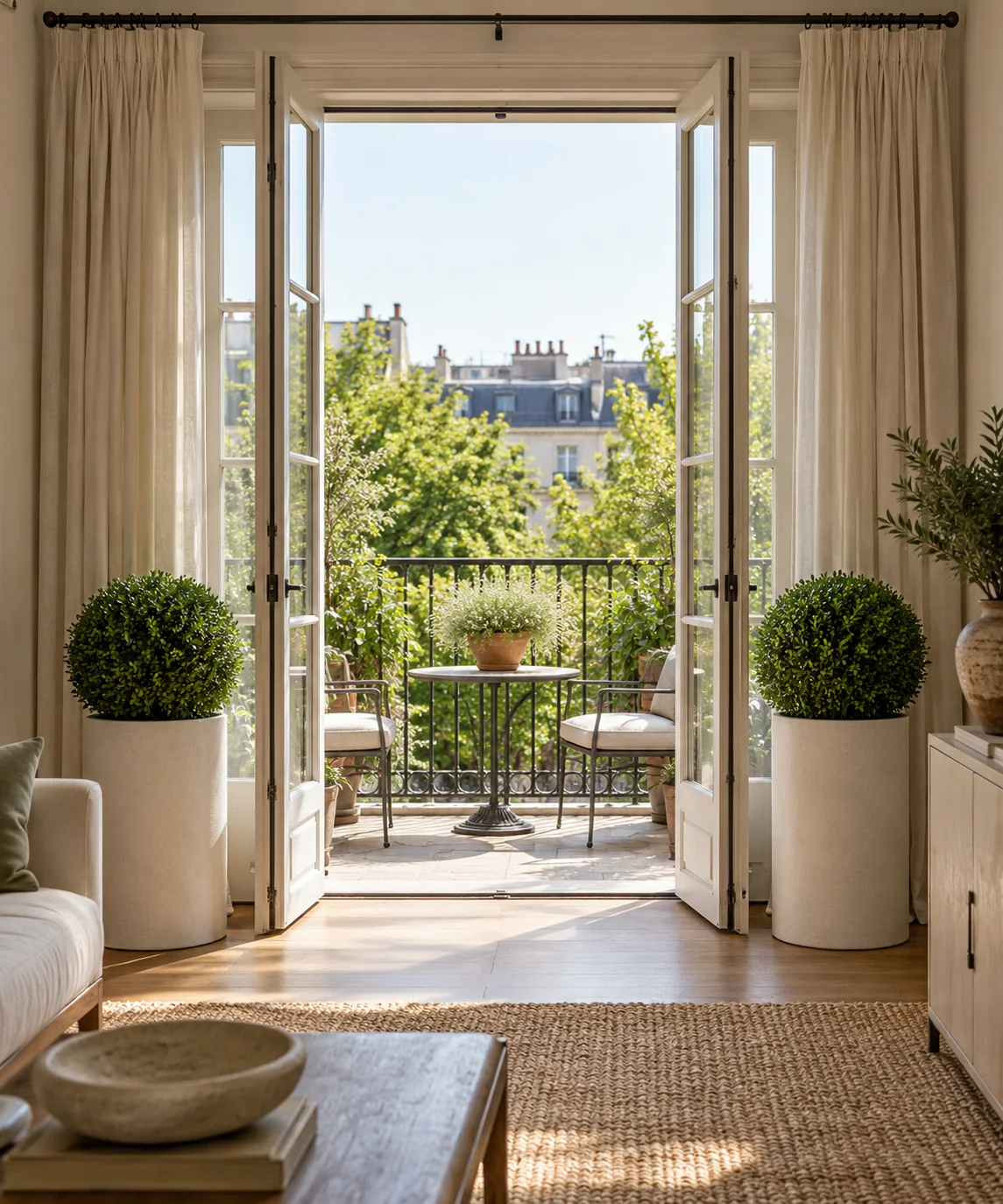
Planning Egress and Doorway Swing Clearances
Before acquiring planters, measure the full arc of the exterior door swing to ensure unhindered passage. If the door opens outward onto the balcony, containers should remain entirely outside the operating arc so they do not collide with the door or trip occupants. For inward-opening or sliding glass doors, verify that the placement preserves an open, unobstructed thoroughfare aligned with local building egress codes and household traffic. Walk through the entryway while carrying everyday items to confirm the vessels leave a comfortable, safe passage without creating pinch points.
Selecting Slender Container Profiles and Materials
To establish vertical impact without consuming valuable floor area, evaluate tall columnar or tapered cylindrical planters. Slender footprints allow you to introduce height while maintaining necessary walking space. Lightweight composites, rotational-molded resins, or fiberstone offer structured silhouettes that are manageable to reposition during maintenance. Because tall, narrow vessels have an elevated center of gravity, check manufacturer guidelines regarding stability in exposed locations, and consult property management regarding permissible balcony load limits before introducing heavy potting media.
Plant Selection for Vertical Structure
Choose upright botanical specimens that naturally maintain a tidy, narrow form without sprawling outward into the threshold. Slender dwarf conifers, structural ornamental grasses, or compact evergreen shrubs provide year-round presence without dropping excessive debris along the threshold. Evaluate the specific microclimate of the doorway, matching species to actual daily sunlight exposure and seasonal temperature swings. Avoid thorny, spiny, or brittle foliage that could catch on clothing or break during regular foot traffic.
Floor Surface and Moisture Management
Direct contact between wet container bases and balcony flooring can trap moisture, leading to staining, algae growth, or potential substrate deterioration. Position matching heavy-duty drip saucers beneath each pot, or select planters with internal reservoirs and accessible overflow plugs. Utilizing low-profile non-staining pot feet under the saucers promotes continuous air circulation beneath the containers, helping to keep the balcony deck dry and preventing pooled drainage water from migrating toward the door threshold.
Harmonizing Sightlines and Placement
Position the containers to mirror each other relative to the doorframe or exterior architectural trim. Aligning each vessel evenly with the casing creates a cohesive visual transition between the interior living space and the outdoor terrace. Selecting neutral, cohesive container finishes that complement interior flooring or exterior walls unifies the doorway without visual clutter. Ensure all placements remain fully reversible and non-destructive, avoiding any adhesive or mechanical anchoring into exterior building cladding or railings unless specifically approved by building management.
YOUR STARTING POINT
A little checklist.
Original editorial guidance. Images are AI-generated concepts, not photographs of completed projects. Our sources and approach.
Questions to consider
What planter shapes work best beside balcony doorways?
Tapered square, cylindrical, or columnar planters with narrow footprints are generally practical choices. They provide vertical presence and root room while leaving the primary walking corridor and door swing clear.
How do I protect balcony decking from doorway planter runoff?
Pair each planter with a durable drip saucer and elevate it slightly using pot feet. This setup catches excess irrigation water, prevents staining, and allows airflow beneath the base so moisture does not pool against the threshold.
How should wind stability be addressed for tall doorway planters?
Tall planters can catch wind, particularly on upper-level balconies. Select lower-profile or gently tapered shapes, keep plantings proportional rather than top-heavy, and check with property management or manufacturer specifications regarding wind safety and permissible floor weight.