Bookshelf Styling · THE GUIDE
Create a Tidy Seed Packet and Gardening Journal Shelf
Gardening documentation and seasonal supplies often end up scattered across utility surfaces, risking damage from moisture and dust. Dedicating an interior shelf tier to botanical reference books, a lidded seed storage tin, and an active garden journal consolidates planning resources into one protected, orderly station. By integrating sturdy regional growing handbooks with dry storage for paper seed packets, this arrangement keeps valuable notes and viable seeds systematically arranged between planting cycles. Selecting dry, shaded indoor locations prevents heat degradation of seed stocks while maintaining a clean, structured visual presentation alongside your broader home book collection.
Jump to the checklist ↓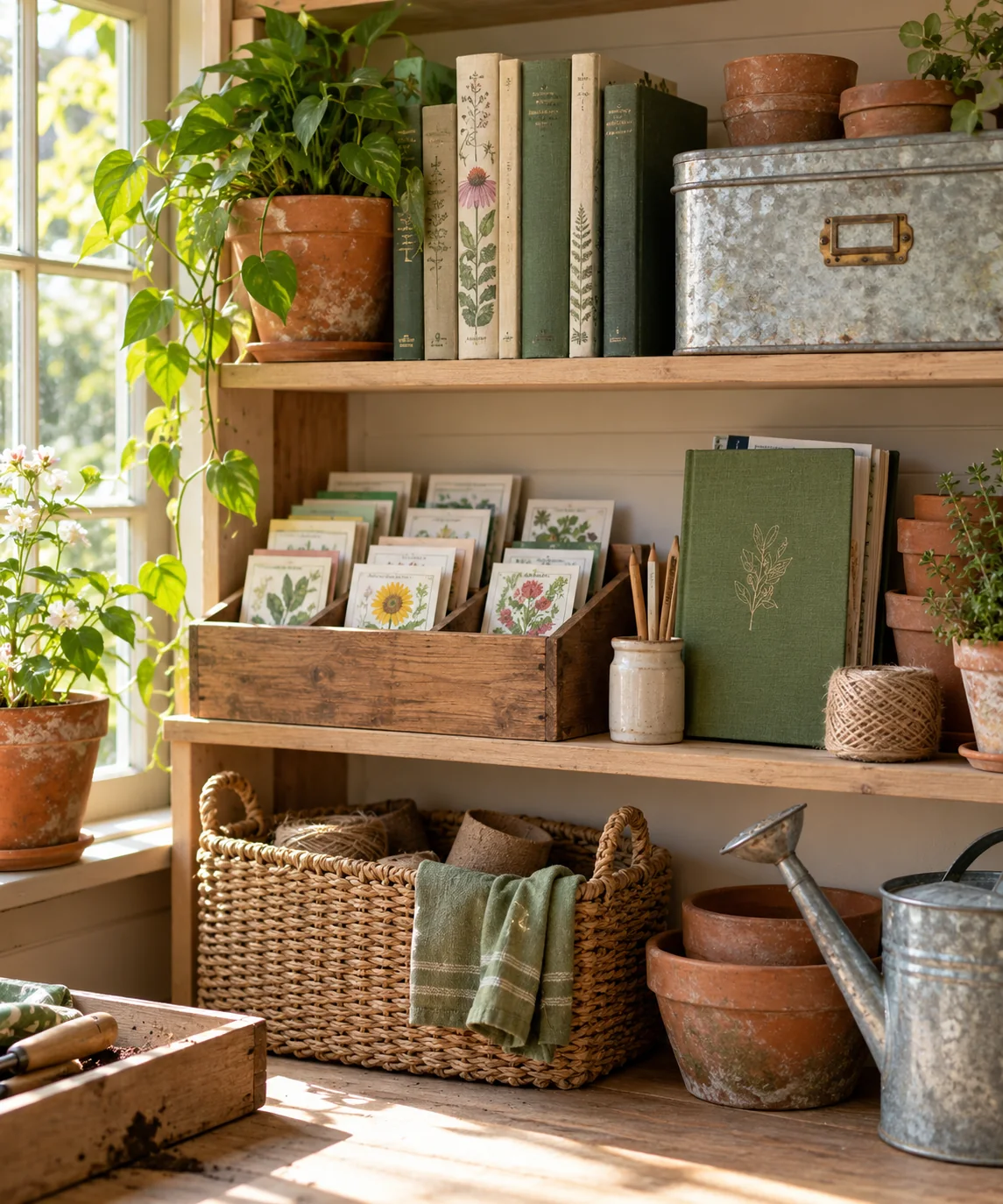
Pairing Handbooks with Planning Notebooks
Group botanical encyclopedias, pruning manuals, and regional gardening guides vertically on one side of the shelf. Place your current planning journal immediately alongside these reference books using a bookend to keep the sequence upright. Storing your notebook next to primary horticultural references encourages consistent record-keeping when checking sowing schedules or soil guidelines. Select journals with durable linen or heavy bookcloth bindings to withstand repeated handling, ensuring notes remain well protected throughout successive growing seasons.
Tin Specifications for Seed Storage
Paper seed packets require complete protection from moisture, fluctuating humidity, and direct ambient light. A powder-coated or galvanized steel tin with a snug friction-fit lid serves as an ideal shelf-stable container. Tins protect paper envelopes from crushing, exclude light that degrades seed viability, and contain loose seeds neatly. Position the tin beside the book group on the shelf, choosing a tin whose height matches the adjacent books to produce a balanced, continuous horizontal silhouette.
Shelf Placement and Environmental Protection
Seed viability deteriorates rapidly in warm, damp, or sunlit spaces. Avoid styling this storage tier in direct sunlit window paths, damp basements, or adjacent to heating vents. Choose an interior wall bookshelf where ambient room temperatures remain consistently between 55 and 70 degrees Fahrenheit. Maintaining low relative humidity preserves seed dormancy while protecting paper journal pages and hardcover book cloth from mildew, warping, and ultraviolet fading across year-round storage periods.
Organizing Seed Packets Internally
Within the metal tin, arrange seed packets upright in chronological planting order rather than stacking them horizontally. Cut stiff cardboard dividers labeled by sowing window, separating early spring starts, direct-sow varieties, and late-season cover crops. This vertical filing layout lets you flip through envelopes quickly without disturbing stored seed lots. Pair the packets with your journal calendar entries, ensuring you can pull required seeds efficiently when the appropriate planting window arrives.
Seasonal Maintenance and Routine Audits
At the close of each growing season, conduct an audit of your shelf contents. Remove expired seed packets, wipe the tin interior dry with a clean cloth, and inventory remaining varieties in your journal. Brush dust from book jackets and inspect journal pages for loose seed debris or moisture marks. Resetting the tin and notebook before winter planning ensures your botanical library remains organized, clean, and ready for immediate spring garden planning.
YOUR STARTING POINT
A little checklist.
Original editorial guidance. Images are AI-generated concepts, not photographs of completed projects. Our sources and approach.
Questions to consider
Why use a metal tin instead of a cardboard box?
A metal tin provides rigid protection against crushing, excludes ambient moisture, and blocks light that can degrade seed viability. Cardboard boxes absorb moisture from seasonal humidity changes, potentially compromising seed dormancy.
Where should I position the seed shelf in the home?
Keep seeds in an interior room with stable temperatures between 50 and 70 degrees Fahrenheit. Avoid window sills or uninsulated porches where direct sunlight or extreme temperature swings damage delicate seed embryos.
How should I organize the seed packets inside the tin?
Group seed packets alphabetically or by sowing season using stiff index card dividers within the tin. Keep active sowing dates logged in the adjacent journal to coordinate indoor starting and direct planting.