Sage and Cream Interiors · THE GUIDE
Create a Wall-Mounted Herb Display Using Ceramic Wall Planters
Culinary greens provide fresh ingredients, but compact kitchens rarely have spare counter space for expansive pot arrangements. Moving herbs onto an open vertical surface keeps meal preparation zones clear while integrating living greenery into a sage and cream decor scheme. Wall-mounted ceramic planters provide a tidy footprint, yet successful indoor herb growth demands strategic planning around direct sunlight, moisture management, wall substrate suitability, and building guidelines. Evaluating natural light paths, lease permissions, and pot drainage mechanics before committing to wall fixtures preserves surfaces and helps culinary plants receive the intense exposure required to produce leaves reliably throughout the growing season.
Jump to the checklist ↓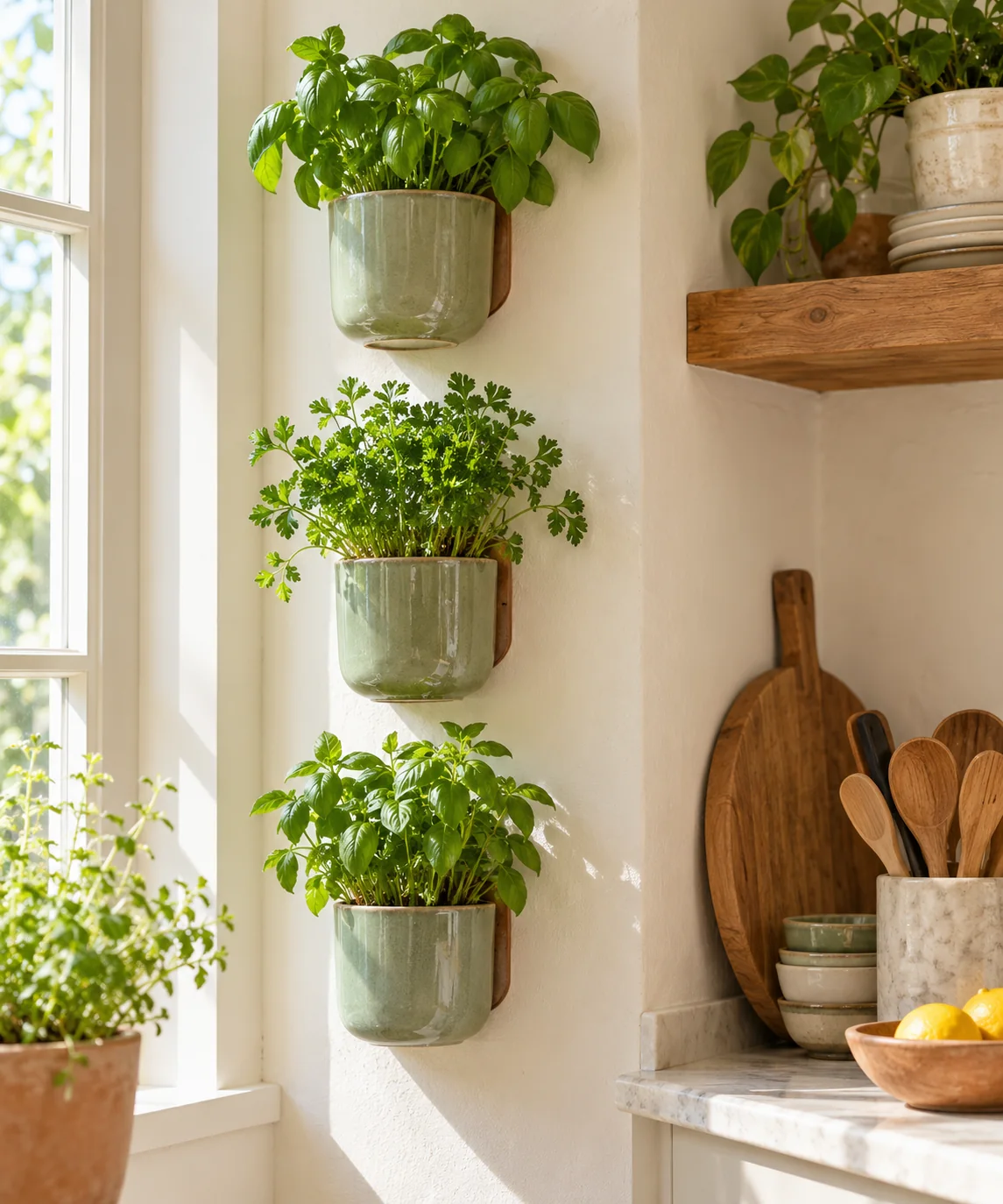
Assessing Natural Sun Exposure
Culinary herbs such as basil, mint, and parsley require direct sunlight for several hours each day rather than ambient kitchen lighting. Before selecting a vertical location, observe how light travels across your kitchen walls from nearby windows throughout morning and afternoon hours. An effective placement sits adjacent to an unobstructed south- or east-facing window. If the target wall receives only indirect or dim illumination, culinary greens tend to stretch, weaken, and produce sparse foliage, making a dedicated window sill or supplementary horticulture lighting a more dependable choice.
Selecting Planters and Moisture Control
Glazed ceramic planters in soft sage or matte cream fit neutral kitchen themes while shielding wall surfaces from exterior dampness. However, many decorative wall vessels lack bottom drainage holes, which creates significant root rot risks if planted directly. To maintain plant health, keep herbs in their plastic nursery pots with drainage holes, inserting those directly into the ceramic holders as removable cachepots. This setup allows you to lift out the inner pot for watering over the kitchen sink, letting excess moisture drain completely before returning the plant to the wall.
Planning Vertical Spacing and Reach
Arrange ceramic wall vessels vertically to make use of narrow wall areas beside kitchen cabinets. Rather than applying a generic spacing rule, set clearance based on the mature height of the specific herbs and the dimensions of your planters so upper foliage does not cast shade over the lower tier. Keep all containers below comfortable arm reach so harvesting sprigs and lifting pots for watering does not require overreaching or standing on unstable surfaces. Aligning two or three vessels along vertical sightlines creates a balanced accent while keeping maintenance practical.
Layout Planning and Clearance Checks
Before committing to hardware placement, confirm whether lease agreements allow wall penetrations and identify your wall substrate to match appropriate hardware weight ratings against fully watered planters. Cut paper templates matching the outer silhouette of each ceramic vessel and affix them temporarily with painter's tape to evaluate proportions, reach, and workflow. Verify that swinging upper cabinet doors or refrigerator panels do not strike the vessels when opened fully, and observe shadow patterns across different times of day to ensure upper containers do not block light.
Establishing Routine Harvesting and Care
Culinary herbs in small containers dry out faster than those in deep garden beds, requiring attentive moisture monitoring. Check soil moisture by feeling the top inch of potting mix rather than watering on a rigid timetable. Harvest sprigs regularly from top leaf nodes to encourage bushier growth rather than tall, weak stems. If an herb begins flowering, pinch the buds off to sustain leaf production. Rotate inner nursery pots periodically within their ceramic holders so all sides receive balanced light exposure from the window.
YOUR STARTING POINT
A little checklist.
Original editorial guidance. Images are AI-generated concepts, not photographs of completed projects. Our sources and approach.
Questions to consider
Can I grow culinary herbs on a kitchen wall without direct sunlight?
Most culinary herbs need several hours of direct natural sun daily to produce flavorful, dense growth. In low-light locations, plants become thin and pale. If your target kitchen wall lacks direct window exposure, position herbs along a bright windowsill or integrate dedicated plant grow lights.
How do I avoid water leaks on drywall when maintaining wall planters?
Use the cachepot method by nesting slotted plastic nursery containers inside watertight ceramic holders. Remove the inner plastic pot, water the plant thoroughly at the sink, allow all excess moisture to drain completely, and wipe the container dry before returning it to the wall.
What should I verify before attaching ceramic planters to interior walls?
Check your lease or building guidelines regarding wall alterations, identify whether the wall is drywall, plaster, or masonry, and ensure chosen mounting hardware is rated to support the combined weight of the ceramic vessel, damp potting mix, and mature plant.