Dining Nooks · THE GUIDE
Create a Wall-Mounted Peg Rail Above a Banquette for Everyday Essentials
Compact dining banquettes often face tabletop congestion, where condiment caddies, cloth napkins, and serving essentials compete with dinnerware for limited space. Mounting a traditional wooden peg rail on an adjacent wall introduces accessible vertical storage that frees surface area while keeping daily necessities within reach. Because hanging objects and protruding pegs sit near seated occupants, planning proper vertical placement, wall anchoring, and item selection is critical for comfort and safety. By securing the rail into structural wall framing, selecting lightweight non-hazardous goods, and maintaining adequate clearance above seated heads, you can create a practical, orderly breakfast nook.
Jump to the checklist ↓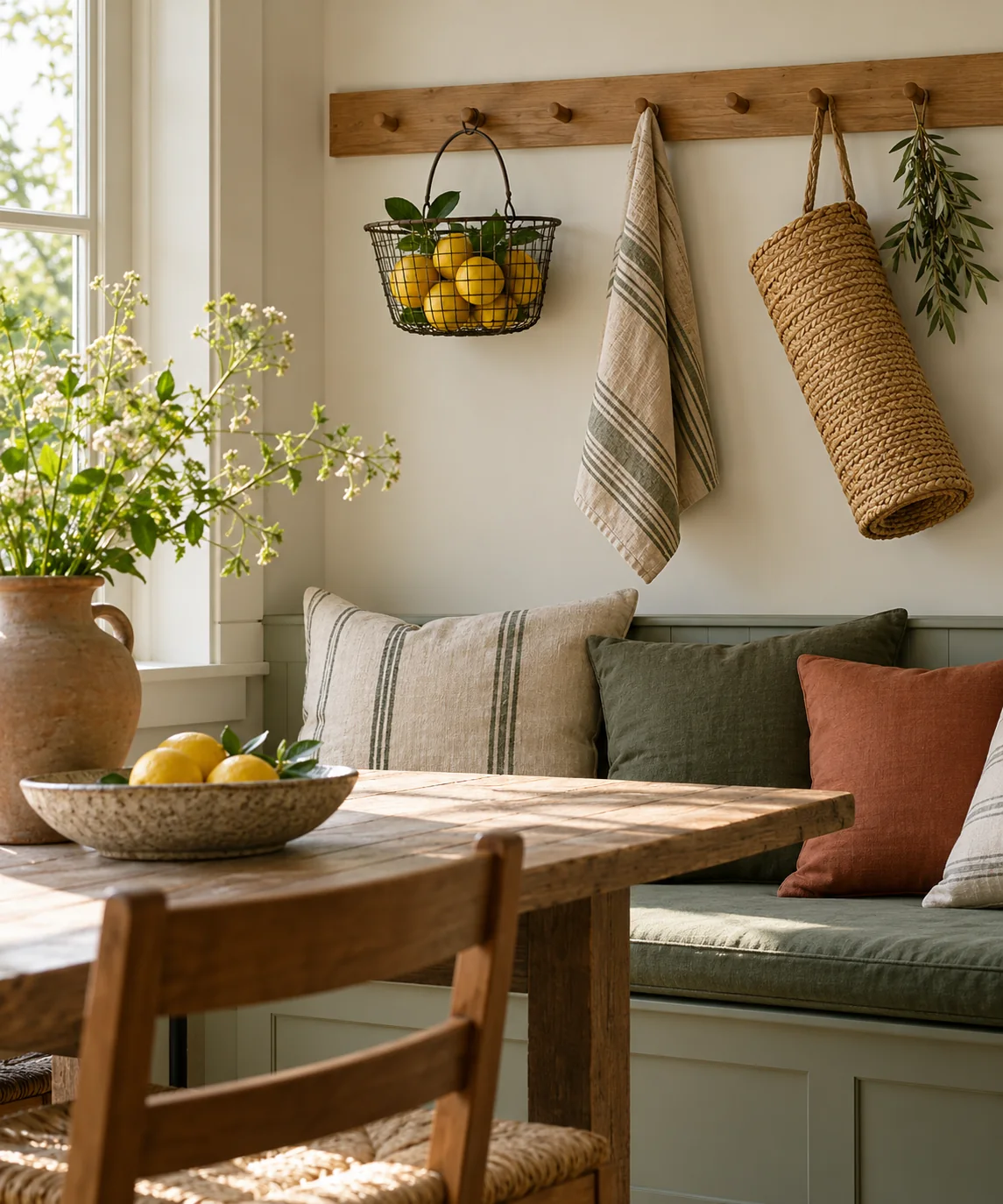
Assessing Headroom and Vertical Placement
Determining the correct mounting height requires careful observation of how occupants sit and lean within your specific banquette. Rather than relying on rigid universal measurements, measure the seated torso height of household members while seated on the compressed bench cushion. Position the rail high enough so that leaning back or shifting posture does not bring an occupant's head into contact with the rail or suspended items. Testing the vertical position with temporary marking tape allows you to verify adequate clearance before drilling permanent mounting holes.
Selecting Safe, Lightweight Hanging Goods
Items stored above seating must be chosen with personal safety in mind to eliminate hazards if something is accidentally brushed off a peg. Restrict storage to soft, lightweight, or shatterproof articles such as woven bread baskets, cloth napkin totes, dried botanical swags, or fabric tea cozy bags. Never hang heavy ceramic vessels, cast iron trivets, glass containers, or sharp cutlery directly above dining seating, as accidental contact during a meal could dislodge them and cause injury.
Ensuring Robust Wall Anchoring
A utility rail carrying daily dining accessories requires dependable mechanical fastening directly into wall studs. Avoid adhesive hanging strips, temporary mounting tapes, or light-duty friction plugs, as temperature fluctuations and repeated pulling forces can cause adhesives to fail unpredictably over time. Fasten the wooden rail using structural wood screws driven directly into wall studs where possible, or use quality toggle anchors rated for hollow drywall when stud alignment does not coincide with rail mounting points.
Balancing Spacing and Visual Rhythm
A cluttered rail with tightly packed hooks creates visual tension in a small dining corner and increases the likelihood of items catching on clothing. Opt for rails with pegs spaced far enough apart—typically five to six inches—to let baskets and totes hang flat against the wall without crowding. Leaving several pegs intentionally empty maintains an open, restful appearance and provides flexible temporary hanging space for small seasonal items or daily cloth napkins.
Streamlining Daily Tabletop Organization
Relocating non-perishable dining accessories off the table surface significantly improves usable dining area, especially during busy morning routines. Hanging open-weave baskets allows quick access to dry breakfast essentials, cloth napkins, or tea towels without cluttering narrow tabletops. Ensure that suspended items do not swing forward into dining paths, and periodically check that stored goods remain clean, dust-free, and securely looped over their designated pegs.
YOUR STARTING POINT
A little checklist.
Original editorial guidance. Images are AI-generated concepts, not photographs of completed projects. Our sources and approach.
Questions to consider
Can adhesive strips be used to mount a peg rail in a rental home?
Adhesive strips are not recommended for hanging rails directly above seating areas. Over time, humidity, paint bond strength, and the mechanical leverage of pulling items off pegs can cause adhesives to release unexpectedly, risking injury to seated diners.
How do I prevent suspended baskets from scratching the wall surface?
Choose baskets woven from soft natural fibers like seagrass or cotton rope, or apply small adhesive felt pads to the rear contact points of rigid willow baskets. This protects painted drywall from scuffs caused by daily handling.
What is the best way to clean a wooden peg rail near a dining table?
Wipe the rail and pegs periodically with a soft, slightly damp cloth to remove cooking oils and dust, then dry immediately with a clean towel. Avoid abrasive scrubbers or harsh chemical sprays that could strip protective wood finishes.