Laundry Space Organization · THE GUIDE
Create a Wall Pegboard for Brushes and Lint Rollers
Garment care tools such as cashmere combs, lint rollers, clothes brushes, and shoe horns frequently end up jumbled in laundry catch-all bins. When stored flat, delicate horsehair bristles bend and adhesive roller sheets pick up stray fibers, rendering them ineffective. A dedicated wall pegboard establishes a visible, vertical staging zone that keeps specialized fabric maintenance tools in pristine condition. By mapping tool silhouettes and utilizing tailored peg accessories, you transform blank wall space into an orderly station that streamlines morning prep and post-wash clothing preservation.
Jump to the checklist ↓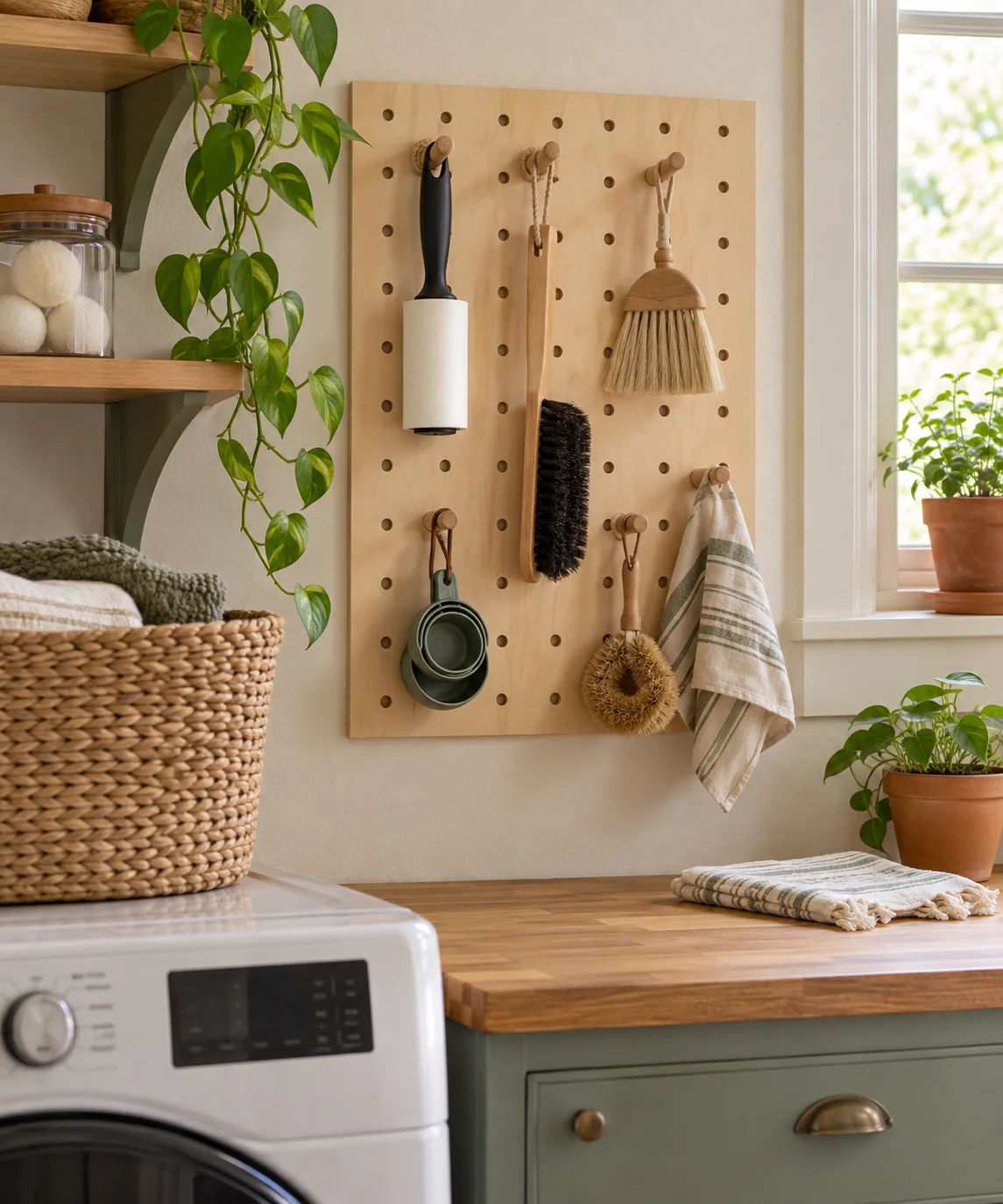
Wall Positioning and Ergonomic Placement
Select an unobstructed section of wall in the laundry or dressing area, positioned away from direct washer steam, sink splash zones, and ironing heat. Mount the board at a height that matches your natural reaching zone, ensuring that the highest pegs remain accessible without straining and lower tools hang clear of countertops. Check that the board perimeter provides enough clearance so opening doors, overhead cabinet swings, and raised washer or dryer lids do not collide with hanging items or dislodge accessories from their hooks.
Panel Selection and Structural Support
Select pegboard panels suited to the humidity levels of a laundry area, such as sealed composite, moisture-resistant coated wood, or powder-coated metal. Check your wall type—such as drywall over studs, plaster, or solid masonry—and use appropriate wall anchors or drive screws into wall studs according to the panel manufacturer's load guidance. Standard pegboards require rear clearance or integrated standoffs so hooks can insert and rotate into place without grinding against the finished wall. Confirm that the mounted frame is level and securely fastened before hanging loaded accessories.
Layout Planning and Tool Arrangement
Before mounting hooks, lay the pegboard flat on a clean table and arrange your garment care tools across the surface to determine a balanced layout. Group tools by purpose, placing frequently used lint rollers and clothes brushes along accessible outer edges and delicate specialty tools toward the center. Allow sufficient spacing between tools so handles and hanging lanyards lift off cleanly without bumping adjacent items. Testing the layout horizontally lets you adjust hook spacing and basket positions before committing hardware to the wall.
Peg Hook and Accessory Selection
Choose hardware accessories that securely match the shape and weight of each tool. Sturdy double-prong hooks provide stable cradles for the cylindrical crossbars of lint rollers, while single downward-curving pegs hold looped brush handles and shoe horns. Use small wire baskets or hanging cups for items lacking pre-drilled holes or lanyards, such as fabric combs, de-pillers, and spare adhesive rolls. Add retention clips or plastic peg locks to your hooks to prevent hardware from pulling out of the board when tools are lifted away quickly.
Dust Control and Environmental Care
Brushing textiles and handling lint rollers sheds fibers and dust that settle onto pegboard surfaces and hook attachments over time. Clean the board periodically using a vacuum fitted with a soft dusting brush, focusing on peg holes, tool cups, and wire baskets where lint tends to gather. Keep the laundry space well-ventilated during active washing and drying cycles to prevent excessive humidity buildup, which can affect untreated wood materials or cause surface moisture to collect on hanging accessories.
YOUR STARTING POINT
A little checklist.
Original editorial guidance. Images are AI-generated concepts, not photographs of completed projects. Our sources and approach.
Questions to consider
How do I store tools that lack pre-drilled hanging holes?
Thread a loop of cotton twill tape or leather cord through solid handle openings, or place the items inside small pegboard-mounted wire baskets. This keeps delicate combs and compact de-pillers accessible without modifying original handles.
Can pegboards support heavy garment steamers or irons?
Standard pegboards are designed for lightweight maintenance tools like brushes, combs, and lint rollers. Heavy appliances like steam irons exceed typical hook load ratings and should be kept on dedicated heat-resistant shelves or anchored utility racks instead.
How do I prevent wooden pegboard panels from warping?
Choose pre-sealed or factory-painted pegboards and ensure the laundry room maintains proper airflow during dryer operation. Sealing raw edges of cut wood panels with protective primer minimizes moisture absorption in humid utility spaces.