Entryway Organization · THE GUIDE
Create an Enclosed Porch Buffer to Catch Outdoor Grit
Transitioning directly from a damp garden path into the main living quarters frequently introduces loose loam, sand, and grit onto vulnerable interior floorboards. An enclosed exterior front porch serves as a dedicated decompression threshold where heavy debris can be intercepted before crossing the residential doorway. By establishing an orderly, sequential staging area, you create an effective physical barrier against outdoor soil. Careful placement of scraper mats, boot trays, and dedicated staging surfaces allows outdoor particles to settle within a washable zone, safeguarding interior hallways while keeping everyday gardening footwear neatly contained and ready for quick retrieval.
Jump to the checklist ↓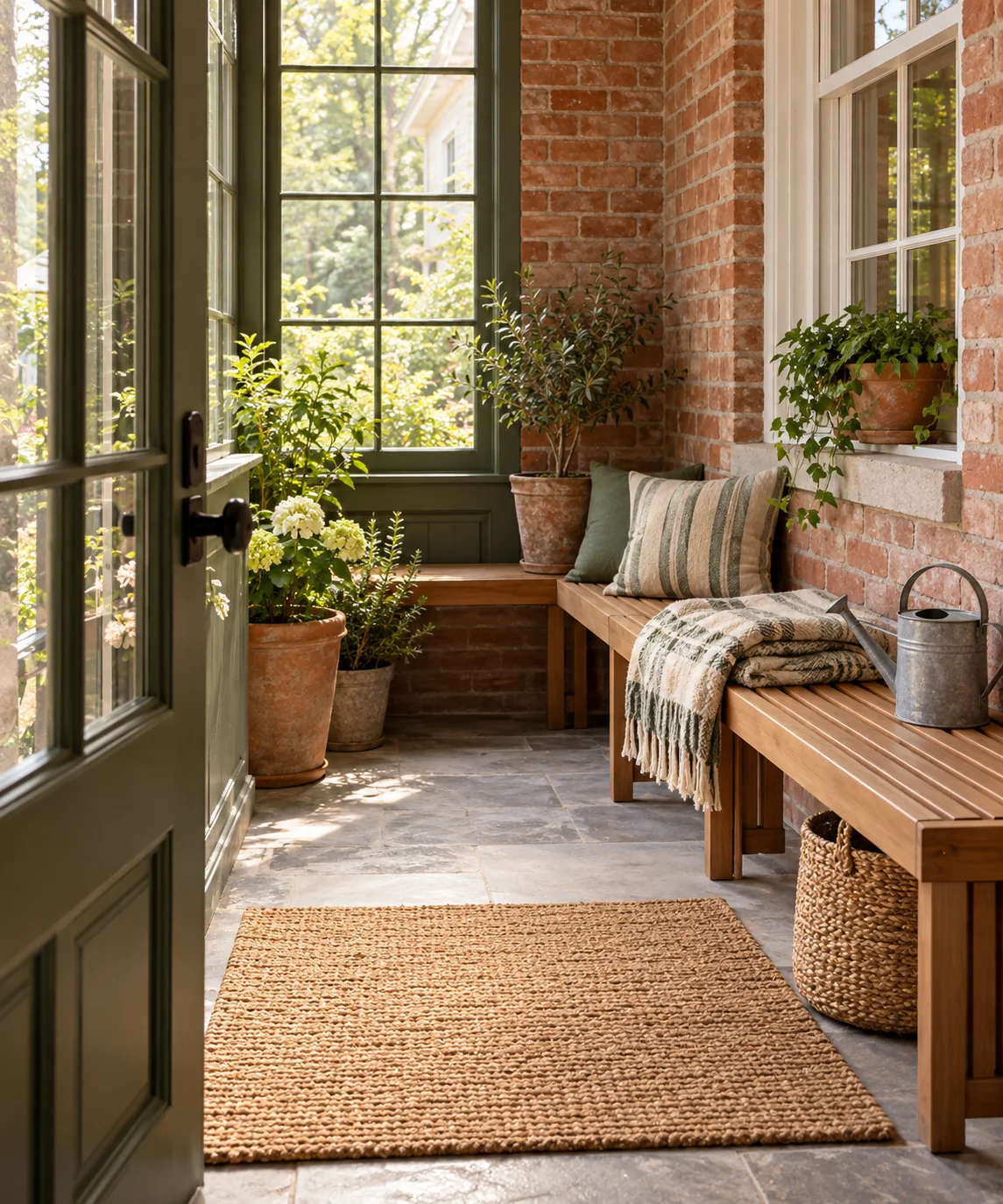
Establish an Unbroken Walkway Alignment
A small enclosed porch requires an unobstructed path from the outer door to the primary house entry. Avoid placing oversized furnishings directly across the natural walking vector, which causes people to sidestep and bypass cleanup mats. Keep a clear minimum corridor width of thirty-two inches. Designate one corner beside the latch side of the outer door for footwear removal. This arrangement prompts visitors and gardeners to step fully inside, close the exterior weather door, and shed grimy clogs or boots before stepping onto interior runners.
Deploy a Dual Matting Sequence
Capture soil effectively by using two complementary mats along the entry line. Place an unbacked, coarse natural coir mat at the immediate threshold to scrape compacted loam from deep tread patterns. Pair this with a low-profile, washable vulcanized rubber or woven microfiber mat situated just before the interior door. The coarse fibers dislodge solid mud cakes, while the secondary absorbent mat captures residual dampness and fine dust. This two-stage transition prevents tracking loose grit across finished interior hardwood.
Incorporate a Slatted Boot Tray
Wet garden clogs left flat on a solid tray often retain water in their treads and develop musty odors. Elevate footwear by placing an open-grid rubber insert or slatted cedar insert inside a deep-rimmed metal or rigid polypropylene boot tray. Air circulates freely beneath the soles, accelerating drying times while trapping shedding soil beneath the walking surface. Position this tray adjacent to any seating to ensure shoes are stripped and stored in one fluid motion.
Designate a Staging Surface for Garden Tools
Carrying hand trowels, harvested vegetables, or damp gloves directly indoors deposits fine grit across interior counters. Position a compact slatted bench or narrow side table in the porch corner to serve as a temporary landing zone. Use shallow zinc or enamel trays atop the surface to capture stray dirt from handheld tools and garden trugs. Confining these items to an unheated transition zone keeps garden residue isolated from indoor surfaces until you are ready for washing.
Manage Porch Dust and Temperature Shifts
Enclosed porches experience rapid temperature swings and collect airborne grit quickly. Sweep or vacuum the floor weekly using a stiff-bristled utility broom to prevent abrasive particles from scratching porch floor coatings. Avoid using standing water on unsealed masonry or timber surfaces in sub-freezing weather, which can lead to ice formation or surface spalling. Instead, shake outdoor mats regularly against an exterior garden wall and wipe hard surfaces with a lightly dampened microfiber cloth.
YOUR STARTING POINT
A little checklist.
Original editorial guidance. Images are AI-generated concepts, not photographs of completed projects. Our sources and approach.
Questions to consider
How often should coir mats be cleaned in wet weather?
Shake out coir mats twice weekly during damp seasons. When saturated with dry soil, sweep the mat vigorously with a stiff hand brush. Avoid soaking natural coir in water, as continuous moisture degrades the woven backing and fibers.
Can I leave rubber boot trays on painted porch floorboards?
Place a thin felt or open-weave protective pad beneath vulcanized rubber trays on painted timber. Direct contact with certain rubber compounds can react with floor paint over time, creating discoloration or surface softening when moisture gets trapped beneath.
What is the best way to clean dried mud from the porch floor?
Allow wet garden mud to dry completely before attempting removal. Scraping or sweeping dry soil prevents smear marks on porch flooring. Once loose debris is swept up, wipe down the area with a plain damp cotton cloth.