Small Balcony Layouts · THE GUIDE
Create an Uncluttered Stretching Spot with Folding Furniture
Balconies often require balancing everyday outdoor seating with space for personal movement or stretching routines. Because standard exercise mats occupy substantial deck space, fixed patio tables and armchairs quickly create obstacles. Utilizing compact, flat-folding furniture and freestanding or non-invasive storage solutions allows you to transition an outdoor area into a functional open zone in minutes. By leaning or stowing folding pieces flush against an interior wall, you clear practical floor space without permanent building modifications or structural drilling. This approach keeps outdoor layouts versatile, reversible, and organized throughout the week.
Jump to the checklist ↓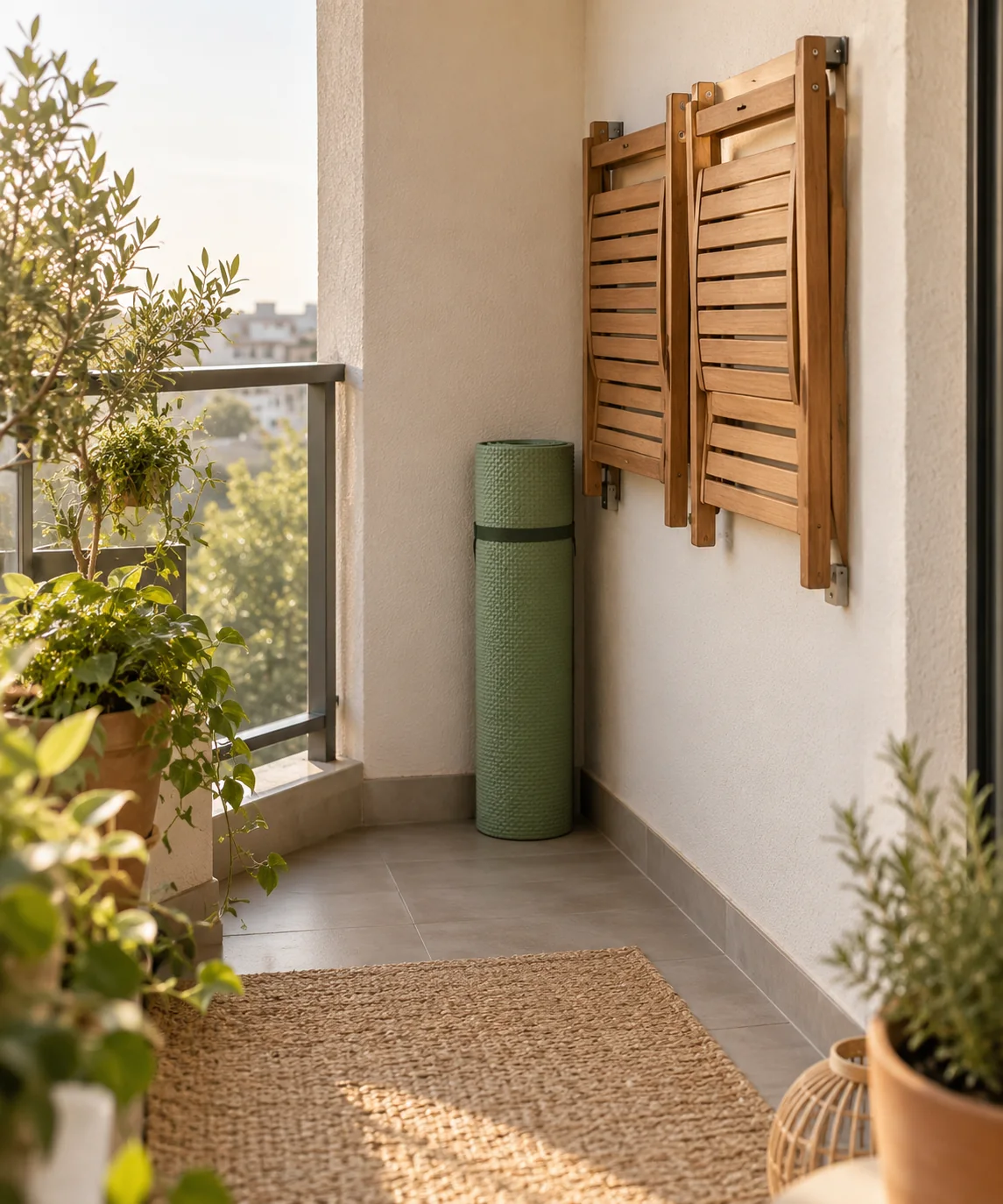
Mapping Floor Space for Movement
Before selecting furniture or rolling out an exercise mat, assess the available open footprint of your balcony. Confirm that standing and horizontal stretching routines will not cause limbs or equipment to strike railings, exterior fixtures, or door thresholds. Use temporary painter's tape to mark your planned mat boundary during layout planning. Verifying functional clearances beforehand helps you position storage zones away from high-traffic doorways, ensuring you can move freely while keeping safe buffers away from balcony railings and perimeter ledges.
Selecting Truly Flat-Folding Furniture
Not all folding outdoor furniture collapses efficiently. Bulky wooden armchairs or curved metal designs may still protrude significantly when collapsed, encroaching on limited balcony walkways. Look for streamlined scissor-frame chairs and drop-leaf or narrow-profile folding tables that collapse flat. Verify the folded dimensions and unit weight before purchase so that items can be moved smoothly and stored without straining or scuffing exterior surfaces. Selecting weather-resistant materials like powder-coated aluminum or treated wood helps furniture endure outdoor exposure without unnecessary bulk.
Adopting Non-Invasive Storage Solutions
Keeping folding furniture upright off the active floor zone maximizes usable surface area, but drilling into exterior walls often violates rental agreements or building envelope warranties. Instead of installing wall anchors, opt for freestanding storage racks, leaning deck ladders, or tucked floor-level arrangements placed securely against an interior wall. If your building allows wall-mounted hardware, check with property management regarding approved anchor specifications and weight ratings. Ensure any stored furniture remains stable during wind gusts by securing frames together with soft hook-and-loop ties.
Selecting Practical Outdoor Mat Materials
Standard lightweight foam fitness mats wear down quickly on textured balcony decks and can absorb exterior dust and grit. Denser closed-cell rubber or polyurethane mats provide superior puncture resistance, stability, and traction over decking planks or outdoor pavers. Avoid leaving mats laid out permanently on the balcony deck, as trapped moisture underneath can stain finishes, promote mold, or accelerate wood rot. After completing your movement session, wipe the mat clean with a damp cloth, let it dry, and roll it for indoor storage.
Establishing a Smooth Daily Transition
An efficient routine makes it practical to switch between seating and movement on a daily basis. Start by clearing any loose debris or grit from the deck surface to preserve mat traction and prevent punctures. Fold chairs and tables, standing them securely against a protected perimeter wall or within a designated freestanding rack. Unroll your mat in the cleared central corridor, keeping adequate distance from balcony railings. Reversing the sequence after your workout returns the balcony to its dining or relaxation configuration in just a few moments.
YOUR STARTING POINT
A little checklist.
Original editorial guidance. Images are AI-generated concepts, not photographs of completed projects. Our sources and approach.
Questions to consider
How should I store folding chairs without drilling into balcony walls?
Use freestanding leaning ladders, weather-resistant storage benches, or tuck folded chairs securely between a heavy planter and an interior wall. Fasten frames together with adjustable straps to prevent rattling in breezes.
Is it safe to exercise directly beside balcony railings?
Maintain a cautious setback from all exterior railings to prevent accidental loss of balance against perimeter barriers. Keep dynamic movements oriented toward the interior wall rather than the balcony edge.
How do I maintain an outdoor exercise mat?
Wipe the surface with a mild, diluted detergent and dry it thoroughly after use to remove outdoor dust. Store the mat rolled vertically in an indoor closet or dry storage bin rather than exposing it to continuous sun and rain.