Small Bedroom Layouts · THE GUIDE
Creating a Window-Sill Reading Seat with a Custom Cushion
A deep, low window recess or built-in ledge presents an appealing opportunity to add seating in a compact bedroom without consuming open floor space. Standard armchairs often obstruct walking paths or crowd adjacent furniture, whereas an existing structural ledge can provide an unobtrusive resting spot. Creating a safe window perch requires confirming whether the ledge is structurally framed to support adult body weight, avoiding glass breakage and fall hazards, and ensuring heating units remain unobstructed. By measuring accurately, verifying heating appliance clearances, and choosing non-permanent, non-slip cushions, you can establish a comfortable reading space that maintains bedroom safety and airflow.
Jump to the checklist ↓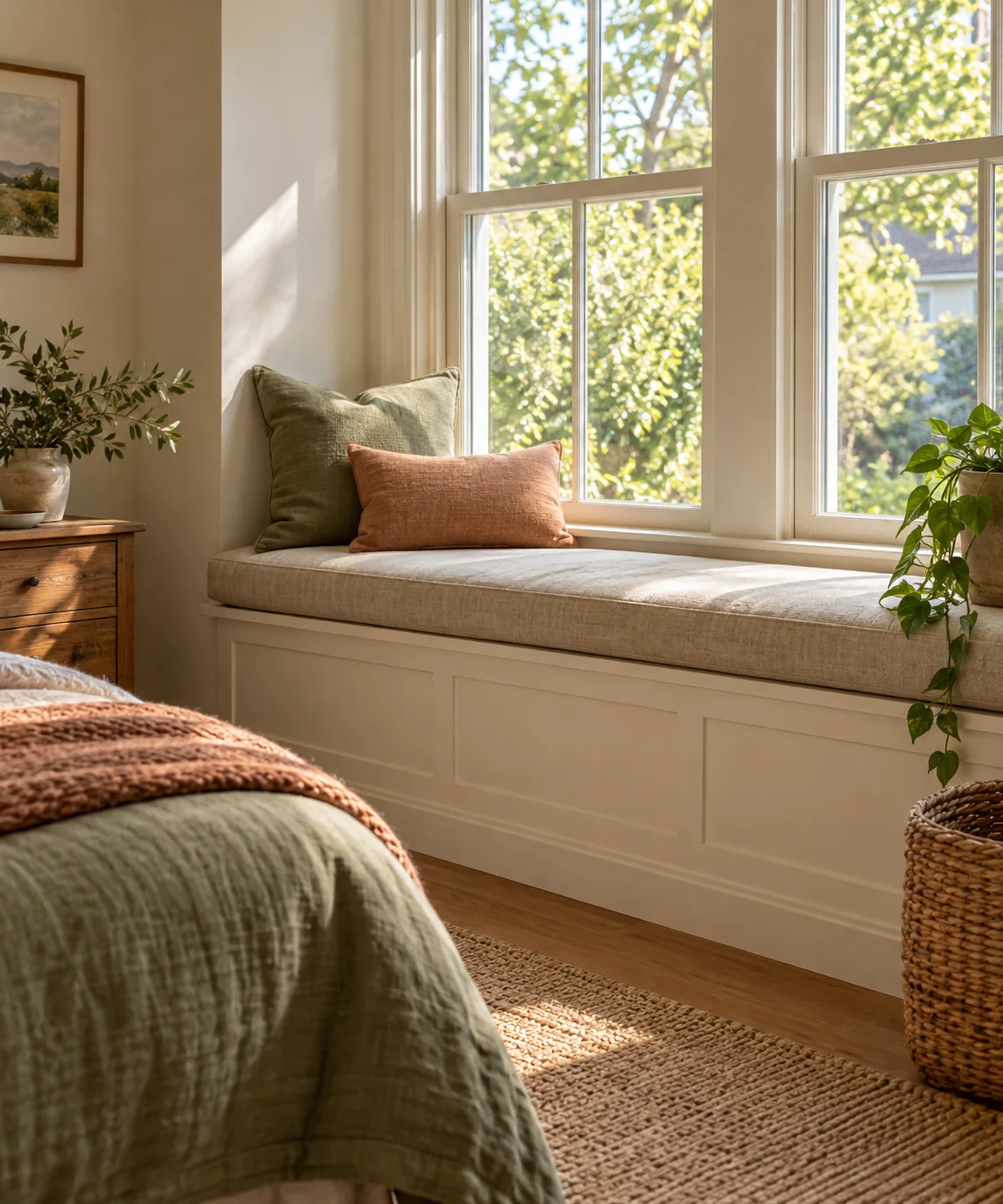
Verifying Structural Suitability and Fall Safety
Before planning a window seat, determine whether the ledge is engineered for seating or merely functions as a decorative trim sill. Standard residential window sills and drywall ledges are typically finished with light casing or thin trim intended to bridge the framing gap, not support the dynamic weight of a seated adult. Consult a qualified carpenter or builder if the ledge was not explicitly designed as a reinforced bench. Additionally, inspect the window itself. Sitting against standard, non-tempered window glass or near low-opening sashes introduces severe fall and glass-shattering hazards. Never use a window sill as seating if it places outward pressure on window glazing or compromises window lock safety.
Evaluating Heating Clearances and Airflow
Bedroom windows are frequently positioned directly above convective baseboard heaters, hydronic radiators, or forced-air registers. Placing combustible foam, upholstery fabric, or accent pillows over or directly adjacent to heat sources introduces serious fire hazards and blocks room heat circulation. Review manufacturer specifications for your heating equipment to confirm mandatory horizontal and vertical clearances. Seat cushions must never overhang a heater, block upper air discharge grilles, or trap hot air beneath the fabric. If safe clearances cannot be verified, keep the sill free of upholstery and maintain unobstructed room airflow.
Testing Ergonomics with Reversible Mock-Ups
Before purchasing custom-cut foam or bespoke upholstery, test whether the alcove comfortably accommodates an adult. Place folded bed quilts or a flat bench pad across the ledge to reach an approximate height of two to three inches. Sit on the mock-up for ten to fifteen minutes to evaluate posture, daylight glare, and headroom. Confirm that you can sit comfortably without leaning against cold glass or window hardware, and check that your feet and knees do not intrude into walking paths or prevent nearby wardrobe doors from sliding open.
Selecting Resilient Foam and Removable Covers
If the ledge framing is structurally sound and safely separated from heat sources, choose materials designed for sun exposure and frequent use. High-density upholstery foam between two and three inches thick provides firm support without collapsing against hard timber or stone. Wrap the core in a thin layer of polyester batting to soften outer seams, and enclose it in a removable, zippered cover. Select tightly woven, fade-resistant fabrics such as heavy cotton canvas or solution-dyed acrylic blends that resist ultraviolet degradation and allow convenient laundering.
Securing Cushions and Managing Condensation
Smooth painted trim, stone, or varnished wood surfaces can cause loose seat cushions to slip easily when sitting down or standing up. Rather than driving mechanical fasteners into window frames or trim, place a cut-to-size rubberized non-slip mesh beneath the cushion to keep it firmly positioned. During colder months, inspect the sill weekly for moisture accumulation. Exterior windowpanes routinely develop condensation that can wick into cushion foam, encouraging mold, mildew, and paint rot. Prop the cushion upright periodically to allow airflow and keep surfaces dry.
YOUR STARTING POINT
A little checklist.
Original editorial guidance. Images are AI-generated concepts, not photographs of completed projects. Our sources and approach.
Questions to consider
Can any standard window sill support a reading cushion?
No. Most standard window sills are decorative finish trim fastened with light brad nails and cannot support human weight. A reading seat requires dedicated structural framing underneath, such as a reinforced alcove or built-in bench, along with safety-rated window glass.
How do you protect window-sill seating from sun fading and moisture?
Use solution-dyed acrylic or UV-resistant upholstery canvas that resists degradation from direct sunlight. To address moisture, select closed-cell or water-resistant foam, and periodically lift the cushion away from the glass to inspect for condensation.
What should I do if a heater is positioned beneath the window?
Maintain all clearance distances specified by the heater manufacturer, ensuring cushions, skirts, or pillows never hang over or touch the unit. If minimum clearances cannot be met, avoid adding upholstery to the ledge to eliminate fire and airflow risks.