Small Bedroom Layouts · THE GUIDE
Creating an Open Garment Rail System Along a Single Nook
A traditional freestanding wardrobe often dominates a small bedroom, projecting deeply into floor space and obstructing natural light. When a room features an architectural recess or shallow alcove, swapping that bulky cabinet for a streamlined garment rail and low footwear bench opens the room visually. This layout choice preserves the full perimeter of the floor while keeping everyday essentials accessible. Successful execution relies on disciplined spacing, calculated hanging clearances, and strict curation to prevent the open setup from appearing chaotic. Planning around actual garment lengths ensures the nook remains efficient rather than overcrowded.
Jump to the checklist ↓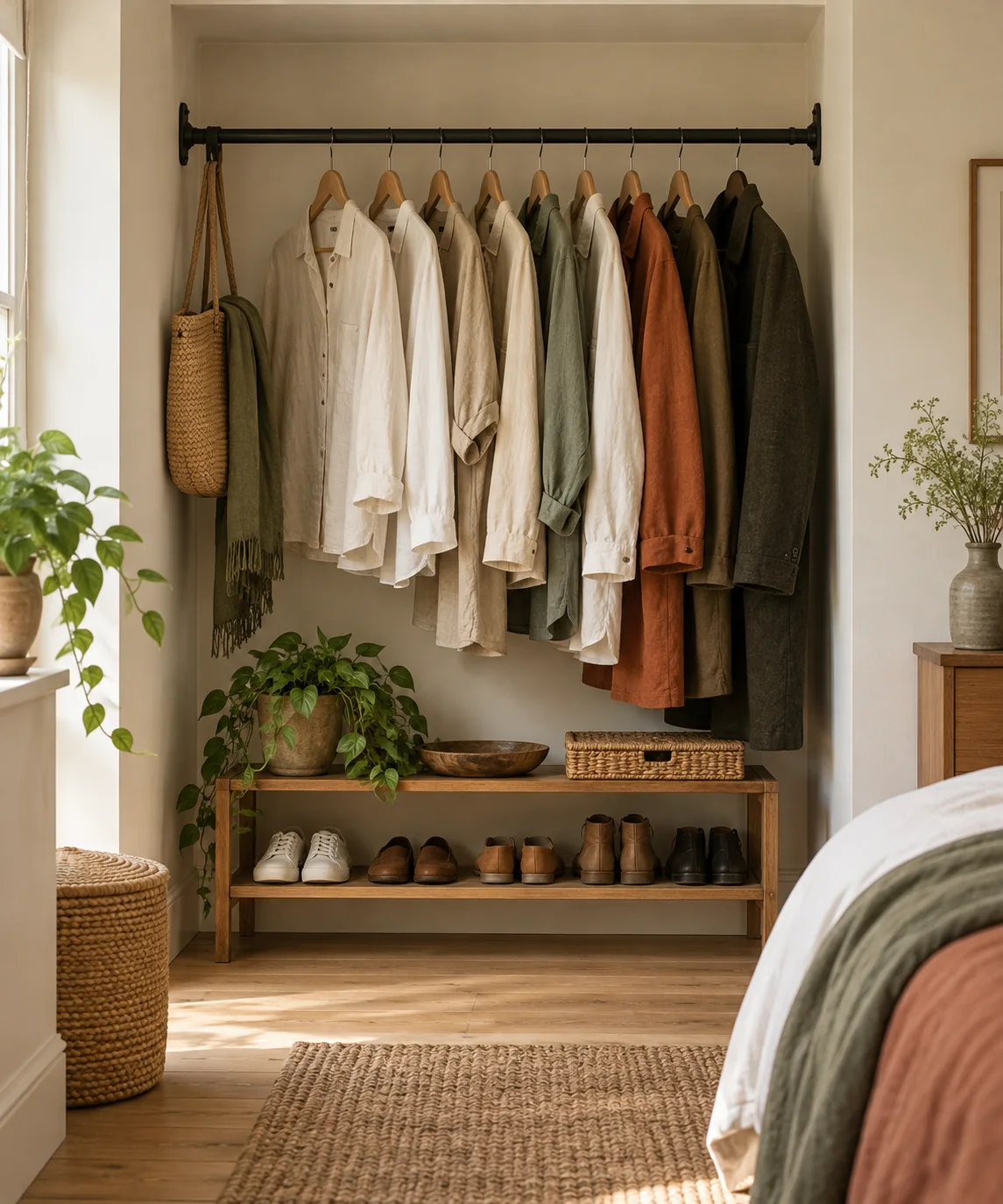
Assessing Alcove Depth and Clearances
Begin by measuring the precise depth and width of the recess before introducing hardware. Standard hangers require a minimum clearance of fifty centimeters from front to back to hang perpendicular without brushing against plaster surfaces. If your nook measures less than that depth, consider an angled rail or forward-facing valet rods. Ensure the rail height leaves at least one hundred centimeters of vertical drop for shirts and jackets, plus additional space beneath for a floor rack, keeping hem edges entirely clear of shoe shelving.
Pairing Low-Profile Footwear Storage
Place a slim, low-slung wooden shoe shelf directly on the floor beneath the hanging zone. This horizontal boundary anchors the alcove and keeps stray footwear from scattering across the broader bedroom floor. Select a unit with open slatted shelves to promote air circulation around shoes and limit dust collection. Ensure the overall height of the rack sits at least ten centimeters below the lowest hanging garment hems so that fabric drapes freely without bunching, crumpling, or snagging on soles.
Visual Curation and Uniform Accessories
Because open storage exposes garments to plain sight, visual uniformity maintains a tidy atmosphere. Standardize your hangers using identical slim wooden or matte composite models, facing them in a single direction across the entire rail. Group clothing logically by category and color palette, which prevents visual fragmentation. Leaving five to eight centimeters of negative space between garments stops the rack from looking stuffed and allows items to air out properly between regular wears.
Managing Dust and Everyday Wear
Exposing clothing directly to room air means fabric will gather ambient dust over extended periods. Reserve this open rail for pieces currently in weekly rotation, storing off-season coats, delicate silks, and formalwear in covered containers elsewhere. Keep a soft textile brush nearby to sweep over shoulder seams weekly. Vacuum or damp-wipe the low shoe rack every few days, as street dirt and lint naturally settle downward into the lowest tier of any exposed alcove.
Evaluating Practical Limitations
An open garment nook demands consistent personal maintenance compared to closed closet doors. Overfilling the rail instantly creates visual clutter that makes a compact bedroom feel smaller. Furthermore, clothing hung in direct sun can suffer gradual UV fading; reposition the arrangement or fit a sheer window screen if harsh light hits the recess. If storage needs expand beyond seasonal rotations, an open nook must be supplemented by under-bed bins rather than crammed.
YOUR STARTING POINT
A little checklist.
Original editorial guidance. Images are AI-generated concepts, not photographs of completed projects. Our sources and approach.
Questions to consider
How do I stop garments from accumulating household dust?
Rotate pieces frequently and restrict the open rail to high-turnover daily wear. Vacuum the surrounding floor area regularly, and keep long-term storage items, formal wear, or delicate textiles protected inside breathable garment bags stored separately.
What if my alcove depth is under fifty centimeters?
Use forward-facing pull-out valet rails rather than a traditional sideways rail. This allows hangers to sit parallel to the back wall, fitting garments cleanly within recesses as shallow as thirty-five to forty centimeters.
Can I add closed bins to this setup?
Yes, placing matching fabric or woven baskets on the lowest shelf of the shoe rack works well. These hold socks, accessories, and loose sundries out of sight while preserving the open architectural look.