Small Bedroom Layouts · THE GUIDE
Creating an Open Under-Window Plant and Book Ledge
The area beneath a low bedroom sill often becomes awkward, dead space because standard tables rise too high and obstruct incoming daylight. Positioning an eighteen-inch-high bench directly along this architectural threshold establishes an open display ledge that keeps sightlines clear. This low profile preserves the window's natural illumination while utilizing floor space for organized stacks of reading materials and container greenery. By treating the bench as a dual-purpose horizontal surface, you create functional bedroom storage that grounds the window wall, supports sun-seeking potted plants, and maintains quick access to daily items without visual clutter.
Jump to the checklist ↓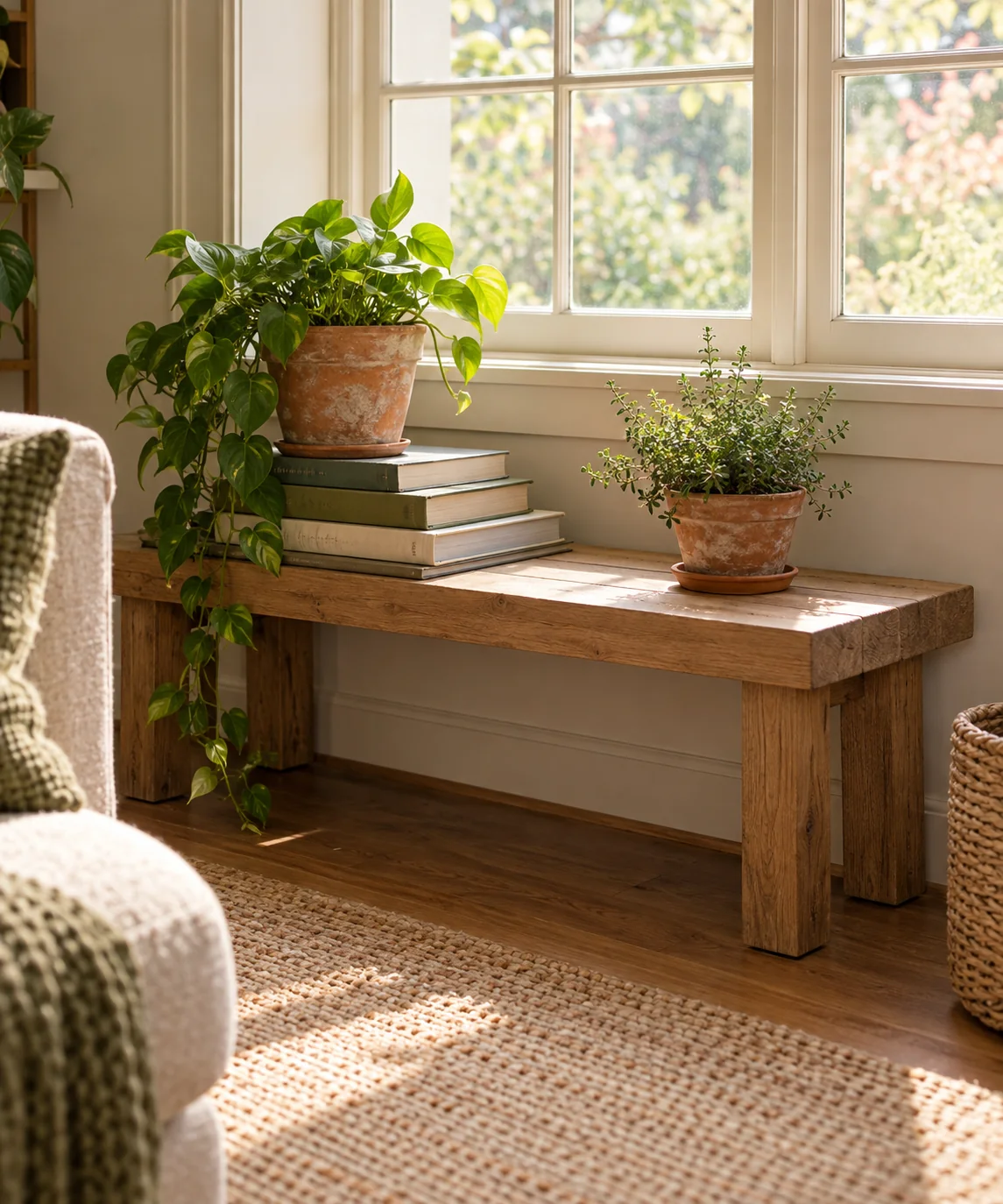
Measuring Clearances and Sill Heights
Before selecting a low bench or ledge, measure the vertical distance from the finished floor to the underside of the interior window sill. A bench surface positioned below the sill line keeps the glass fully exposed, maximizing natural daylight. Additionally, confirm that the bench depth leaves ample walking room between the edge of the furniture and neighboring bed frames or dressers, ensuring everyday movement through the bedroom remains fluid and unobstructed.
Arranging Stable Book Piers
Storing hardcover books horizontally in low stacks provides a stable base on a narrow bench surface, eliminating the risk of vertical bookends sliding off the edge. Stacking three to four volumes creates firm, low-profile pedestals that remain steady during dusting. Placing these stacks toward the bench ends aligns weight directly over the supporting legs, keeping the middle of the bench open for low decorative bowls or smaller containers.
Selecting Plants Suited to Window Exposure
Window areas provide direct or bright indirect light, making them suitable for sun-tolerant houseplants like jade plants or hoyas. Check the specific sunlight orientation of the window—south- and west-facing openings receive stronger, hotter afternoon sun than north-facing glass. Always place pots in waterproof saucers or on moisture-resistant coasters to protect furniture surfaces from dampness, and rotate containers occasionally to promote even foliage growth.
Managing Condensation and Temperature Swings
Window perimeters experience noticeable seasonal temperature fluctuations and humidity shifts. Position the bench with enough offset from the wall and heating registers to permit natural room airflow. During cold weather, inspect the glass for condensation runoff that could drop onto wooden furniture or bindings. Keeping plant leaves from directly touching cold window panes prevents localized chill damage and leaf spotting during temperature drops.
Surface Protection and Dusting Routines
A low surface directly beneath a window naturally gathers airborne dust and shedding plant debris. Establish a simple care habit of lifting book stacks periodically to dust the bench with a dry microfiber cloth. Water plants away from the bench or use a narrow-spout watering can to avoid accidental spills on book covers, and wipe down foliage with a damp cloth rather than misting near wood finishes.
YOUR STARTING POINT
A little checklist.
Original editorial guidance. Images are AI-generated concepts, not photographs of completed projects. Our sources and approach.
Questions to consider
Can I grow potted herbs on an under-window bedroom bench?
Herbs generally demand several hours of strong direct sunlight daily. If the window faces south or west and receives intense natural light, sturdy potted herbs can thrive, provided waterproof trays catch any drainage.
How do I protect books from sun fading beneath a window?
Direct sunlight can bleach book covers and page edges over time. Rotate volumes periodically, use decorative dust jackets, or position stacks slightly outside the primary sunbeam while reserving the brightest spots for sun-loving plants.
What should I consider if there is a baseboard heater beneath the window?
Heater manufacturers specify minimum clearance requirements to maintain proper convection and prevent fire hazards. Avoid placing wooden benches or trailing plants within these restricted zones, and verify clear air paths around heating elements.