Indoor Plant Styling · THE GUIDE
Curate a Privacy-Enhancing Plant Arrangement for Bathroom Windows
Frosted bathroom windows let daylight into private quarters, but ambient silhouettes can still remain visible from adjacent outdoor spaces. You can establish an organic, layered shield by arranging dense moisture-loving ferns along the windowsill. The fine, overlapping fronds break up exterior sightlines without noticeably dimming the incoming daylight. Because bathrooms naturally experience regular steam and fluctuating warmth, selecting adaptable foliage creates a self-sustaining microclimate on the ledge. Planning a tidy lineup of containers safeguards the surrounding trim, supports healthy root systems, and introduces a lush natural focal point to your daily self-care routine.
Jump to the checklist ↓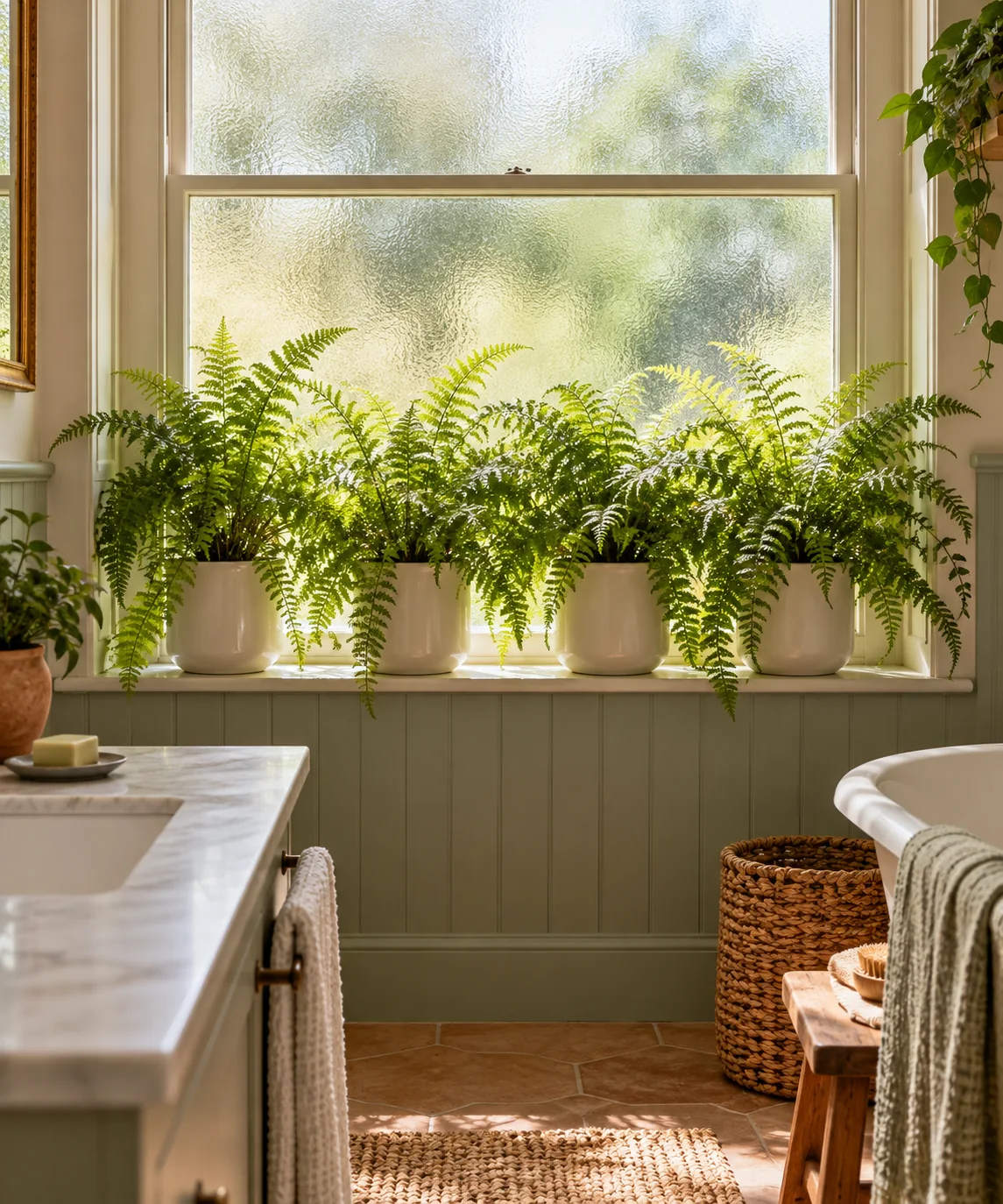
Assessing Window Sill Depth and Support
Before selecting planters, measure the usable flat depth of the interior window sill from the window frame to the front edge. Containers should sit completely level with their bases resting fully on the sill surface, without overhang that could cause tipping. Verify that the window trim and sill are firmly anchored, level, and free of dry rot or movement before adding heavy pottery. If the sill is narrow, choose slim rectangular or oval troughs designed for compact ledges. Keep all containers clear of window handles, latches, and sliding tracks so you can open the window for ventilation without disturbing the plants.
Foliage Selection for Diffused Light
Frosted glass scatters direct sunlight into a soft, ambient glow suitable for understory plants. Ferns such as Boston ferns, button ferns, and bird's nest ferns often adapt well to diffused exposure while producing layered foliage that softens exterior sightlines. Button ferns offer delicate, rounded leaflets along dark stems, while bird's nest ferns produce broader, upright fronds that provide fuller visual screening. Combining distinct foliage textures creates an appealing natural screen while ensuring plants receive adequate light without leaf scorch.
Planter Selection and Sill Protection
Uniform containers bring visual order to a compact bathroom window. Choose pots with matching drip saucers, or place nursery pots inside watertight decorative cachepots to catch drainage. Standing water and shower condensation can easily damage painted or varnished wooden window sills. To protect the wood, place non-porous silicone mats or glazed saucers beneath each container. Avoid unsealed cork or paper mats, which absorb water and can trap moisture directly against the sill finish, leading to mildew, peeling paint, or wood discoloration.
Spacing Foliage for Airflow and Coverage
Rather than crowding containers tightly together, arrange them with modest spacing between pots to encourage gentle air circulation around the foliage. Stagnant, humid air trapped between dense leaves can promote fungal issues or mold growth. Position taller or denser plants toward the center of the window area where visual shielding is most useful, tapering to lower-profile pots toward the edges. This arrangement screens key sightlines while allowing ambient daylight to enter around the plants.
Routine Care and Humidity Management
High humidity in bathrooms reduces the rate at which potting soil dries out, but it does not eliminate the need for regular soil monitoring. Check moisture levels beneath the surface once or twice weekly, watering only when the soil feels dry according to the needs of the specific fern species. Lift nursery pots to water them at the sink, allowing surplus liquid to drain completely before returning them to their decorative containers. Periodically wipe or rinse dust and soap residue from the foliage using room-temperature water to keep leaves healthy.
YOUR STARTING POINT
A little checklist.
Original editorial guidance. Images are AI-generated concepts, not photographs of completed projects. Our sources and approach.
Questions to consider
Can ferns survive on a north-facing frosted window?
Many ferns tolerate the low to moderate diffused light typical of northern windows. Growth may be slower in cooler, shaded exposures, so adjust watering accordingly to prevent over-saturating the soil.
How do I prevent moisture damage to painted window sills?
Use fully glazed saucers or non-porous protective mats beneath pots. Avoid porous cork liners that absorb water, and lift inner pots to water and drain at the sink to keep wood surfaces dry.
Will bathroom shower steam replace regular soil watering?
No. Shower steam temporarily elevates relative humidity and slows transpiration, but plant root systems still require regular, thorough watering whenever the potting soil dries out.