Bookshelf Styling · THE GUIDE
Curate an Open Kitchen Bookshelf for Frequently Used Cookbooks
An open kitchen bookshelf functions best when balancing practical culinary reach with deliberate decorative restraint. Housing frequently referenced recipe collections alongside everyday kitchen tools transforms a working storage ledge into an inviting focal point. Instead of overcrowding the shelf with every volume you own, editing the collection down to active kitchen staples keeps the surface accessible and easy to maintain. Integrating functional items like ceramic measuring vessels and wooden spoons alongside books breaks up linear paper spines. This arrangement ensures essential cooking resources remain within arm's reach while preserving clean workspace ergonomics across your counters.
Jump to the checklist ↓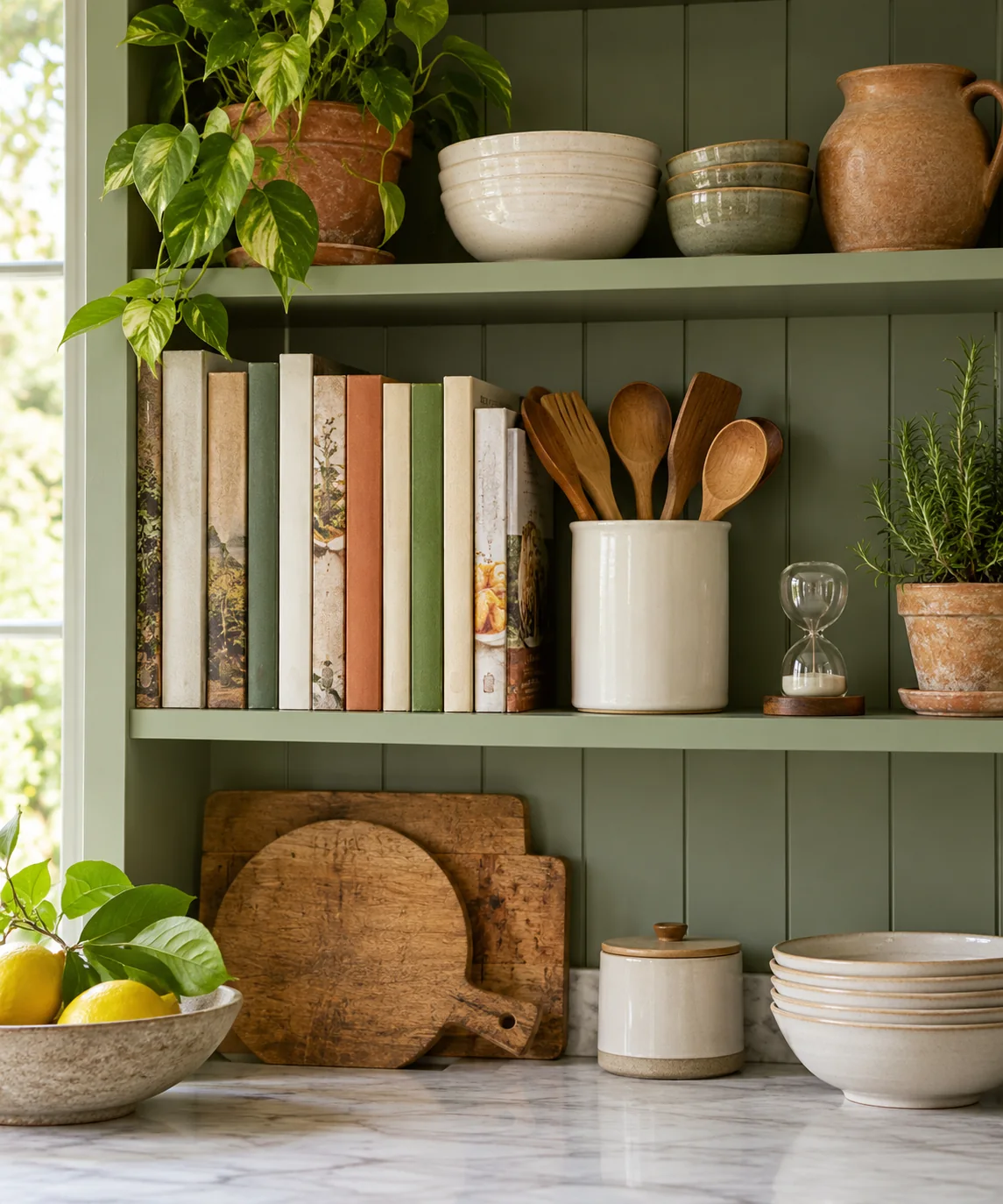
Selecting and Arranging High-Rotation Cookbooks
Filter your open kitchen shelving by focusing on volumes you reference on an ongoing basis. Place the heaviest, tallest hardcovers near the shelf support brackets or adjacent to a sturdy side panel to distribute weight effectively. Aligning book spines uniformly creates an orderly appearance while making titles legible at a glance. For delicate or collectible cookbooks, consider storing them in an enclosed cabinet, as open kitchen ledges are routinely exposed to ambient humidity, airborne grease, and culinary dust.
Pairing Practical Utensils and Functional Vessels
Incorporating a ceramic crock or container alongside cookbooks breaks up repetitive vertical lines and keeps everyday tools accessible. Fill the crock with dry wooden spoons, spatulas, or tasting utensils, keeping handles upright for convenient retrieval. Ensure the vessel base sits securely on the shelf depth without overhanging the edge. Selecting durable, easy-to-clean ceramic or stoneware provides a stable, weighted bookend while complementing the surrounding kitchen finishes.
Balancing Shelf Proportions and Visual Breathing Room
Avoid filling an open culinary shelf to maximum capacity, which can make retrieving books cumbersome and create visual clutter. Leaving an intentional buffer of open space on the shelf allows titles to be removed and replaced without scuffing neighboring covers. Grouping items into defined zones—such as placing books together on one side and utensil crocks on the other—maintains functional organization while keeping work surfaces below feeling spacious and uncluttered.
Shielding Paper Goods from Grease and Moisture
Shelf placement relative to cooking appliances strongly influences how well books and paper goods hold up over time. Consult appliance manufacturer guidelines regarding clearances, and position book ledges well away from active stovetop burners, steam vents, and sink splash zones to minimize exposure to grease aerosols and water droplets. When cooking with high heat or oils, utilize range hood ventilation to reduce airborne residues. Periodically wipe laminated covers with a dry microfibre cloth to remove dust before it binds with kitchen oils.
Seasonal Rotation and Routine Shelf Care
Reviewing your shelf contents periodically helps align titles with seasonal cooking patterns while preventing neglected volumes from accumulating dust. Transitioning between warm-weather salad guides and cold-weather baking manuals keeps the collection relevant to your weekly routine. Use rotation intervals to take down utensil vessels for thorough washing and drying before returning them to the shelf. Regularly inspecting shelf supports and fasteners ensures the installation remains sound under changing loads.
YOUR STARTING POINT
A little checklist.
Original editorial guidance. Images are AI-generated concepts, not photographs of completed projects. Our sources and approach.
Questions to consider
How do I support cookbooks on an open shelf without commercial metal bookends?
A heavy ceramic crock, marble mortar, or dense stoneware vessel functions effectively as a stable culinary bookend, provided it has a flat, non-slip base that does not slide under lateral book pressure.
Can collectible or antique cookbooks be safely displayed on open kitchen shelves?
Valuable, fragile, or antique volumes are best kept in enclosed cabinets away from kitchen grease, steam, and ambient cooking heat, which can discolor paper and weaken antique bindings over time.
How can I prevent wooden spoons on open shelves from absorbing moisture?
Wash wooden utensils by hand with mild dish soap, allow them to dry completely in open air before returning them to a crock, and avoid storing them near active steam plumes or unventilated corners.