Kitchen Herb Gardens · THE GUIDE
Cutting Board Station with Herb Well and Shears Rest
Integrating live herbs directly into daily meal preparation streamlines cooking while keeping fragile greens exceptionally fresh. A dedicated butcher block cutting board equipped with a recessed end-well allows a standard culinary herb pot to sit flush with the prep surface. Rather than harvesting stems hours in advance, cooks can snip leaves directly onto the board as needed. This layout merges living produce with standard prep tools, creating a compact culinary station. By selecting proper wood species, non-porous pot liners, and secure tool rests, you maintain food safety and workspace cleanliness throughout the cutting process.
Jump to the checklist ↓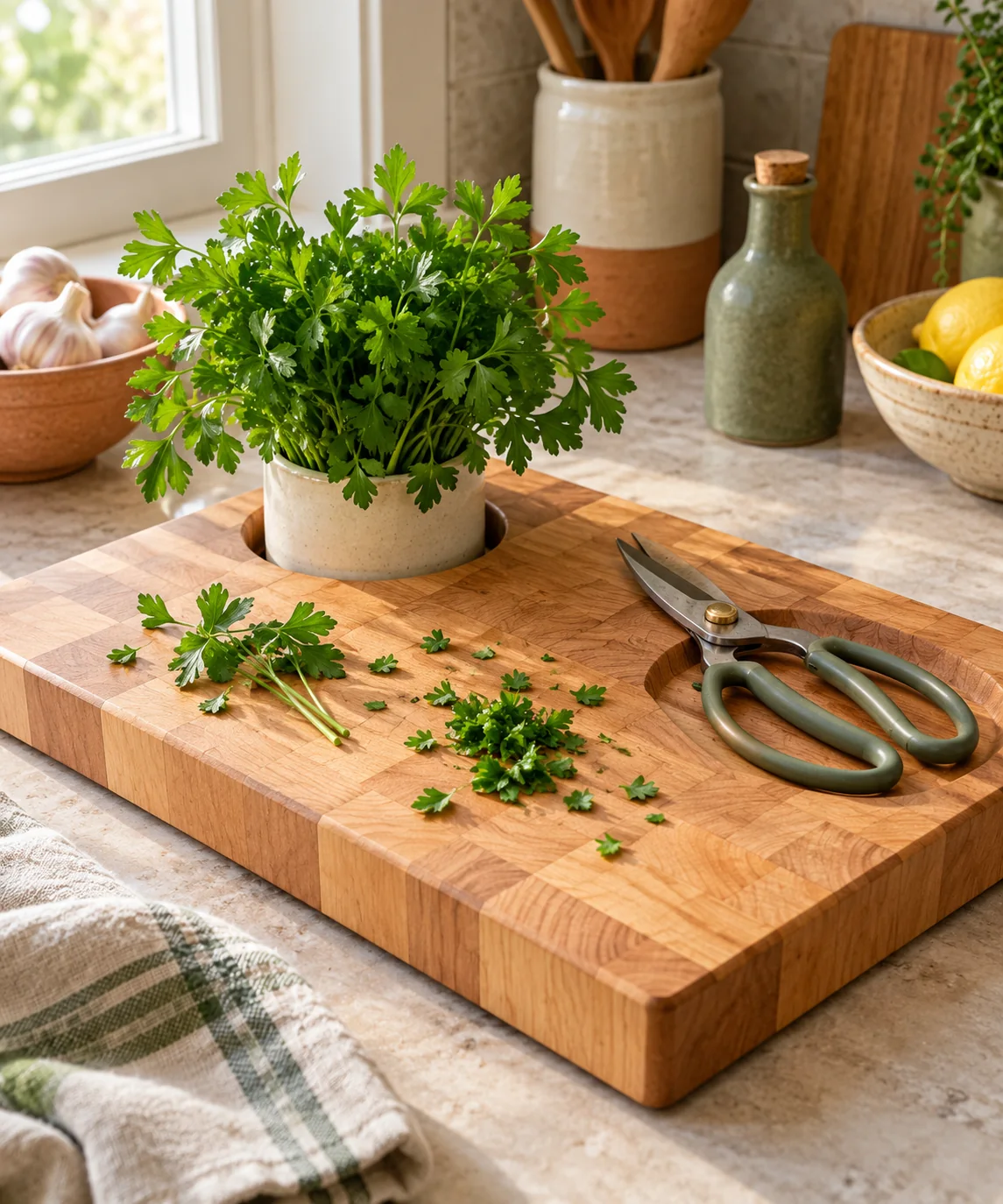
Station Dimensions and Counter Clearance
A board measuring at least twenty inches long by fourteen inches wide provides sufficient working room alongside an integrated well. Position the recessed opening in a far corner, sized to receive a standard three-inch nursery pot. This placement preserves an uninterrupted chopping area of roughly twelve by fourteen inches for standard vegetable prep. Ensure the board sits firmly on a flat counter away from stove heat, using rubber feet underneath to prevent shifting when applying downward knife pressure.
Moisture Barriers and Protective Liners
Raw wood swells and deteriorates when exposed to standing water from plant drainage. The recessed well must house a removable, glazed ceramic or stainless steel cup rather than the bare nursery pot alone. This cup catches incidental irrigation runoff and prevents damp soil particles from migrating across the cutting surface. Choose an insert with a shallow lip that lifts out smoothly for regular washing in hot, soapy water, protecting both board hygiene and structural integrity.
Dedicated Shears Storage and Blade Safety
Loose snips rolling across a food prep zone present accidental puncture risks. Integrate a carved shallow channel or an embedded silicone rest along the upper edge of the board specifically sized for kitchen shears. This indent keeps blades pointed away from your non-dominant hand and prevents the tool from sliding off slick counters. Wipe the blades dry after cutting oily herbs like rosemary or moist herbs like chives before setting them down.
Sunlight Rotation and Plant Recovery
Most culinary herbs decline rapidly in interior kitchen zones lacking strong, direct sunlight. The cutting board station should serve as an active meal prep station rather than a permanent living habitat. Keep potted herbs on a south-facing windowsill or dedicated plant ledge between cooking sessions. Transfer the active pot into the cutting board well just before prep begins, returning it to sunlight promptly after cleanup to sustain healthy vegetative growth.
Hygiene Protocols and Wood Maintenance
Maintain strict separation between the plant well and raw proteins. Never place raw poultry, meat, or unwashed produce against the herb container. Wash the cutting surface with mild dish soap and warm water immediately after use, keeping water out of the recessed well. Apply food-grade mineral oil across the entire wooden surface monthly. Allow the board to air-dry completely upright on its edge to prevent warping and mildew development.
YOUR STARTING POINT
A little checklist.
Original editorial guidance. Images are AI-generated concepts, not photographs of completed projects. Our sources and approach.
Questions to consider
Can I leave the herb pot in the board permanently?
No, herbs require strong natural light that interior countertops rarely provide. Leaving pots in the board permanently weakens the plant and risks wood rot from persistent moisture trapped within the recessed well.
What herbs fit best in a three-inch station well?
Compact, soft-stemmed herbs like flat-leaf parsley, cilantro, and Greek oregano perform best. Their root systems tolerate smaller nursery containers temporarily, and their foliage remains manageable within arm's reach of your knife.
How do I clean soil that drops onto the board?
Brush away loose dry soil immediately with a dry bench scraper. Then scrub the board using a sponge dampened with warm water and mild dish soap, drying the wood thoroughly with a clean towel.