Laundry Space Organization · THE GUIDE
Decant Powder Detergent into Airtight Glass Canisters
Storing powdered laundry detergent in secondary containers can help protect washing agents from ambient laundry room humidity and streamline tight utility shelving. However, moving chemical cleaning products out of their original commercial packaging requires strict attention to household safety. Clear canisters should never resemble food storage, and laundry powders must remain completely inaccessible to children and pets. When paired with clear hazard labeling, dedicated dosing scoops, and secure shelf placement away from appliance movement, dedicated canisters offer a tidy, functional way to manage powdered laundry supplies safely.
Jump to the checklist ↓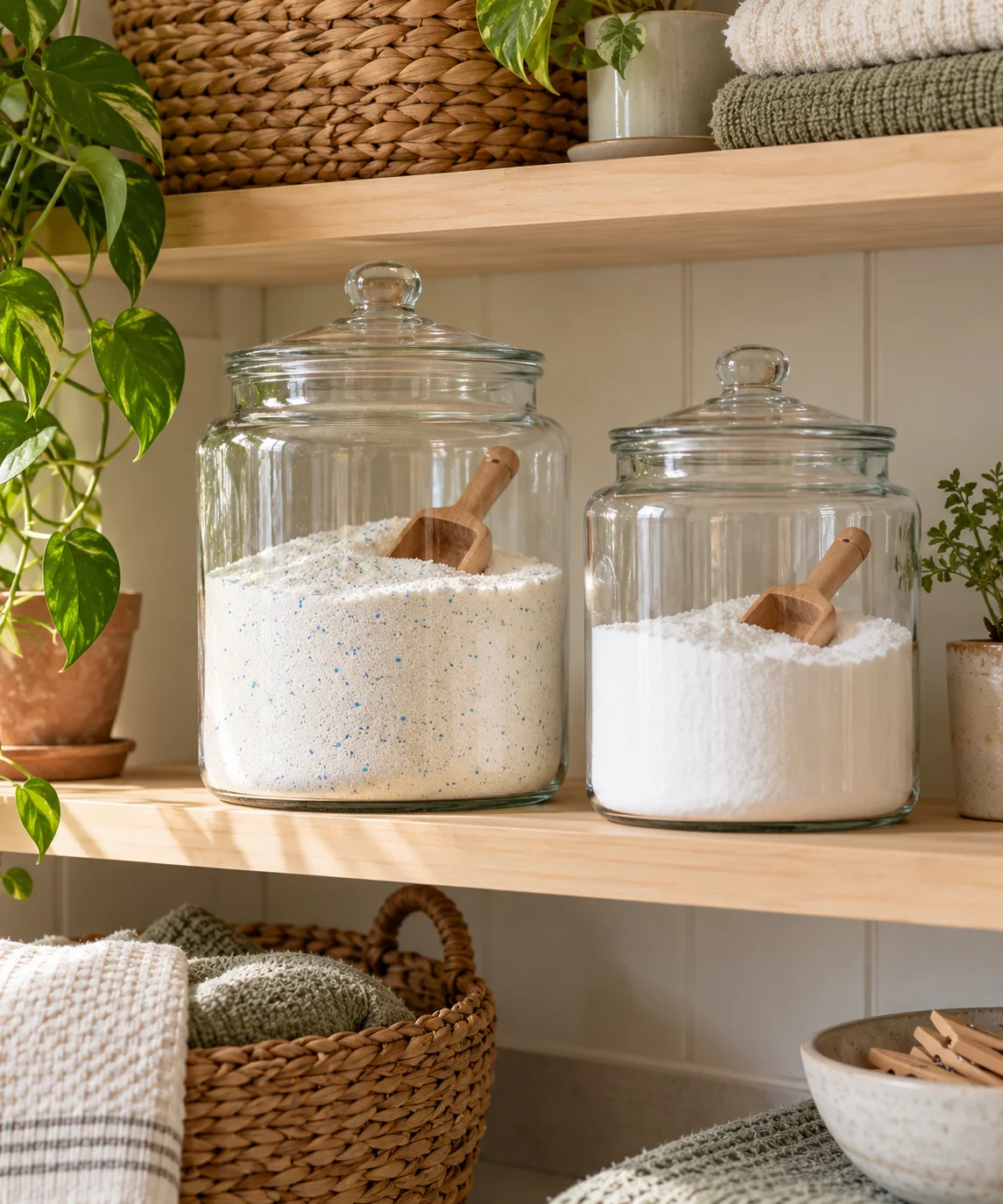
Selecting Gasketed Canisters for Moisture Resistance
Laundry powders are formulated to dissolve readily in water, meaning high ambient humidity in utility rooms or basements can cause granules to clump over time. Canisters featuring silicone or rubber gaskets create a tight barrier against airborne moisture, helping washing soda and powdered detergents remain free-flowing. Look for durable, thick-walled containers with secure latches or screw-on lids rather than loose push-tops that can dislodge if bumped. Ensure the rim is smooth and intact so the gasket seals evenly without gaps.
Evaluating Shelf Stability and Vibration Isolation
Washing machines generate significant mechanical vibrations during high-speed spin cycles, which can transfer through walls, floors, and adjacent cabinetry. Heavy containers placed on shelves directly attached to or sitting above vibrating appliances can gradually shift over time. Position storage canisters on sturdy, securely anchored shelving units isolated from appliance movement. Always check the manufacturer load rating for your utility shelves, factoring in the combined weight of the containers and several pounds of dense washing powder.
Safe Pouring and Dust Minimization
Transferring bulk powdered detergent between containers can release fine airborne particulates that irritate the eyes, skin, and respiratory tract. Pour powders slowly in a well-ventilated area, keeping the transfer height low to minimize dusting. Using a clean, wide-mouth funnel designed for utility use helps guide the granules into the container without spills. Wipe down the container threads and exterior with a dry cloth after filling, and wash your hands thoroughly after handling concentrated cleaning agents.
Preserving Dosing Guidance and Safety Labels
Commercial packaging contains critical information that must not be discarded, including safety precautions, ingredient disclosures, poison control guidance, and specific dosing charts based on load size and water hardness. When transferring powder, affix a durable, water-resistant chemical label to the canister that clearly identifies the contents. Keep the original product box or cut out the manufacturer dosing guidelines and emergency contact details, storing them nearby in the laundry area. Use dedicated measuring scoops calibrated to the manufacturer's recommended load volumes.
Child Safety and Material Considerations
Household cleaning products must always be stored out of reach and out of sight of children and pets, ideally in a latched or locked upper cabinet. Avoid decorative containers that resemble cookie jars, candy dispensers, or standard kitchen pantry canisters, as bright or granular cleaning agents can be mistaken for food. If shelves are elevated or located in high-traffic utility paths, consider shatter-resistant materials such as heavy-duty plastic or metal tins rather than glass to eliminate the hazard of sharp broken shards if dropped.
YOUR STARTING POINT
A little checklist.
Original editorial guidance. Images are AI-generated concepts, not photographs of completed projects. Our sources and approach.
Questions to consider
Can I use kitchen food jars to store laundry detergent powder?
It is best to avoid repurposing recognizable food jars for household chemicals. Using containers that resemble pantry jars increases the risk of accidental ingestion, especially in homes with children. Choose clearly distinct utility containers and label them explicitly.
Is it safe to keep glass detergent jars on a shelf directly above the washer?
Placing glass containers directly over a washer is not recommended. Appliance spin cycles produce strong vibrations that can cause containers to walk across shelves, creating a severe shatter and spill hazard. Keep glass storage on separate, wall-anchored shelving.
How should I clean a canister before refilling it with a different powder?
Rinse the empty container thoroughly with water, wash with mild soap, and rinse away all detergent residue. Allow the container and lid gasket to dry completely before refilling, as any lingering moisture will cause fresh powder to cake.