Small Kitchen Organization · THE GUIDE
Decanted Dry Goods on Open Pine Floating Shelves
Mismatched cardboard boxes and open ingredient bags can clutter pantry storage and make inventory tracking difficult. Decanting staple dry goods into uniform airtight containers on open pine floating shelves creates an organized, accessible storage layout. Clear jars allow quick visual checks before grocery shopping, while solid pine shelving adds functional storage to underutilized wall areas. Verifying bracket load ratings, understanding container weights, and managing pantry rotation ensures an open shelf system remains stable, tidy, and practical over years of daily cooking.
Jump to the checklist ↓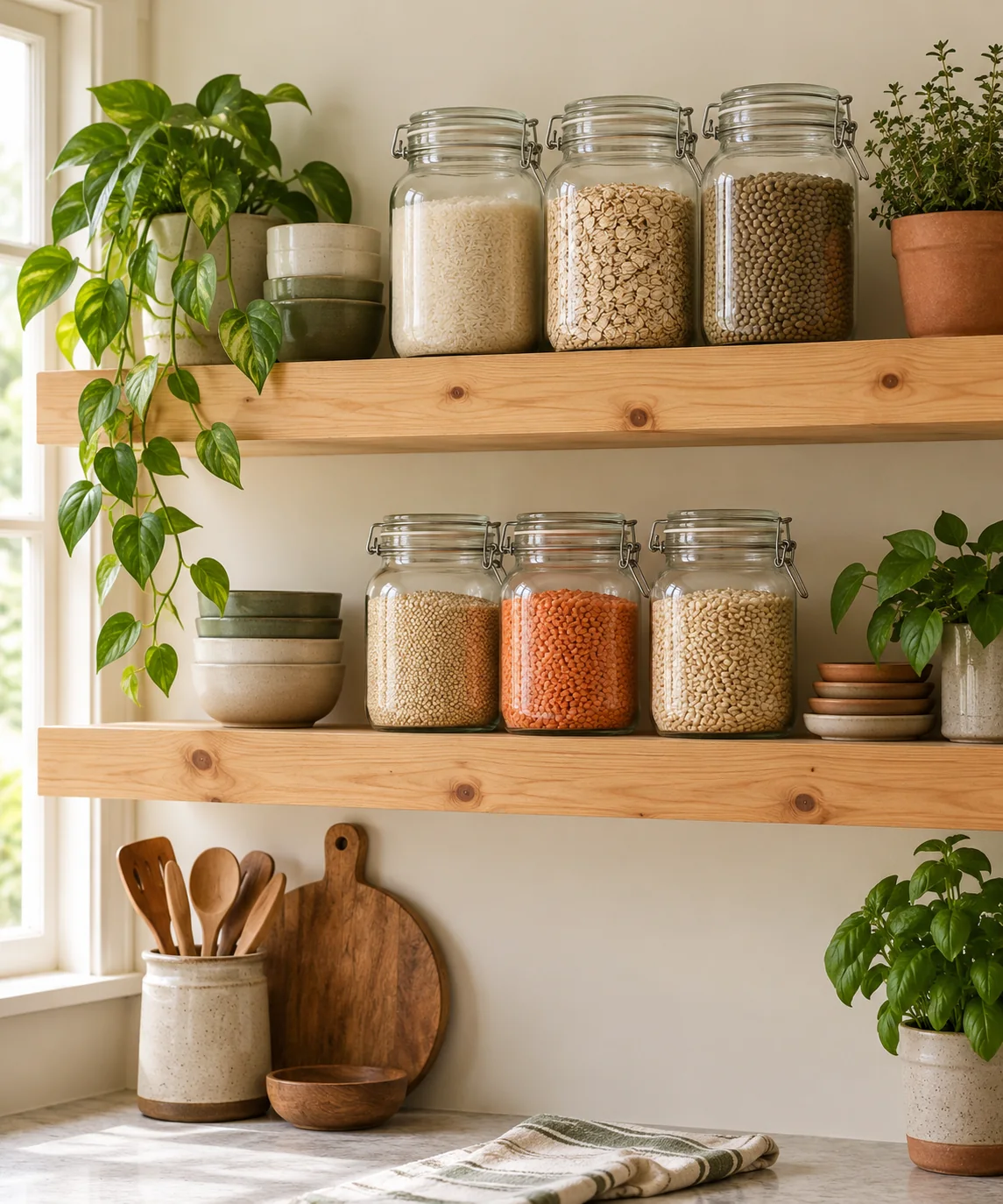
Assessing Shelf Load Capacity and Jar Dimensions
Before selecting storage jars, determine the manufacturer weight rating for your floating shelves and their wall mounting brackets. Glass containers filled with dense ingredients like flour, sugar, dried beans, or rice can quickly accumulate significant weight. Confirm that the shelf brackets are securely fastened to wall framing or appropriate structural masonry. Measure the shelf depth and vertical clearance between tiers, confirming that jars sit fully on the shelf without overhang and leave enough overhead space to lift them out comfortably.
Ergonomic Grouping and Ingredient Accessibility
Organize decanted goods according to frequency of use rather than purely aesthetic arrangements. Place daily staples such as oats, coffee beans, or primary cooking grains on the lower, most accessible shelf tiers. Reserve upper shelves for secondary baking ingredients or items bought in smaller quantities. Grouping similar ingredients together streamlines cooking routines and minimizes unnecessary reaching, while keeping heavier jars centered over the strongest support points of the shelf.
Airtight Seals and Pantry Stock Rotation
Proper container selection helps protect dried goods from ambient humidity and pantry pests. Choose canisters fitted with durable food-grade silicone gaskets or secure latching lids. When replenishing supplies, practice first-in, first-out rotation by using up remaining contents before pouring in new stock. Wash and thoroughly dry containers between refills, as residual moisture trapped beneath new starches or grains can cause clumping and spoilage.
Light Exposure and Environmental Considerations
Open shelving exposes stored food to ambient kitchen conditions, including daylight and temperature shifts. Position floating shelves away from direct sunlight, which can fade colorful legumes, accelerate oil rancidity in nuts, and degrade light-sensitive nutrients over time. Shelves should also be installed away from direct stove steam, dishwasher vents, or heat registers to prevent condensation inside containers and protect unfinished pine wood from moisture absorption.
Routine Cleaning and Wood Care
Exposed shelves and glass containers collect airborne dust and cooking grease over time. Establish a regular habit of wiping jar exteriors and shelf surfaces with a dry or lightly dampened microfiber cloth. If using unfinished or minimally treated pine, apply a food-safe wood wax or light protective sealant to prevent oil spills or liquid splatters from penetrating the wood grain, allowing loose flour or sugar spills to be cleaned up easily.
YOUR STARTING POINT
A little checklist.
Original editorial guidance. Images are AI-generated concepts, not photographs of completed projects. Our sources and approach.
Questions to consider
Can dry goods be stored on open shelves as long as in closed pantries?
Yes, provided they are kept in truly airtight containers away from direct sunlight, excess heat, and cooking steam. Exposure to UV rays or heat sources can shorten the shelf life of whole grains and spices, making location planning essential for open displays.
How can cooking instructions and expiration dates be tracked after decanting?
Apply removable labels to the back or underside of each container with expiration dates and basic cooking ratios. Alternatively, cut instructions from the original packaging and store them beneath the container lid for quick reference.
How much weight can a standard pine floating shelf typically hold?
Capacity depends entirely on the bracket design, shelf thickness, and wall anchoring method. Floating shelves mounted into drywall anchors alone hold very little weight, whereas brackets fastened into wall studs hold significantly more. Always consult the manufacturer hardware specifications before loading shelves with heavy glass jars.