Rental-Friendly Decor · THE GUIDE
Declutter Shoes Using an Entryway Bench with Low Open Shelving
Cramped apartment vestibules quickly turn chaotic when discarded footwear piles directly in front of the primary exit. Without designated storage, stray soles obstruct door pathways and track outdoor grime across living areas. A compact wooden bench featuring an integrated low open shelf establishes an immediate drop zone while offering a stable seat for lacing up boots. Because it sits entirely freestanding against the baseboard, this layout introduces essential organization without requiring drywall anchors, bulky cabinetry, or alterations to your rental property floor plan.
Jump to the checklist ↓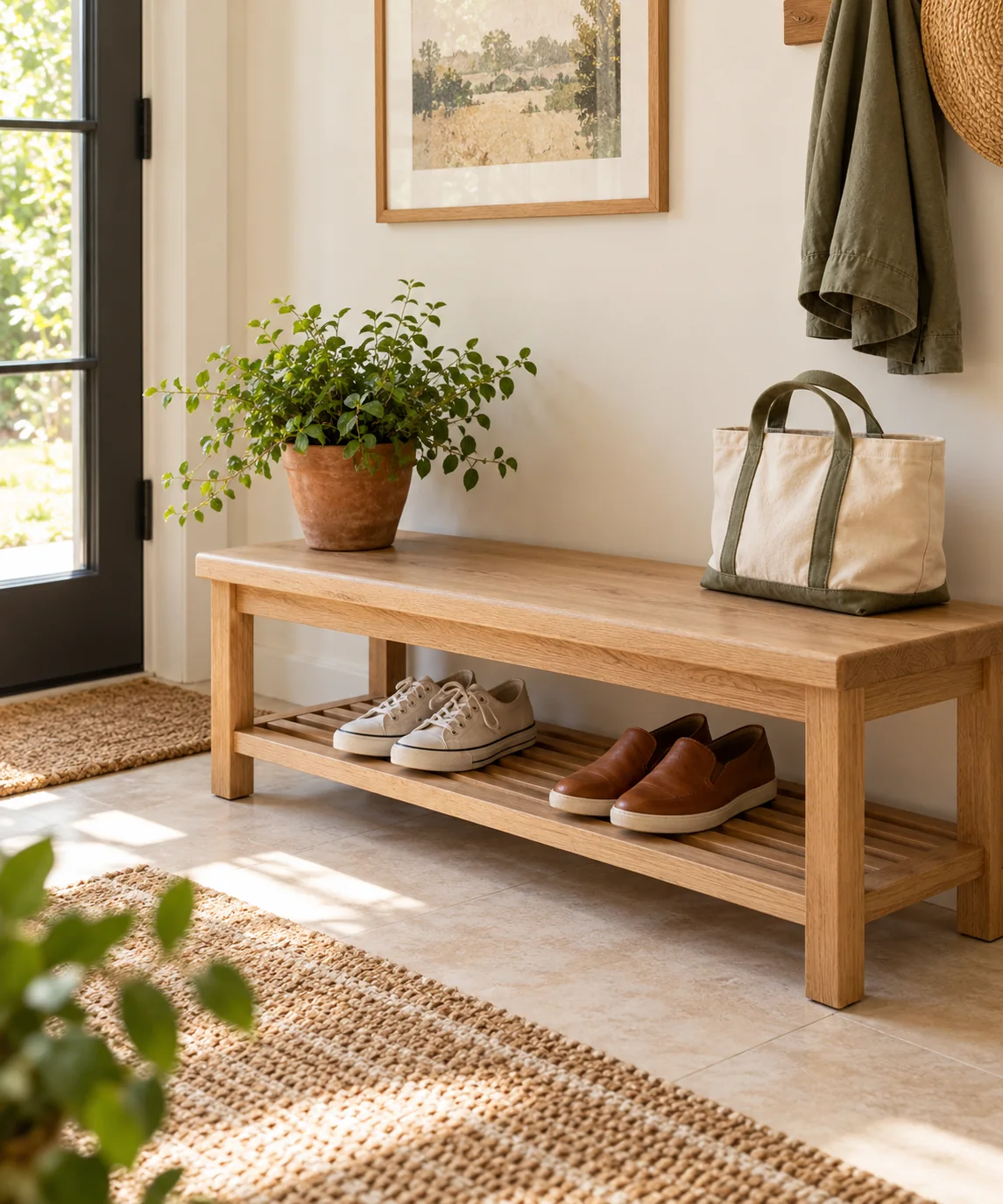
Door Clearance and Pathway Planning
Situate the bench along your entrance wall so it maintains an unobstructed passage from the doorway into primary living areas. Confirm that the front door swings fully open through its normal arc without contacting the bench frame or corners. In compact entry halls, look for shallow bench profiles that provide practical seating without protruding into the main walkway. Keeping the arrival corridor clear helps prevent tripping hazards while ensuring daily movement remains smooth and comfortable.
Allocating Low Slatted Shelves
A slatted lower shelf elevates footwear, encouraging air circulation around soles while keeping everyday dirt off entryway flooring. Designate this lower rack for frequently worn pairs, such as everyday sneakers, slip-on shoes, and flat walking footwear. Stand taller boots upright adjacent to the bench ends rather than wedging them into narrow shelf openings. Setting a sensible limit on how many pairs sit on the rack keeps the entrance tidy and prevents secondary clutter from spilling onto the floor.
Protecting Walls and Baseboards
Position the bench with a slight gap away from the wall to prevent back edges from rubbing against paint or baseboards during seating. Affix felt or rubber floor protectors beneath all bench legs to help shield rental hardwood, laminate, or vinyl finishes from friction marks. If people frequently lean back while removing footwear, consider placing a loose cushion or bolster on the seat to act as a soft buffer, keeping outerwear and bags from scuffing drywall.
Managing Seasonal Footwear Overflow
An open-shelf entryway bench works best when dedicated to footwear in active weekly rotation. Bulky winter boots, seasonal sports gear, and occasional formal footwear are better stored in bedroom closets or covered under-bed storage boxes. During wet or snowy weather, place a shallow rubber boot tray with raised lips either beside the bench or on the slatted shelf if sized appropriately, catching moisture and grit before they reach finished wood or flooring.
Routine Dusting and Slatted Shelf Care
Fine soil and dried dust sift through open slats over time, accumulating on the floor beneath the bench. Vacuum under the unit periodically using a narrow floor or crevice attachment without needing to shift the bench unnecessarily. Clean sealed wood or metal surfaces with a lightly dampened cloth, followed promptly by a dry towel to remove residual moisture. Avoid silicone-heavy furniture polishes that can create slick surfaces on the seating area or shoe bars.
YOUR STARTING POINT
A little checklist.
Original editorial guidance. Images are AI-generated concepts, not photographs of completed projects. Our sources and approach.
Questions to consider
How many pairs of shoes can a compact entryway bench realistically hold?
A standard three-foot bench with a single lower shelf comfortably holds four to six pairs of adult shoes. Overcrowding the rack forces shoes forward into the hallway walkway, defeating the streamlined organization of the entryway.
Can I leave soaking wet footwear directly on the wood slats?
No. Prolonged contact with standing water can warp unfinished or clear-sealed wood. Place soaking boots on a small rubber drip tray beside the bench until they dry, then transfer them back onto the slatted rack.
What bench height is most comfortable for putting on shoes?
A seat height between 17 and 19 inches allows most adults to sit comfortably with feet flat on the floor, making shoe removal straightforward without straining knees or hunching over excessively in a narrow hall.