Kitchen Herb Gardens · THE GUIDE
Dedicated Mint Containment Crock for Urban Kitchen Counters
Spearmint adds brightness to everyday cooking, but its underground growth habit makes it difficult to manage in mixed herb planters. The plant propagates using vigorous subterranean runners, known as stolons, which choke companion roots and take over shared containers within a single season. Housing your mint in a heavy, standalone stoneware crock controls this invasive growth while creating a tidy harvest station for your kitchen counter. Isolating the root system allows you to manage mint's aggressive expansion, satisfy its high moisture demands, and keep fresh sprigs within arm's reach of your beverage and prep counters.
Jump to the checklist ↓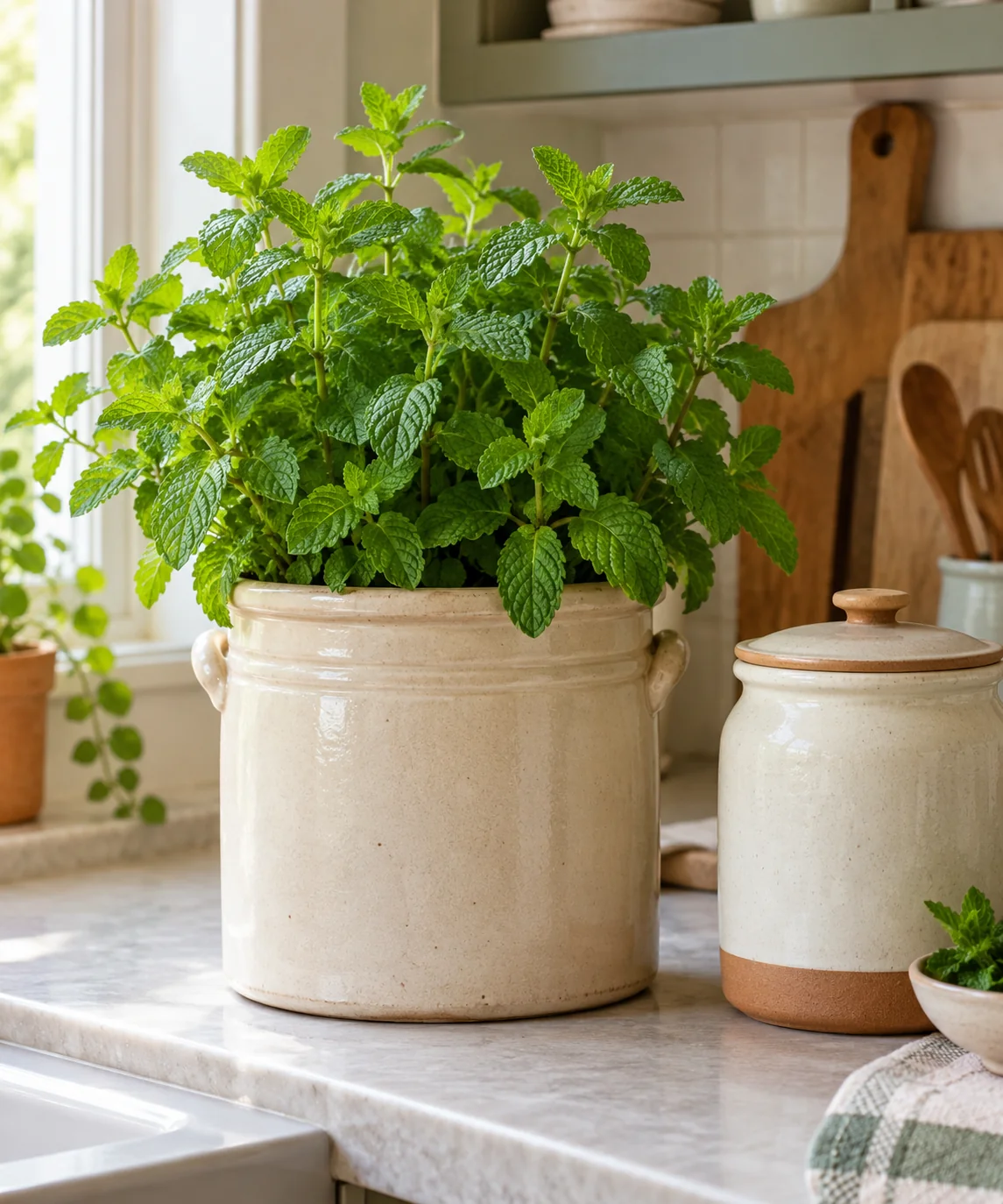
Physical Containment and Crock Selection
A thick-walled stoneware crock provides an impenetrable physical boundary that stops wandering mint runners from escaping into adjacent pots. Select a crock holding at least one to two gallons of soil to accommodate mint's spreading roots without requiring constant replanting. The vessel's substantial weight also prevents top-heavy foliage from tipping the container when placed on smooth kitchen counters or food prep stations.
Drainage Adaptations for Solid Pottery
Traditional kitchen crocks frequently lack factory-drilled drainage holes. Rather than risking cracked pottery by drilling, use an internal nesting strategy. Plant the spearmint into a standard plastic nursery pot that features ample bottom perforations, then nest that insert inside the decorative stoneware. Elevate the inner pot slightly using non-absorbent plastic risers so drained water gathers safely underneath without soaking the bottom roots.
Meeting Sun Requirements on Prep Surfaces
Culinary mint is vigorous, but it still requires strong, unfiltered natural light to produce flavorful leaves. Position the containment crock along a sun-drenched countertop run or beneath an adjustable LED plant light. Avoid dark counter zones located beneath deep overhead cabinetry. Turn the crock a quarter turn every few days to promote symmetrical foliage growth and prevent lanky, one-sided stems.
Pruning Techniques to Stimulate Bushiness
Mint plants quickly become tall and leggy if left to grow without routine harvests. Use clean kitchen snips to cut stems right above an active leaf node, which encourages the plant to branch into two fresh side shoots. Never harvest more than one-third of the total foliage mass during a single prep session. Immediately remove any terminal flower spikes to preserve sweet leaf flavor.
Annual Root Division and Substrate Refresh
Because mint fills root volumes quickly, it can become root-bound and stall in growth within twelve months. Every spring, lift the inner liner pot, slide out the root ball, and slice through the root mass vertically with a clean serrated knife to remove half the volume. Repot the remaining section using fresh, well-aerated potting soil to jump-start another season of tender, leafy growth.
YOUR STARTING POINT
A little checklist.
Original editorial guidance. Images are AI-generated concepts, not photographs of completed projects. Our sources and approach.
Questions to consider
Can I plant peppermint and spearmint together in one crock?
It is best to separate them. When grown in close proximity, vigorous mint varieties interweave their underground runners, and one cultivar will eventually dominate and crowd out the other.
Why are the leaves near the base of my mint drying out?
Lower leaf drop typically indicates the plant has exhausted its available root space or dried out too severely. Check if roots are circling the pot tightly and increase watering consistency.
Can culinary mint survive in a dim kitchen corner?
No. Culinary herbs need strong sun or dedicated supplemental grow lights. In low light, mint stems stretch, become brittle, drop leaves, and lose their rich aromatic profile.