Container Vegetable Gardens · THE GUIDE
Deep Fabric Grow Bags for Patio Sweet Potatoes
Sweet potatoes are vigorous, warm-season root vegetables that demand deep, warm soil and substantial root volume to develop usable storage tubers. For gardeners working on wooden patios or decks, standard rigid plastic tubs are cumbersome to maneuver and consume valuable off-season storage space. Fifteen-gallon fabric grow bags present a lightweight, breathable alternative that folds flat once the autumn harvest concludes. Because fabric aerates the root zone and prevents circular root girdling through air-pruning, it supports healthy tuber expansion. Success depends on selecting appropriate blends, managing structural deck drainage, and guiding sprawling vines effectively.
Jump to the checklist ↓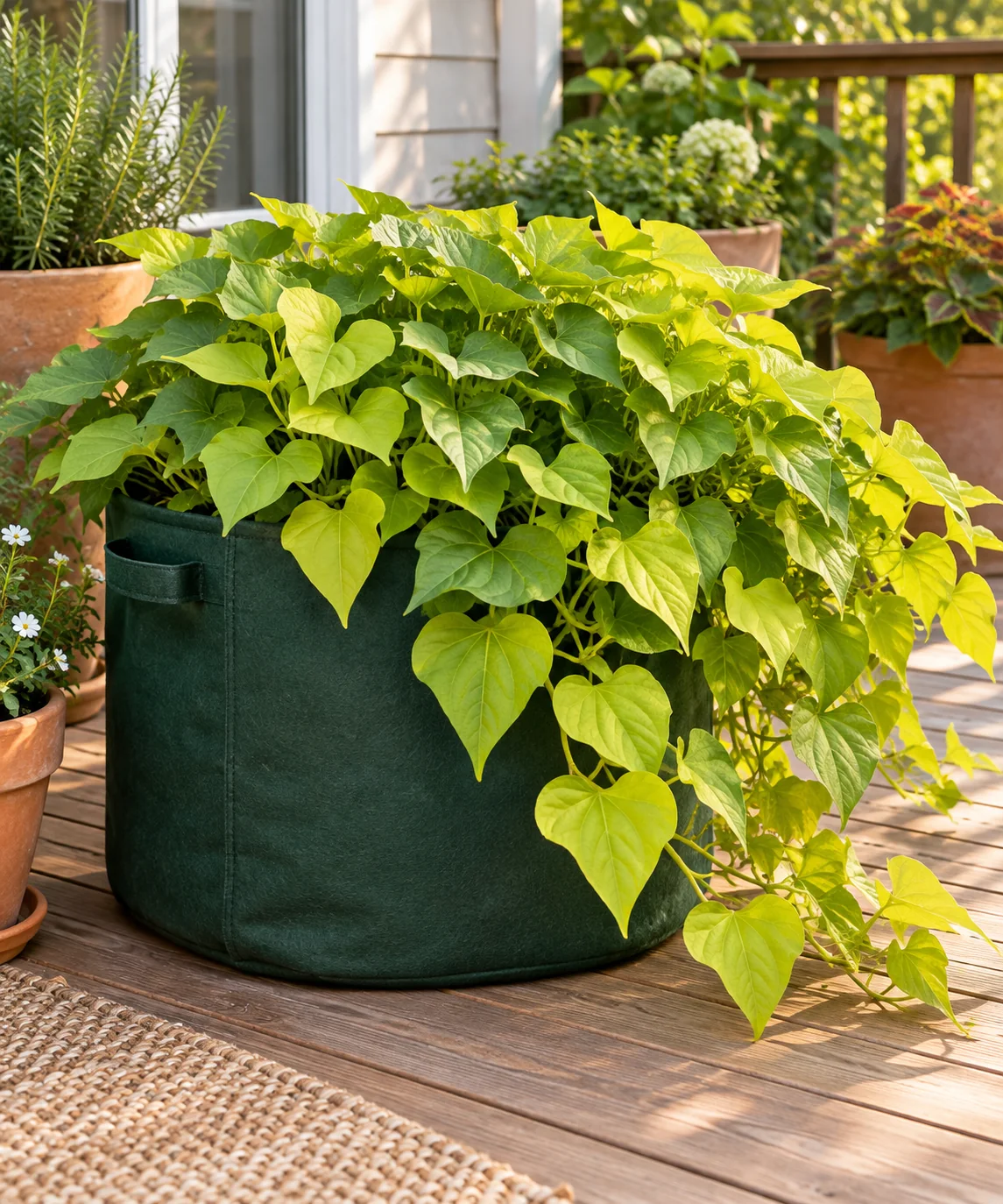
Selecting Bag Capacity and Fabric Grade
A fifteen-gallon round fabric bag provides sufficient root volume—roughly sixteen to eighteen inches in diameter and fourteen to sixteen inches deep—to support two to three sweet potato slips. Choose dense, non-woven geotextile fabric weighing between 260 and 300 grams per square meter with reinforced stitching along the carry handles. Lightweight decorative fabrics break down quickly under intense summer ultraviolet light, while smaller five- or ten-gallon sizes restrict root expansion and reduce tuber yield. Ensure the bag sits completely upright and stable on the patio before filling it with growing media.
Soil Aeration and Lightweight Growing Media
Sweet potato storage roots require loose, aerated substrate to expand without encountering physical restriction. Mix a lightweight potting substrate using two parts quality container potting soil, one part coarse perlite or pumice, and one part screened compost. Avoid using dense garden topsoil or unamended field dirt, which compacts tightly in containers and adds unnecessary dead weight. A fluffy, well-aerated matrix allows developing tubers to swell naturally while fabric sidewalls promote air-pruning of fine lateral roots rather than constrictive circling.
Deck Protection and Load Considerations
A saturated fifteen-gallon container filled with damp soil can weigh over one hundred pounds. If placing multiple bags on an elevated residential deck, consult property management or structural framing plans to confirm that proposed locations comply with rated live-load allowances. Avoid clustering numerous large containers together in the center of long deck spans. Rather than using small-wheeled rolling caddies—which concentrate extreme point loads onto tiny contact patches and can gouge planking—rest bags on broad, slatted pot risers that distribute weight evenly across deck boards while maintaining airflow to prevent timber rot.
Managing Vigorous Vining Growth
Sweet potato vines grow rapidly in warm weather, producing extensive runners that can spread across walkways or weave between decking gaps. Permitting vines to root into deck seams or lawn edges makes harvest difficult and risks surface staining. Set a compact, freestanding bamboo hoop or small trellis inside the container rim to guide vines upward, or route wandering stems back over the bag opening. Prune back only aggressive runaway shoots that block footpaths, as maintaining ample green leaf canopy is essential for photosynthesizing energy to swell the tubers below.
Harvest Protocol and Off-Season Bag Care
Harvest sweet potatoes before the first autumn frost, generally when foliage begins to pale or turn yellow. Stop watering a week before harvesting to let the soil dry slightly, which makes handling easier. Because fabric bags are flexible, you can gently tilt the container onto a tarp or roll down the fabric sides to loosen the root ball without stabbing tubers with metal tools. Empty the spent soil into compost piles, scrub the fabric bag with clean water and a stiff brush, let it air dry completely, and fold it flat for winter storage.
YOUR STARTING POINT
A little checklist.
Original editorial guidance. Images are AI-generated concepts, not photographs of completed projects. Our sources and approach.
Questions to consider
How often do sweet potatoes in fabric bags require water?
Fabric containers lose moisture through their porous sidewalls more quickly than glazed or plastic pots. During warm summer weather, inspect the soil depth regularly and soak thoroughly when the top two inches feel dry, ensuring excess water drains away freely.
Can spent potting soil from grow bags be reused immediately?
Reusing container soil without amendment increases the risk of soil-borne diseases and nutrient depletion. Empty spent soil into garden beds or compost heaps, or thoroughly refresh it by blending it with fresh compost and perlite before replanting.
Will fabric grow bags leave stains on wooden decking?
Resting wet fabric directly against wood prevents drying and can cause moisture stains, mold, or deck rot. Keep bags elevated on wide, slatted risers that allow continuous airflow underneath and facilitate natural water runoff between deck boards.