Container Vegetable Gardens · THE GUIDE
Deep Fabric Troughs for Balcony Root Vegetables
Growing root crops like carrots and radishes on an apartment balcony requires balancing container depth with the weight limits of elevated structures. While lightweight fabric containers weigh less than stone or ceramic pots when empty, saturated growing media still adds considerable mass. Gardeners must confirm permissible floor load limits through property management or building guidelines rather than guessing balcony strength. When managed within established weight and safety limits, deep fabric troughs provide good vertical room for taproot development, offering an adaptable option for seasonal container gardening.
Jump to the checklist ↓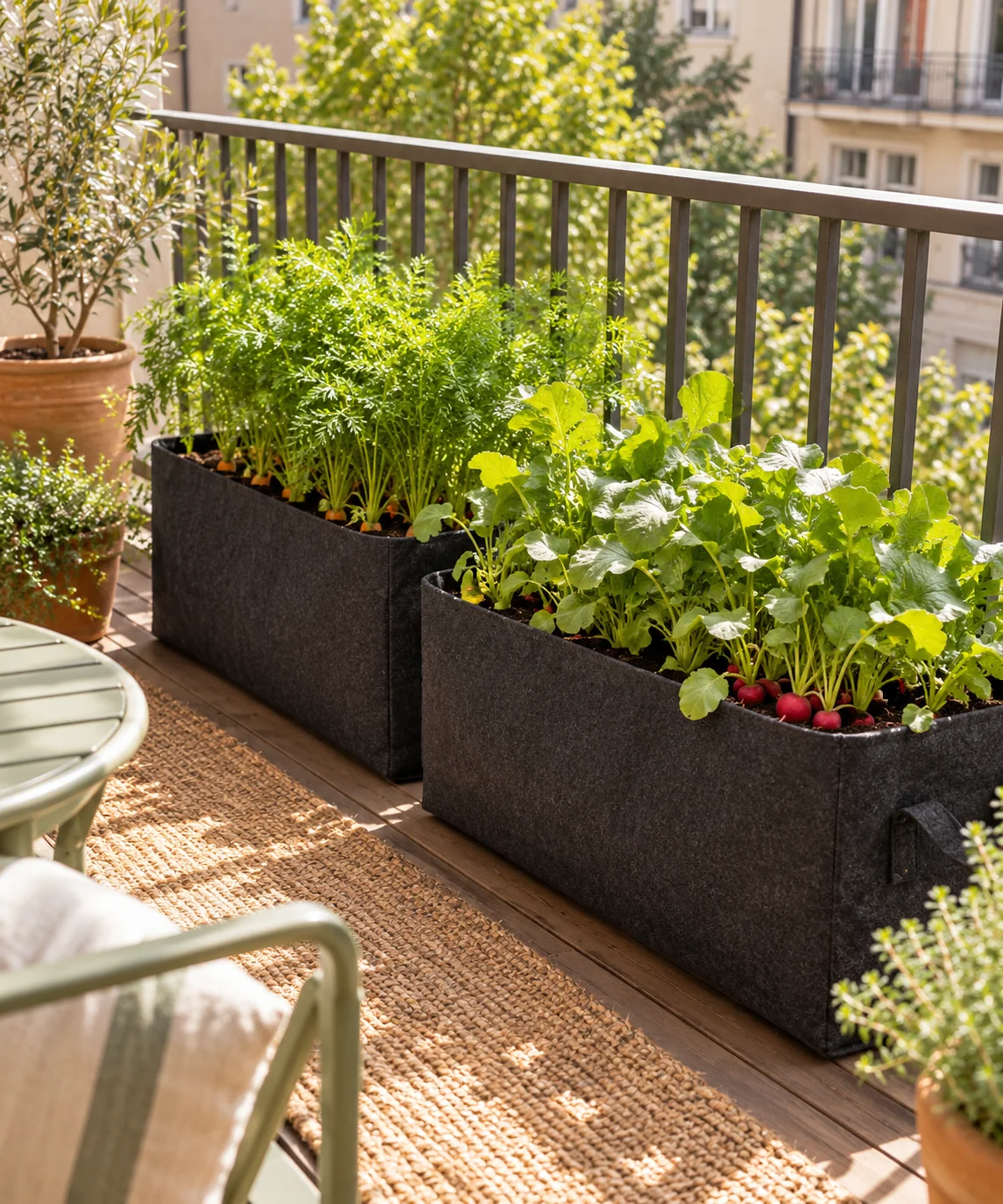
Depth Requirements and Soil Weight Realities
Root crops require uninterrupted vertical space so taproots can grow without deforming against the container base. Deep fabric planters providing thirty to forty centimeters of soil depth accommodate standard carrot varieties, while radishes require less depth. Because saturated growing medium becomes very heavy, gardeners often use light potting blends containing coco coir, perlite, or vermiculite mixed with mature compost instead of dense garden soil. However, even lightweight potting mixes carry substantial weight when fully watered. Always check the load capacity specified by your building management or a structural engineer before setting up large or deep planters.
Placement Planning and Egress Considerations
Balcony container placement must respect structural guidelines, drainage pathways, and personal safety. Rather than assuming certain deck areas or walls can automatically support excess weight, consult your building's rules regarding container sizes and allowable load zones. Keep all primary exit paths, sliding door thresholds, and emergency routes completely unobstructed by containers. Do not place planters on top of balcony railings or suspend them outside the perimeter guardrails, as unsecured containers present serious falling-hazard risks in windy conditions or during accidental bumps.
Root Development and Container Aeration
Flexible geotextile fabric containers differ from rigid, impermeable plastic or glazed ceramic pots by allowing air to reach the potting soil from all sides. As growing root tips approach the porous fabric boundary, exposure to air naturally halts root tip elongation, encouraging the plant to form secondary feeder roots rather than winding repeatedly around the interior perimeter. This aeration supports even root distribution throughout the soil mix. Additionally, excess water can drain through the weave, which helps reduce the chance of standing water lingering around developing taproots.
Moisture Management and Balcony Deck Protection
Because fabric sidewalls expose the potting volume to ambient airflow, fabric troughs lose moisture faster than solid containers. Moisture levels should be monitored frequently, as inconsistent watering can cause carrots to split or radishes to develop a woody texture. At the same time, drainage water exiting the bottom and sides can puddle on balcony flooring. Place troughs on dedicated plant saucers, trays, or shallow risers to protect decking from standing water, and confirm that drainage does not drip onto lower apartments or public pathways below.
End-of-Season Handling and Seasonal Storage
At the close of the growing season, fabric troughs can be emptied and stored without permanently occupying balcony space. Transfer spent growing media into storage tubs or compost systems, brush dried root debris and soil particles from the inner fabric walls, and rinse the containers thoroughly with plain water. Allow the planters to dry completely in an open, well-ventilated area before packing them away. Storing them clean and dry prevents mildew from developing on the fibers while folded in an indoor storage closet until next spring.
YOUR STARTING POINT
A little checklist.
Original editorial guidance. Images are AI-generated concepts, not photographs of completed projects. Our sources and approach.
Questions to consider
How deep should a fabric container be for taproot vegetables?
Standard carrot varieties generally need twenty-five to thirty-five centimeters of container depth to expand without restriction. Shallow-rooted crops like round radishes can grow successfully in containers measuring fifteen to twenty centimeters deep.
How do I protect balcony decking from water draining out of fabric troughs?
Place shallow catch trays or slatted non-porous risers underneath fabric containers. This collects excess drainage, allows airflow under the base, and prevents standing water from staining or degrading balcony decking materials.
Can I determine my balcony's weight capacity by inspecting the floor framing?
No. Visual inspection cannot reliably determine load limits. Always consult your property management, lease documents, or a licensed structural engineer to verify allowable container weights and balcony load restrictions.