Sage and Cream Interiors · THE GUIDE
Design a Coordinated Desktop Filing System Using Cloth Document Boxes
When a home workstation resides within an open-concept living area, loose paperwork and open wire sorters create persistent visual discord. Implementing a desktop filing system with cloth-covered document boxes conceals administrative clutter behind soothing, structured textures. Using sage green linen boxes accented with clean cream labeling elements pairs executive utility with quiet domestic warmth. This approach establishes a repeatable paper-handling process while ensuring that work essentials blend into the broader decor, protecting the restful atmosphere of your shared living space during non-working hours.
Jump to the checklist ↓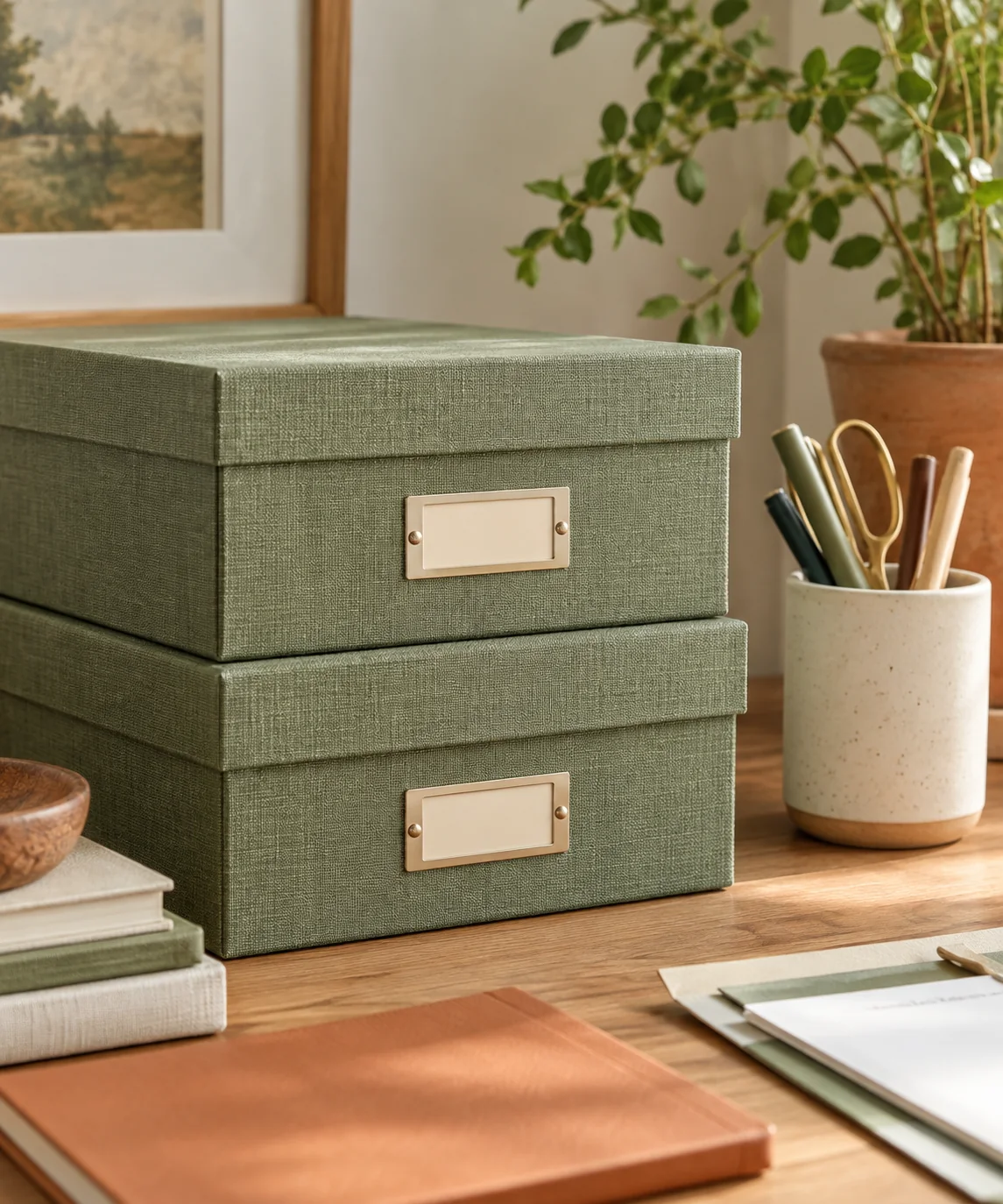
Assessing Work Surface Footprint and Capacity
Begin by calculating how much surface area your desk can surrender to storage without hindering typing or writing. A typical desktop document box occupies roughly ten by twelve inches. Place boxes along the rear corner of the desk furthest from the main room doorway to maintain open sightlines. If your work table is compact, use two stackable boxes vertically rather than spreading them across valuable surface area, ensuring the lower container remains accessible for priority daily tasks.
Categorizing Documents Into Broad Practical Groups
Avoid micro-categorization that causes paperwork to spill back onto open desk surfaces. Establish broad divisions across two or three boxes: incoming action items, active monthly household files, and archival reference papers. Inside each box, use neutral cream file folders to segment contents logically. Limiting your sorting tiers to intuitive categories simplifies daily filing, making it straightforward to tuck incoming mail, utility notices, and receipts immediately out of sight.
Integrating Sage and Cream Textural Elements
Pairing sage green linen bookcloth with matte cream cardstock creates a quiet, cohesive presentation that softens office supplies. Insert legible, neatly hand-lettered or printed card inserts into metal label holders affixed to each box front. Complement the boxes with a simple cream ceramic container for essential writing implements. This deliberate coordination transforms administrative tools into decorative room accessories that harmonize with surrounding residential furnishings rather than disrupting them.
Establishing an Inflow and Purging Routine
A closed storage system requires active maintenance to prevent boxes from overflowing. Schedule a brief weekly administrative review to process items stored inside the active tray. Shred obsolete papers and transfer completed records to a less accessible storage area outside the living zone once or twice a year. Maintaining a strict one-in, one-out volume ceiling ensures lids close completely, preserving the neat rectangular profiles that keep the workspace serene.
Caring for Cloth-Bound Storage Materials
Linen and woven document boxes require gentle handling to retain their tailored appearance. Avoid placing open beverage mugs or condensation-prone cups near fabric boxes, as wet rings can permanently discolor textured linen. Remove light dust weekly using a soft natural-bristle clothes brush or a lint roller over the exterior surfaces. Keep boxes away from direct, harsh window glare to prevent uneven fading of soft sage and cream dyes.
YOUR STARTING POINT
A little checklist.
Original editorial guidance. Images are AI-generated concepts, not photographs of completed projects. Our sources and approach.
Questions to consider
How many document boxes can I stack without damaging them?
Stack no more than two cloth boxes high. Stacking three or more exerts heavy downward pressure on bottom lids, warping the fiberboard structure and making access to bottom documents clumsy on a working desktop.
How do I prevent cloth file boxes from collecting dust in open rooms?
Brush fabric surfaces weekly with a dry lint roller or natural bristle clothes brush. Avoid liquid fabric cleaners, which can leave watermarks or damage underlying structural adhesive inside the box walls.
What type of desk surfaces best support cloth document boxes?
Natural wood, smooth laminate, and painted surfaces work best. Ensure the desk surface is fully dry and clean before placing fabric boxes to prevent oils or surface polishes from wicking into the linen base.