Dining Nooks · THE GUIDE
Design a High-Backed Settle to Shield an Entryway from View
Open-concept residential layouts frequently place the main entryway in direct visual line with the dining area, exposing meals to exterior drafts and entry clutter. Constructing fixed drywall partitions can darken the foyer and permanently shrink usable floor area. A freestanding high-backed wooden settle offers an effective piece of functional furniture that acts as a room divider. By placing the tall, solid paneled back toward the entrance, you create an immediate privacy screen that defines the dining zone while transforming the inward-facing side into an intimate, sheltered eat-in nook.
Jump to the checklist ↓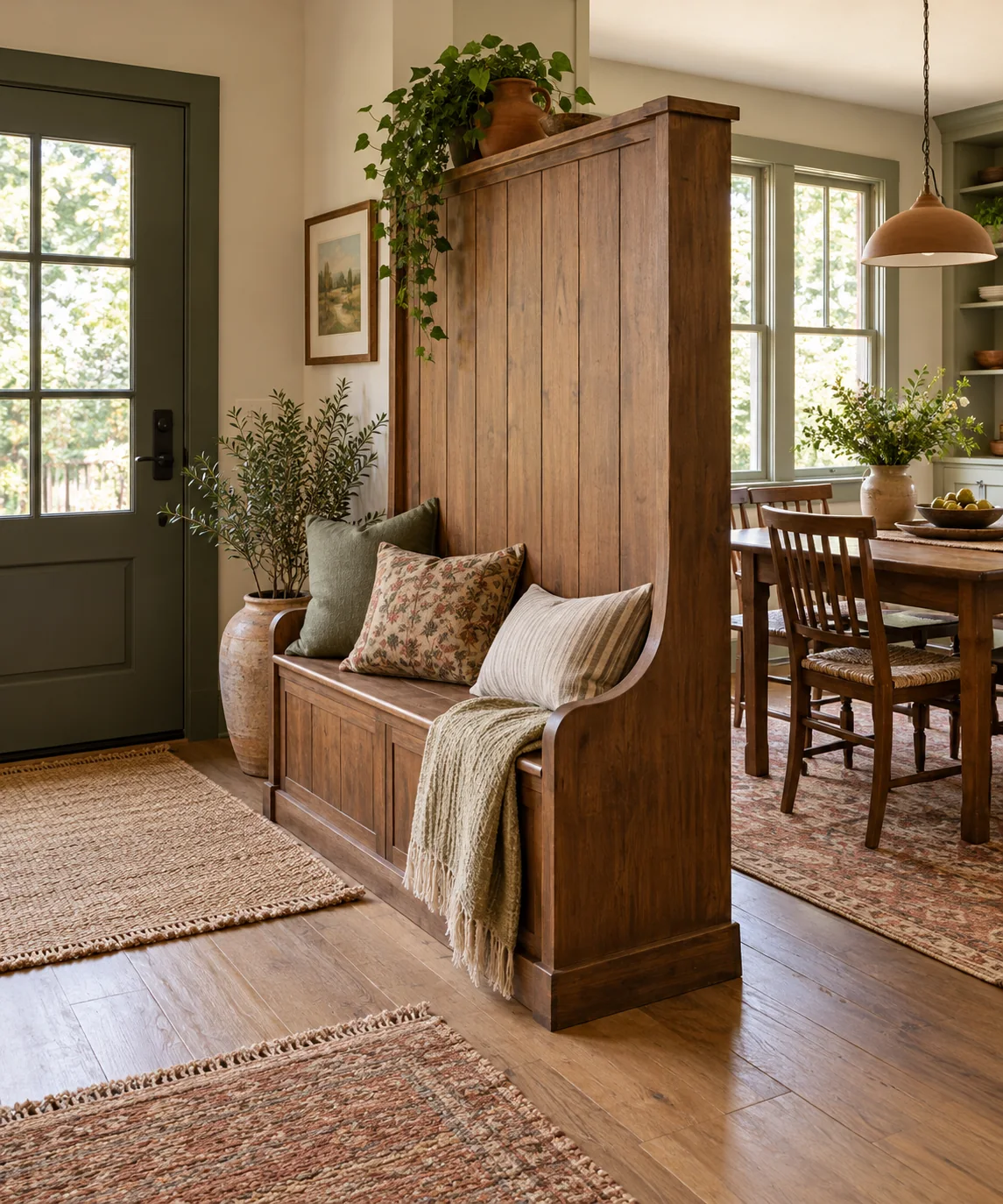
Assessing Sightlines and Partition Height
Positioning a high-backed settle between an entryway and a dining nook helps establish visual separation without building permanent drywall partitions. When planning the settle's backrest height, compare seated eye level at the table with standing sightlines from the front door. A backrest that rises moderately above typical seated head height offers visual shielding for dining occupants. However, avoid excessively tall backs in compact entry areas, as tall vertical furniture can block natural light distribution and make entry corridors feel cramped.
Verifying Hallway Passage and Door Swing Clearances
Introducing large furniture near an exterior entry requires careful evaluation of domestic traffic flow. The settle must not obstruct exterior door swings, interfere with emergency egress paths, or create pinch points for household members carrying bags or coats. Mark the intended settle perimeter on the floor using masking tape and test full door operation. Confirm that open walkways around the back of the settle remain generous and unobstructed before finalizing furniture selection.
Detailing the Back Panel as an Entry Accent
Because the reverse side of a high-backed settle serves as an entry-facing partition, its aesthetic and tactile finish matters as much as the dining side. A bare or roughly stapled furniture backing looks uninviting in a front hall. Look for settles with fully finished backs featuring recessed panels, vertical beadboard, or durable painted surfaces. Ensure the exterior surface is smooth and free of protruding trim or sharp hardware that could snag coats, bags, or sleeves in the entry passage.
Balancing Upright Posture with Modular Cushions
Traditional wooden settles feature upright, vertical back panels that provide a neat architectural profile but may feel rigid during extended dining. Modifying the wooden frame with severe angles can reduce balance and increase the unit's overall footprint. Instead, adjust seated comfort using removable upholstery. A firm, high-density seat cushion combined with low-profile lumbar pillows helps support diners' lower backs while preserving the bench's compact footprint and clean lines.
Addressing Freestanding Balance and Tip Hazards
A tall, narrow settle placed in a busy corridor can present a tip hazard if bumped by active household traffic or pulled by children. Relying solely on base weight or plinth construction is not a substitute for proper stability assessment. Inspect how the unit distributes its mass and check whether the manufacturer provides anti-tip brackets or requires floor/wall anchoring. In high-traffic entry zones, securing tall dividers to adjacent floor joists or a low partition wall provides reliable protection against accidental tipping.
YOUR STARTING POINT
A little checklist.
Original editorial guidance. Images are AI-generated concepts, not photographs of completed projects. Our sources and approach.
Questions to consider
How high should a settle backrest be to block entry sightlines?
The backrest should rise sufficiently above the eye level of seated diners to provide privacy from the entryway, while remaining low enough to let ambient light circulate across the space.
Is a freestanding high-backed settle stable in a busy entry hallway?
Tall furniture in high-traffic zones can pose tip-over risks if bumped or pulled. Always evaluate the unit's center of gravity, check manufacturer stability ratings, and install anchoring hardware if recommended or if children are present.
How do you make an upright wooden settle comfortable for dining?
Add a tailored, high-density foam seat cushion and supportive, low-profile lumbar pillows. These removable additions cushion contact points without requiring permanent changes to the wooden structure.